Webinar: How I Invested Under $30K & Got Permanent Residency In Brazil: Register Now

Webinar: How I Invested Under $30K & Got Permanent Residency In Brazil: Register Now

Brazilian Startup hubs

Where Are Brazil's Startup Hubs?

Rio and São Paulo get the headlines — but Latin America's largest economy has innovation ecosystems spreading across a continent-sized country. Here's where entrepreneurs and investors are actually building.

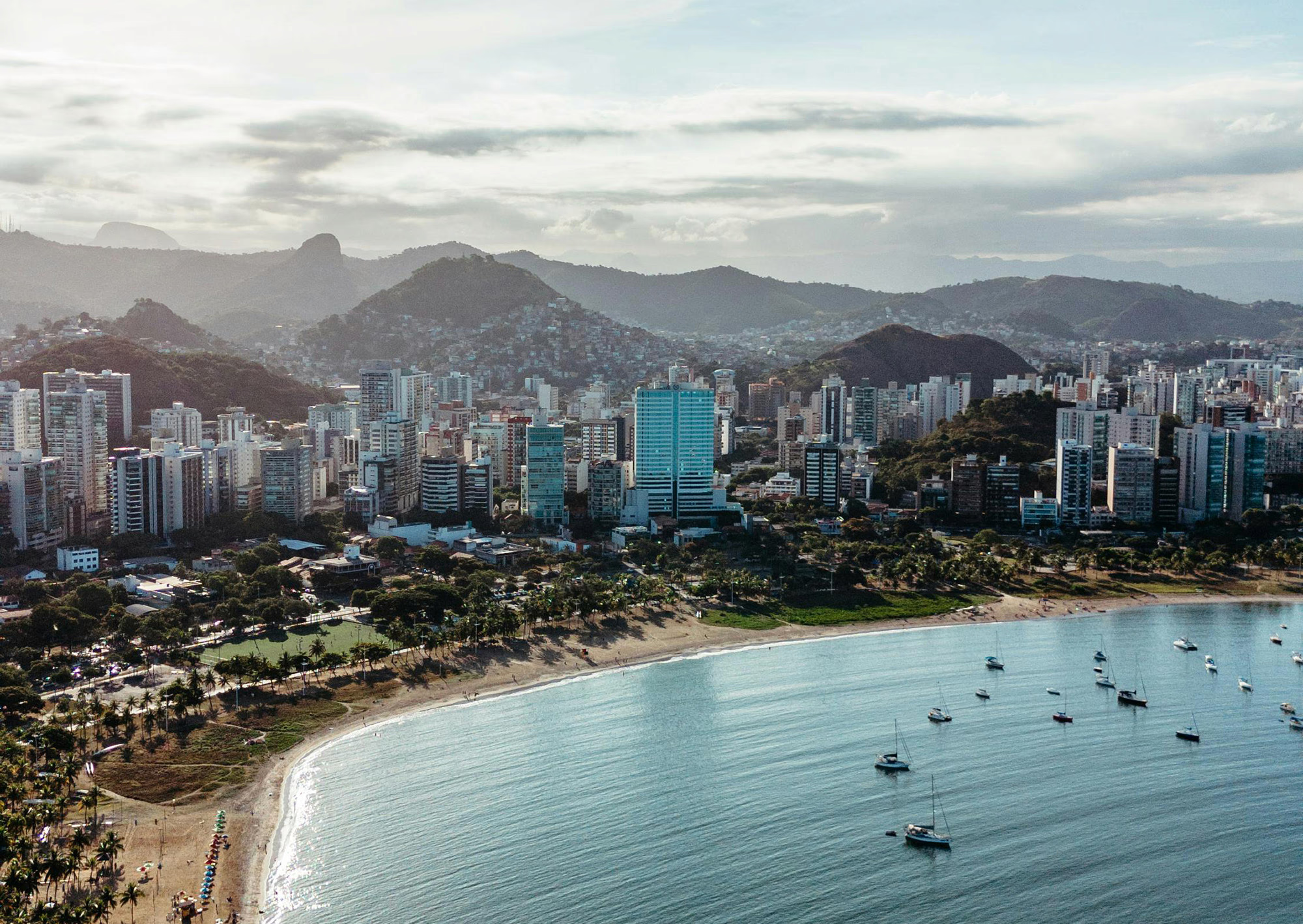
Areal view of Brazilian city
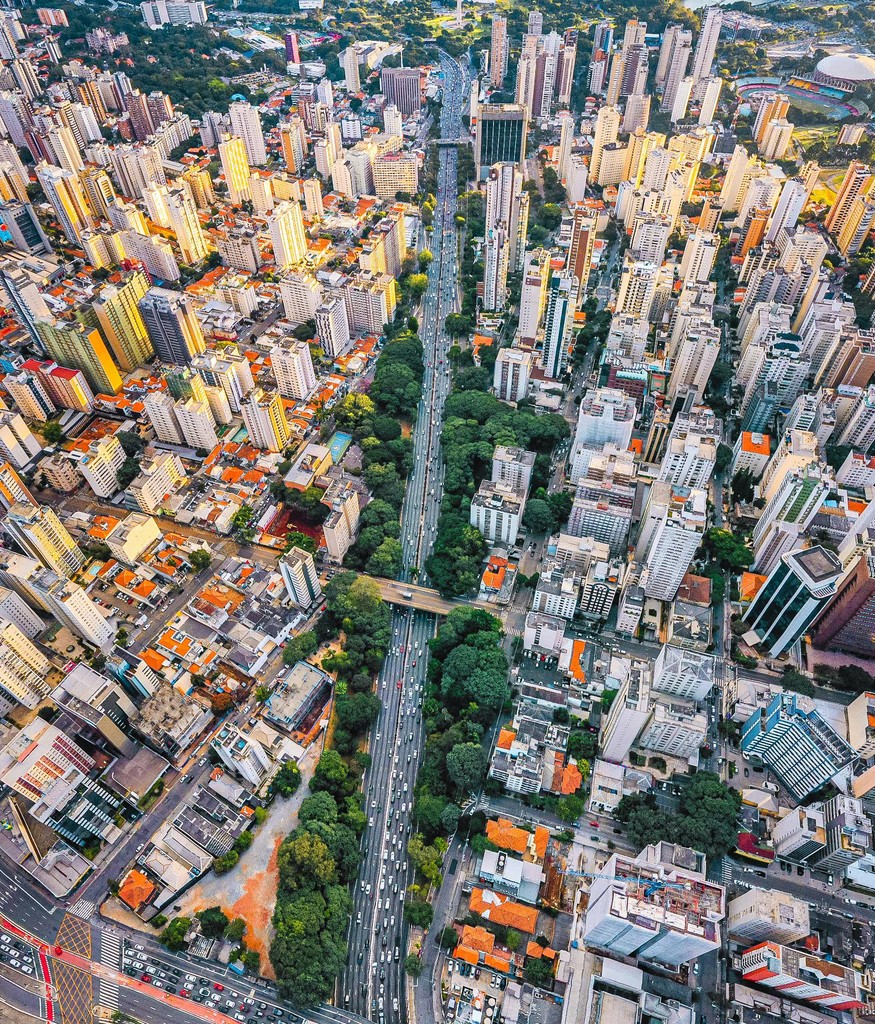
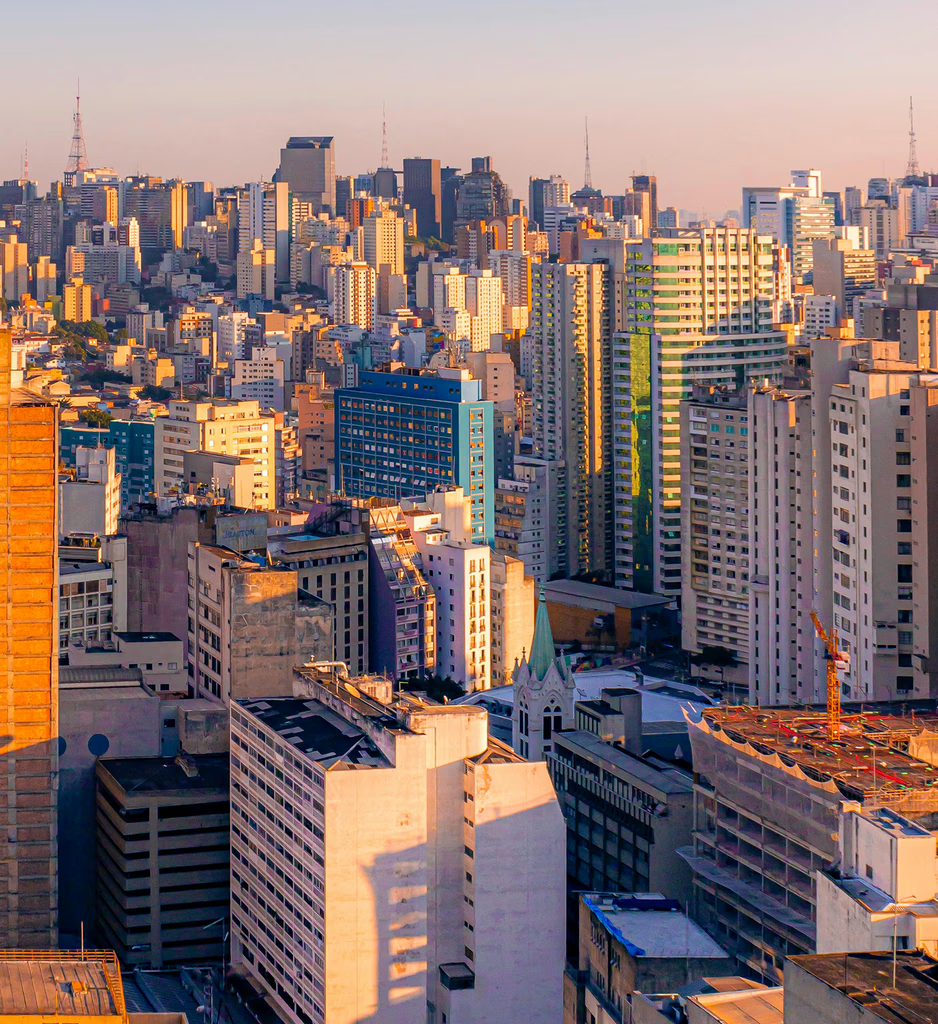
View of Sao Paulo Brazil
where Brazil's $117 billion startup ecosystem is growing

Brazil's Emerging
Startup Cities

When foreigners think of Brazil, São Paulo and Rio de Janeiro dominate. But Brazil is the world's fifth-largest country by area and seventh-most populous, with 26 states across five distinct regions—each with different economies, climates, and cultures. Brazil's startup ecosystem grew 21.7% in 2025 and now ranks among the top 30 globally, with over 5,000 active startups, 24 unicorns, and $117 billion in market value. The country attracted $1.25 billion in tech investment in just the first half of 2025. While São Paulo concentrates 47% of funding, compelling opportunities exist across beach cities turned innovation islands, former mining capitals with Google R&D labs, and northeastern ports with converted colonial tech parks.

For foreign investors pursuing startup or investor residency in Brazil, location determines infrastructure access, talent pipeline, cost of living, and lifestyle. Brazil's secondary startup hubs aren't merely cheaper alternatives—they're genuine destinations blending innovation ecosystems with quality of life that attracts digital nomads and international tech talent.

Florianópolis

State of Santa Catarina · South Region

Officially recognized as the "Startup Capital of Brazil" by federal law in 2024Florianópolis is the proof that you don't need a megacity to build a world-class innovation ecosystem. This island city of roughly 500,000 people now has over 6,000 tech companies generating more than 38,400 jobs, with tech representing 25% of local GDP — the highest share of any state capital in Brazil. It holds up to ten times more startups per capita than São Paulo and the highest average startup funding in the country ($1.07 million per startup).

The ecosystem traces back to the founding of UFSC in the 1960s and Celta, Brazil's first tech incubator, in 1986, and today includes innovation parks like Sapiens Parque and ParqTec Alfa. With 40 beaches, internet speeds averaging 235 Mbps, and a reputation as one of Brazil's safest cities, Florianópolis is the destination of choice for founders and digital nomads who want startup infrastructure without the sprawl of São Paulo.

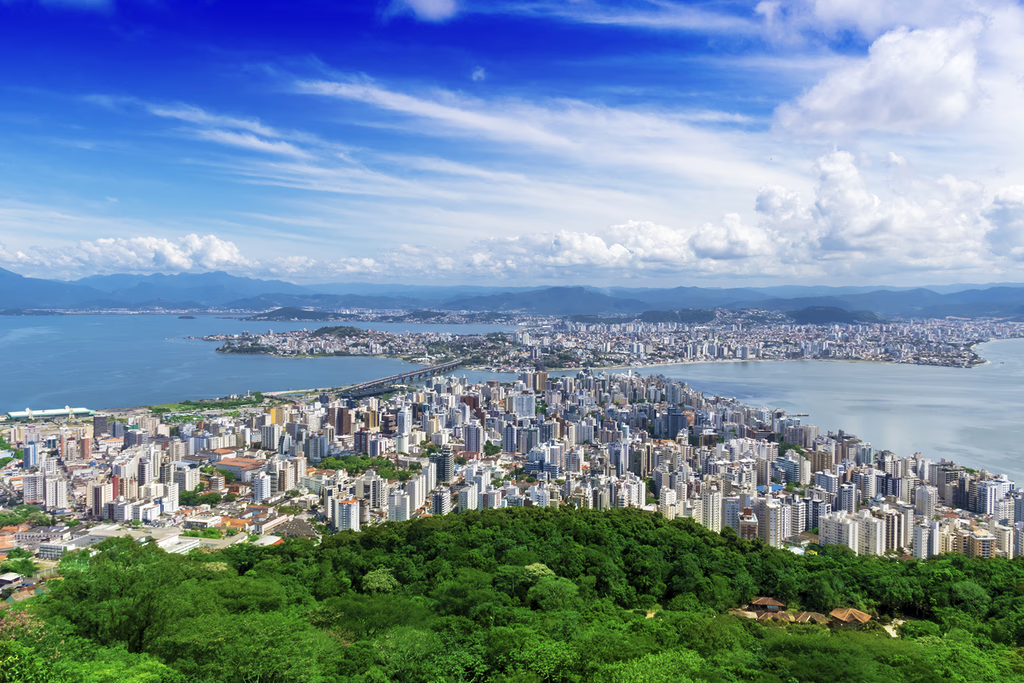
Areal view of Florianopolis, the startup capital of Brazil

Silicon Island

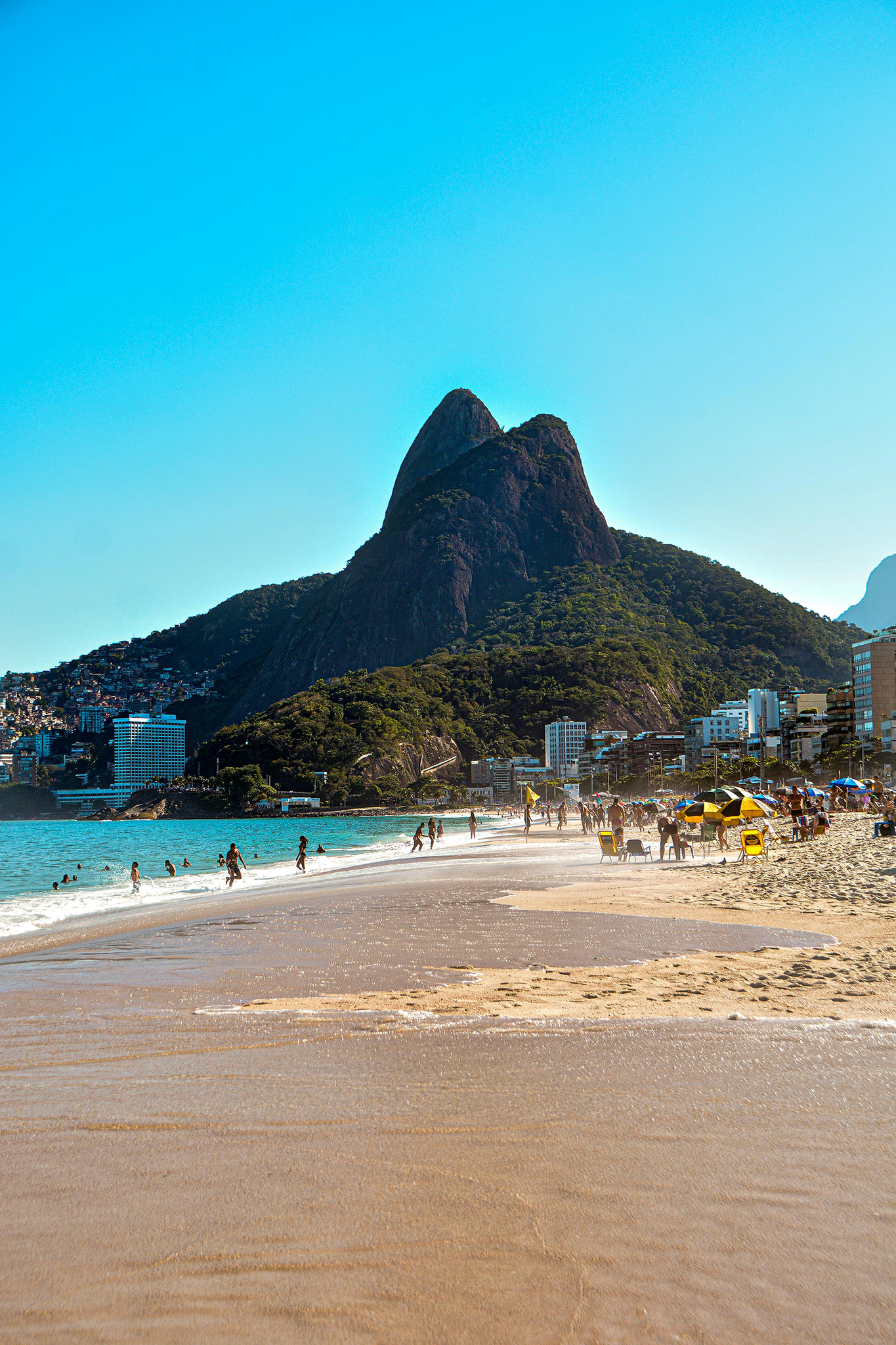
Beach view of Rio de Janeiro, Brazil

Rising Tech Hub

Rio de Janeiro

State of Rio de Janeiro · Southeast Region

Brazil's second-largest city has long been more associated with beaches and Carnival than with code, but Rio de Janeiro is rapidly closing that gap. The arrival of Web Summit Rio — one of the world's largest tech conferences — has become an annual catalyst, and the city government used its 2025 opening to announce "Rio AI City," an initiative to transform Rio into the largest data center hub in Latin America and one of the ten largest globally.

The ecosystem has particular strength in fintech and the creative industries, and a legacy of social innovation — platforms like Instituto Igarapé and Meu Rio emerged from the city's drive to address inequality through technology. For foreign investors, Rio offers a rare combination: a globally recognized city with significantly lower operating costs than São Paulo, improving digital infrastructure, and an economy of 17.4 million people now pivoting toward high-tech services and AI.

São Paulo

State of São Paulo · Southeast Region

With a metropolitan GDP approaching $500 billion — roughly 25% of Brazil's total — São Paulo is not just Brazil's financial capital, it's the beating heart of Latin American innovation. The city is home to 60% of all Brazilian startups and 83% of the country's unicorns, including heavyweights like NubankC6 Bank, and Creditas.

Over 4,000 startups operate here, supported by major accelerators like Cubo ItaúDistrito, and Google Campus, and fueled by top-tier universities like USP and Unicamp, which together employ 26% of Brazil's researchers. Global VCs including Sequoia CapitalKaszek Ventures, and Founders Fund all operate from São Paulo. The city's time zone alignment with the U.S. East Coast, its Port of Santos (the largest in Latin America), and two international airports make it the default entry point for any serious investment in Brazil's tech economy.

Areal view of Sao Paulo city, brazil

#1 in Latin America

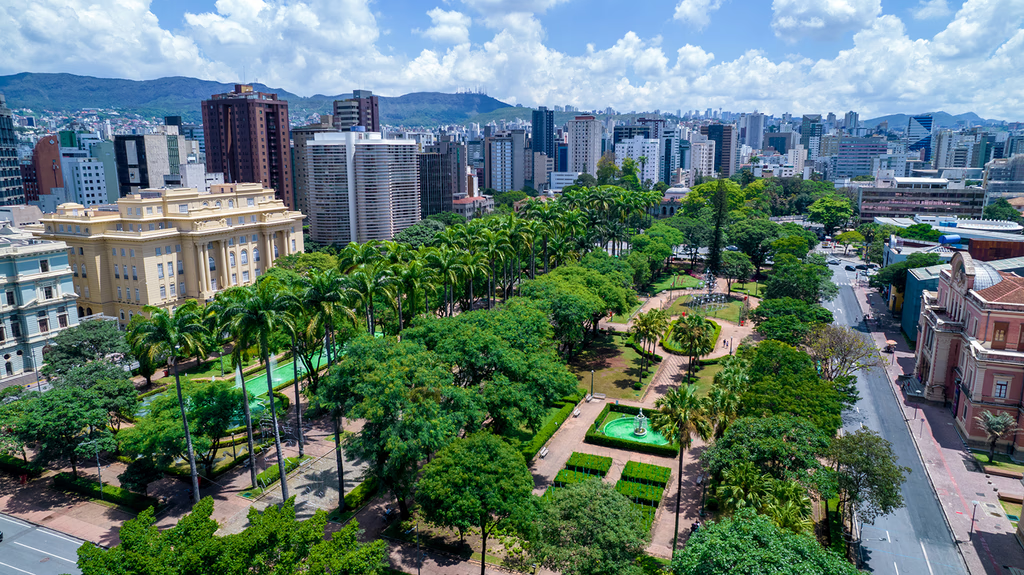
Areal view of Belo Horizonte, Minas Gerais, Brasil

San Pedro Valley

Belo Horizonte

State of Minas Gerais · Southeast Region

The capital of Minas Gerais has transformed from a mining and coffee economy into Brazil's second-largest startup city by count, trailing only São Paulo. The ecosystem is anchored by the San Pedro Valley community, a grassroots network of founders named after the upscale neighborhood where many of the city's first startups clustered in 2011 — spawning breakouts like Hotmart (a unicorn in digital education) and Méliuz (IPO on B3, Brazil's stock exchange).

Google chose Belo Horizonte for its first Latin American R&D center, drawn by the deep technical talent pipeline from UFMG and three other top-tier universities. The ecosystem grew 34.9% in 2025, and the state of Minas Gerais now houses over 782 startups across sectors led by healthtech, fintech, and adtech. With significantly lower rents and a cost of living well below São Paulo or Rio, BH offers investors access to top-tier engineering talent and a metropolitan area of over 5 million people — in a city famous across Brazil for its bars, food culture, and relaxed pace of life.

Recife

State of Pernambuco · Northeast Region

Recife's transformation from a declining sugar port to a technology powerhouse is one of the most remarkable urban reinvention stories in Latin America. At the center of it is Porto Digital, an innovation district built in the abandoned colonial buildings of Old Recife that now houses over 350 companies and 11,000+ workers, with resident companies benefiting from fiscal incentives that reduce local and federal taxes by up to 60%. From 2020 to 2024, early-stage funding in Recife grew an extraordinary 1,534%, fueled by AI, quantum computing, and cybersecurity ventures and supported by programs like SEBRAE's Startup NE and the talent pipeline from the Federal University of Pernambuco (UFPE).

Recife also hosts CESAR, one of Brazil's most important private R&D institutes. For cost-conscious investors and entrepreneurs, Recife offers dramatically lower operating expenses than southeastern cities, combined with a 500-year cultural heritage, warm coastal living, and a community ethos of collaboration that locals call enxerimento — a Northeast Brazilian quality of curiosity and creative resourcefulness.

Coworking startup hub in Recife, Brazil

Northeast Powerhouse

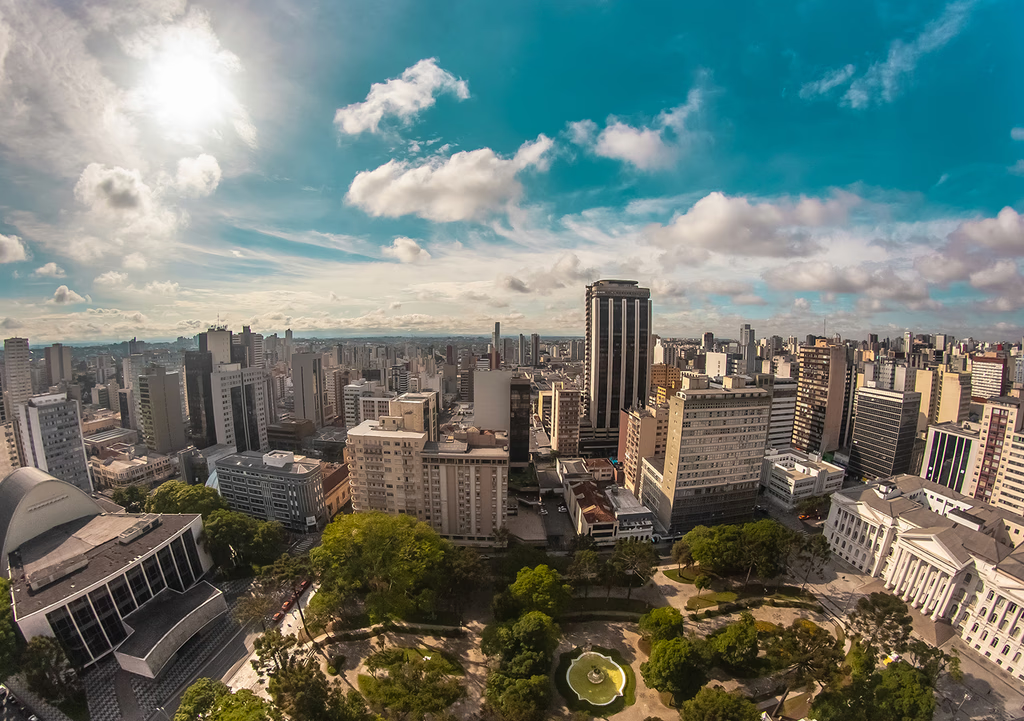
Areal view of Curitiba, startup hub in brazil

3 Unicorns

Curitiba

State of Paraná · South Region

Already internationally recognized for pioneering urban planning and sustainable transport, Curitiba has quietly become one of Brazil's most productive startup cities. The Vale do Pinhão (Pinhão Valley) initiative — a public-private partnership fostering entrepreneurship — has helped the city produce three unicornsEBANX (cross-border payments), MadeiraMadeira (e-commerce), and Olist (SMB logistics).

Curitiba ranks first in Brazil for tech sector productivity and efficiency, and its business registration process runs 64% faster than the national average — a company can be opened in roughly 22 hours through the Empresa Fácil online portal. The city offers tax deductions for tech companies, nine public SEBRAE entrepreneurship offices, public coworking spaces through the Worktiba program, and strong talent from UFPR and PUCPR. Located within easy reach of two major ports and the Afonso Pena international airport, and known for its green spaces, safety, and high quality of life, Curitiba is especially compelling for investors who value operational efficiency as much as innovation.

Campinas

State of São Paulo · Southeast Region

Just 100 kilometers from São Paulo city, Campinas is Brazil's research-driven innovation corridor. The city of 1.2 million is home to Unicamp (the University of Campinas), consistently ranked among the top two universities in Latin America and responsible for a significant share of Brazil's academic patents and research output. Campinas also hosts Sirius — the most advanced particle accelerator in the Southern Hemisphere — along with Embrapa, the agricultural research giant, and the National Center for Research in Energy and Materials (CNPEM). The municipality attracts technology companies with major tax reductions including 50% cuts on IPTU and ITBI, reduced ISSQN rates, and exemption from certain business fees.

Hubs like Venture Hub connect startups with corporate partners including Bosch and Samsung, making Campinas a magnet for deep tech, biotech, and agritech ventures. For investors oriented toward R&D-intensive sectors — particularly precision agriculture, life sciences, and advanced materials — Campinas offers a density of research infrastructure that rivals any city in the Global South.

Coworking startup hub in Campinas, Sao Paulo, Brazil

Research Powerhouse

Data from Federal Gazette Investor Residency Approvals, 2025

Where Foreign Investors
Are Actually Setting Up

Where Foreign Investors Are Actually Setting Up

Major startup hubs tell only part of the story. To understand where foreign investors are actually putting capital to work in Brazil — and where they're choosing to live — it helps to look at the data directly. A StartBrazil review of 512 investor residency approvals published in Brazil's Diário Oficial da União (Federal Official Gazette) during 2025 reveals that the geography of foreign investment extends well beyond the country's tech capitals. These approvals span three distinct residency pathways established under Brazil's Migration Law (Law 13.445/2017): real estate investment (Resolução Normativa 36/2018), business entity investment (RN 13/2017), and startup investment (RN 13/2017, Art. 3).

Number of Residency Approvals by Investment Type (2025)

Loading Chart.js...
Group of European Investors having a meeting in brazil

European Investors:
The Northeast Corridor

European investors represent the largest regional bloc across all three residency pathways, but their geographic preferences within Brazil paint a striking picture. Among the 101 European business entity investors approved in 2025, a remarkable 43.56% established companies in Ceará, followed by Rio Grande do Norte (13.86%), Bahia (12.87%), and São Paulo at just 8.91%. At the city level, the largest concentrations appear in Fortaleza (15%), Natal (9%), São Paulo (7%), Rio de Janeiro (6%), and Porto Seguro (6%). European investors are also establishing businesses in smaller coastal municipalities across Ceará — including Jijoca de JericoacoaraTrairiItaremaBeberibe, and Paracuru.

The pattern is clear: European investors in Brazil's business visa program are overwhelmingly oriented toward the Nordeste (Northeast) and coastal tourism corridors, not the country's largest metropolitan centers. Fully 57% of European-invested companies list real estate activities as their primary business, followed by hospitality and food services (12%) and professional services (8%). The dominant single activity is compra e venda de imóveis — buying and selling property — at 37%, followed by property rental (10%) and hotel operations (7%). France leads among European nationalities (40.59% of European investors), with Italy (13.86%) and Germany (8.91%) in second and third place.

In the real estate investor pathway specifically, Europeans are even more dominant, representing approximately 65% of all approvals — a larger share than in any other residency category. The United States leads at the country level with 17.22% of real estate approvals, followed by Germany (15.75%), France (10.62%), and Italy (9.89%).

European Investors by Brazilian State of Investment

Loading Brazil map...

American Investors: Agriculture, Land & the Bahia Corridor

The 21 U.S. business entity investors approved in 2025 show a geographic profile that is distinct from every other investor group. While São Paulo city leads at the municipal level (23.81%), the state of Bahia dominates overall with 42.86% of all U.S. investments, followed by São Paulo state (29%) and Rio de Janeiro (14.29%). Two Bahian municipalities stand out as unusual concentrations: São Desidério (19.05%), an agricultural powerhouse in western Bahia, and the beach town of Itacaré (14.29%), known for ecotourism and cacao production.

Group of American Investors in a big agriculture land in Brazil

American Investors by Brazilian State of Investment

Loading Brazil map...

The sectoral profile is equally distinctive. Real estate activities account for 38.10% of U.S.-invested companies, but agriculture and environmental services represent 19.05% — a share far larger than for any other nationality. The single most common primary business activity for U.S. investors is perennial fruit farming (20%), followed by property transactions (10%). Other activities include wholesale agricultural inputs, restaurant operations, financial services, and online content platforms. The concentration in Bahia — particularly in smaller, rural municipalities — suggests that American investors are pursuing land-based ventures, agricultural projects, and tourism developments in regions where land costs remain low relative to southeastern Brazil.

Group of startup investors in Brazil

Startup Investors: Small But Geographically
Distributed

The startup investor visa (RN 13/2017, Art. 3), which requires a minimum investment of BRL 150,000 in an innovative Brazilian company, remains the least-used pathway. Across the full period from 2021 through early 2026, only 19 verified approvals were identified. Despite the small sample, the geographic spread is notable: São Paulo state accounts for 42.11% of startup investments, but meaningful clusters also appear in Rio Grande do Nortethe Federal District (Brasília)Minas GeraisParaná, and Santa Catarina — each with 10.53%. Cities represented include São Paulo, BrasíliaFlorianópolisCuritiba, and Juiz de Fora in Minas Gerais.

The sectoral profile of startup-backed companies is dominated by information technology and digital services (42.11%), followed by professional and business services, construction, agriculture, and real estate (10.53% each). European and American investors together account for nearly 80% of all startup visa approvals, with the U.S. alone representing 31.58%. Notably, 73.68% of startup investors applied from outside Brazil via a pre-approved residency route — the highest consular-application rate of any pathway — suggesting that the startup visa is particularly attractive to investors who have not yet relocated.

Primary business sector of startup investor companies · 2021–2026 (%)

Loading Chart.js...

Ready To Start Your
Journey
to Brazil?

Begin your path to Brazilian residency with expert guidance, vetted opportunities, and a transparent step-by-step process.

Rio de Janeiro Eagle eye picture
Brazilian people working for a startup, using a laptop in a coffee shop
Rio de Janeiro beach, with multiple surfboards on the picture
Cristo Rei from Rio de Janeiro