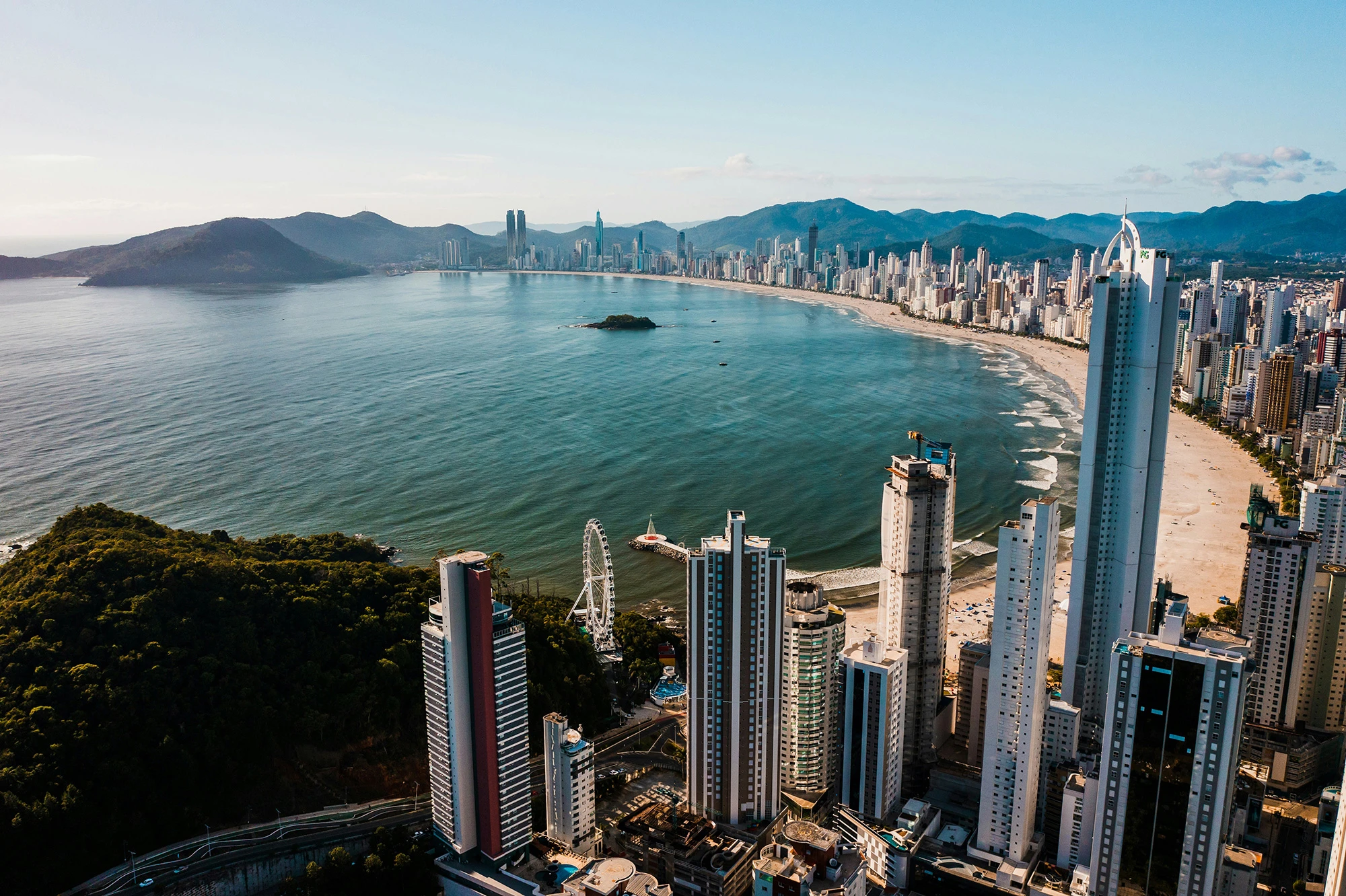


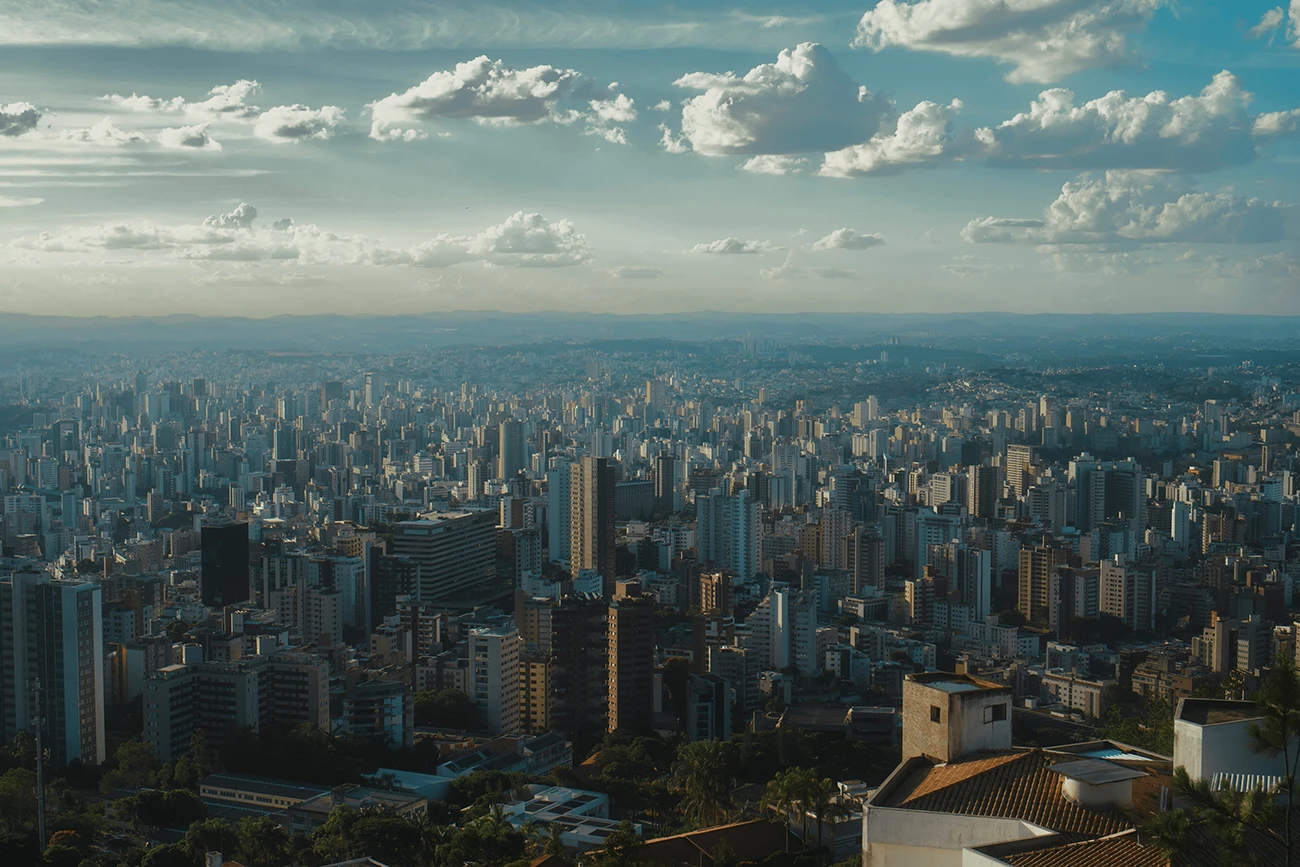
Santa Catarina, Brazil. Big city for foreign investment

Dec 12, 2025

Brazil's BRICS Membership: The Global South Positioning Advantage

Most Western investors evaluate Brazilian residency through a Western lens: how does it compare to Portugal, Spain, or Caribbean programs? They're asking the wrong question. Brazil isn't positioning itself as an alternative to Europe—it's positioning itself as an anchor in a parallel global system that's emerging whether Western capitals acknowledge it or not.

What Is BRICS? Understanding the Non-Western Economic Architecture

BRICS began in 2001 not as a political alliance but as an investment thesis. Jim O'Neill, an economist at Goldman Sachs, identified Brazil, Russia, India, and China as emerging markets with extraordinary growth potential that would reshape the global economy over the coming decades. The acronym was marketing genius—memorable, optimistic, building on the metaphor of construction.

What makes BRICS historically significant is that the countries took this investor-created label and transformed it into an actual geopolitical bloc. The first formal summit occurred in 2009, adding political cooperation to economic coordination. South Africa joined in 2010, adding the "S" and establishing BRICS as a cross-continental framework spanning Latin America, Eastern Europe, Asia, and Africa.

In 2024, the bloc expanded dramatically: Egypt, Ethiopia, Iran, and the United Arab Emirates became full members, with Saudi Arabia invited but delaying formal accession. In January 2025, Indonesia joined as the first Southeast Asian member, making it a truly global coalition. By October 2024, an additional 13 countries were invited as "partner countries," creating a two-tier structure of full members and aligned nations.

Current BRICS members (10 countries): Brazil, Russia, India, China, South Africa, Egypt, Ethiopia, Iran, United Arab Emirates, Indonesia

BRICS+ partner countries (13): Algeria, Belarus, Bolivia, Cuba, Kazakhstan, Malaysia, Nigeria, Thailand, Turkey, Uganda, Uzbekistan, Vietnam, and others expressing interest

Total scope: 3.3+ billion people (45% of global population), 37.3% of global GDP (PPP), $28+ trillion combined economy, $5.2 trillion in combined foreign reserves

The Philosophy: Reforming Rather Than Rejecting the Global Order

BRICS isn't anti-Western despite how it's often portrayed in American media. It's post-Western—meaning it accepts that the post-WWII order centered on American hegemony and European influence no longer reflects economic reality.

The bloc's founding premise: International institutions (World Bank, IMF, United Nations Security Council) were designed in 1945 when today's emerging economies were either colonies, devastated by war, or economically irrelevant. These institutions remain dominated by powers whose share of global GDP has been declining for decades while emerging economies' share has exploded.

BRICS doesn't seek to destroy these institutions. It seeks to reform them to reflect current economic weight—and when reform proves impossible, to create parallel institutions that provide alternatives.

This distinction matters enormously. BRICS nations maintain membership in Western-led institutions while building alternatives. They trade extensively with the US and EU while diversifying toward each other. They're not choosing sides—they're creating optionality.

For foreign investors, this matters because Brazilian residency and eventual citizenship positions you within this parallel system without severing access to Western markets.

Key Achievements That Signal Permanence

BRICS has evolved from talk shop to institution-builder:

New Development Bank (NDB): Established 2015, headquartered in Shanghai with branch in Johannesburg. Total assets exceed $31 billion. Has approved 120+ investment projects totalling $40 billion in infrastructure, digital systems, and social development across member states. Led since 2023 by former Brazilian President Dilma Rousseff, signaling Brazil's centrality to BRICS financial architecture.

Contingent Reserve Arrangement (CRA): $100 billion emergency fund to provide liquidity support during balance of payments crises, reducing reliance on IMF conditional lending.

BRICS Pay and Alternative Payment Systems: Development of alternatives to SWIFT for international transactions, reducing exposure to Western financial sanctions. China's CIPS, Russia's SPFS, India's SFMS, and Brazil's PIX represent parallel infrastructure that enables sanctions-resistant trade.

Trade in Local Currencies: Increasing bilateral trade settled in yuan, rupees, reais, and other national currencies rather than dollars, reducing currency risk and transaction costs for intra-BRICS commerce.

Coordinated Diplomatic Positions: Regular joint statements on international issues, voting coordination at the UN, and collective negotiating positions in global climate, trade, and security discussions.

This isn't aspirational—it's operational. The infrastructure exists, processes billions in transactions, and provides genuine alternatives to Western-dominated systems.

Economic Integration and Trade Opportunities for Investors

BRICS represents 37% of global GDP but—critically—a much higher share of growth. While developed economies grow at 1-2% annually, BRICS nations collectively average 4-6% growth, accounting for the majority of new economic activity globally.

Intra-BRICS Trade: The Hidden Opportunity

BRICS countries collectively conduct over $500 billion annually in mutual trade, with momentum strongly upward:

China-Brazil trade exceeded $180 billion in 2024, making China Brazil's largest trading partner by substantial margin. Key flows:

  • Brazilian exports: soybeans, iron ore, beef, oil

  • Chinese exports: manufactured goods, electronics, machinery, vehicles

India-Brazil trade approaches $15 billion annually and growing at double-digit rates:

  • Brazilian exports: crude oil, sugar, minerals

  • Indian exports: pharmaceuticals, chemicals, automotive parts

Russia-Brazil trade remains modest at $5-8 billion but shows strategic complementarity:

  • Brazilian exports: meat, coffee, sugar

  • Russian exports: fertilizers (critical for Brazilian agriculture), energy equipment

UAE-Brazil trade has accelerated with UAE's BRICS membership, focused on:

  • Brazilian exports: meat, minerals, agricultural products

  • UAE position as logistics hub for Brazilian goods entering Middle Eastern markets

The Compounding Effect of Brazilian Positioning

A Brazilian-based company doesn't just access Brazil's 220 million consumers—it gains privileged positioning for BRICS markets:

Trade Finance: The New Development Bank provides project financing in local currencies, eliminating currency risk and reducing borrowing costs for eligible projects. Brazilian entities can access NDB financing for infrastructure, renewable energy, digital transformation, and supply chain development.

Reduced Dollar Dependence: Brazil-China trade increasingly settles in yuan or reais, cutting transaction costs by 3-5% compared to dollar intermediation. For commodities traders or manufacturers with supply chains spanning BRICS nations, this represents substantial margin improvement.

Supply Chain Diversification: BRICS nations explicitly cooperate on building alternative supply chains less vulnerable to Western sanctions or trade disruptions. Brazil's agricultural exports, rare earth minerals, and manufacturing capacity position it as key node in these emerging trade networks.

Market Access Through BRICS Relationships: Brazil's diplomatic positioning within BRICS creates business opportunities. When China or India seek Latin American partners, Brazilian companies get first look. When UAE investors target agricultural investments, Brazil is the natural destination.

Sector-Specific Opportunities

Agriculture and Food Security: BRICS nations represent the majority of global commodity production and consumption. Brazil is the linchpin:

  • World's largest exporter of soybeans (China is largest importer)

  • Leading beef exporter (Middle East and Asia as primary markets)

  • Major sugar, coffee, orange juice supplier to BRICS+ partners

A Brazilian agricultural company or trader gains privileged access to the majority of global food import demand.

Energy and Commodities: BRICS+ countries control:

  • 40%+ of global oil production (Russia, UAE, Iran, Brazil)

  • 60%+ of rare earth elements (China, Brazil, Russia)

  • Major uranium, copper, iron ore reserves

Brazilian mining and energy companies operate within an ecosystem explicitly designed to trade among aligned nations, reducing vulnerability to Western sanctions or trade restrictions.

Technology and Digital Infrastructure: Brazil's advanced payment systems (PIX), India's digital public infrastructure, and China's tech manufacturing create opportunities for Brazilian tech companies to:

  • Export Brazilian fintech innovations to other BRICS markets

  • Partner on digital transformation projects funded by NDB

  • Participate in BRICS technology cooperation frameworks

Infrastructure and Development: NDB lending priorities align with Brazilian strengths: sustainable transport, renewable energy, water systems, urban development. Brazilian construction, engineering, and consulting firms can compete for projects throughout BRICS+ with financing support unavailable to pure foreign bidders.

Mobility Benefits: What BRICS Membership Does (and Doesn't) Provide

Unlike MERCOSUR, BRICS has no formal visa or residence agreement. It's an economic and diplomatic bloc, not a freedom-of-movement zone.

As a Brazilian permanent resident or citizen, BRICS membership provides:

Zero direct visa benefits. You don't get automatic residence rights in Russia, India, China, South Africa, or other BRICS nations simply by holding Brazilian status.

What you do get—and this matters more than formal agreements:

Strategic Business Positioning in BRICS Markets

When a Brazilian company or Brazilian resident entrepreneur approaches business opportunities in other BRICS nations, the reception differs fundamentally from pure Western firms:

In China: Brazilian companies aren't viewed through the US-China competition lens. Brazil's non-aligned foreign policy and substantial existing trade means Chinese authorities see Brazilian investment as complementary rather than competitive or suspicious.

In India: Historical Non-Aligned Movement ties and current BRICS cooperation create positive bias toward Brazilian business interests. Indian companies actively seeking Latin American expansion naturally consider Brazilian partners first.

In Russia: Facing Western sanctions, Russia explicitly prioritizes trade and investment from BRICS partners. Brazilian entities can access opportunities unavailable to American or European firms.

In UAE/Middle East: Brazil's BRICS membership and Islamic outreach signal commitment to non-Western partnerships, creating preference for Brazilian suppliers in food security and infrastructure projects.

In African BRICS members (South Africa, Egypt, Ethiopia): Brazil's positioning as a Global South leader and its historical ties to African development create credibility unavailable to former colonial powers.

Practical Business Advantages

Banking and Financial Access:

  • Brazilian banks have correspondent relationships with BRICS financial institutions that ease cross-border transactions

  • BRICS payment systems (CIPS, SPFS, PIX) allow Brazilian entities to transact without SWIFT dependency

  • NDB project financing available to Brazilian entities creates advantages over non-BRICS competitors

Political Risk Mitigation:

  • Brazilian diplomatic presence and BRICS coordination provide channels for resolving business disputes

  • BRICS summit declarations signal areas of cooperation, helping businesses identify supported sectors

  • Brazilian government actively promotes BRICS business connections through trade missions and financing support

Cultural and Linguistic Bridges:

  • Brazil's experience as multiracial democracy with African, European, Asian, and indigenous heritage creates cultural fluency lacking in more homogeneous societies

  • Portuguese-speaking African nations (Angola, Mozambique) see Brazil as natural partner

  • Brazilian business culture—more hierarchical than Anglo-American, less formal than East Asian—bridges Western and non-Western norms effectively

The Hidden Advantage: Sanctions Resistance

This is the uncomfortable truth that drives much BRICS expansion: the bloc creates economic space beyond Western enforcement jurisdiction.

If you're a Brazilian company trading with Russia, Iran, or other sanctioned nations, you're not subject to US Treasury enforcement in the way American or European companies are. Brazil maintains diplomatic and trade relationships with virtually everyone.

This doesn't mean illegal activity—Brazil enforces its own laws and international obligations. What it means is that legal trade with countries facing Western sanctions remains possible for Brazilian entities when it's impossible for American or European ones.

For businesses in:

  • Agricultural commodities (Russian fertilizer imports, food exports to Iran)

  • Energy technology and services

  • Industrial machinery and equipment

  • Consumer goods for markets cut off from Western suppliers

Brazilian positioning provides access to billions in trade flows that Western firms cannot pursue regardless of profitability.
What BRICS Means for Foreign Residents and Citizens of Brazil

So you're an American, European, or Australian who's obtained Brazilian permanent residency. How does Brazil's BRICS membership actually benefit you?

1. Access to a Parallel Financial System

The most immediate practical benefit: Brazilian banking and payment systems integrate with BRICS alternatives to Western financial infrastructure.

Why this matters:

  • If Western sanctions or capital controls affect your origin country, your Brazilian assets and bank accounts remain accessible

  • If dollar-based payments become restricted or expensive, BRICS local currency systems provide alternatives

  • If geopolitical tensions escalate, having banking relationships outside Western enforcement jurisdiction creates optionality

Your Brazilian CPF (tax ID) and bank accounts give you access to:

  • PIX for domestic instant payments (76% adoption rate, processing more transactions than Venmo/Zelle/Cash App combined)

  • Correspondent banking with Chinese, Indian, and UAE institutions

  • Potential future BRICS unified payment system currently under development

  • NDB financing opportunities unavailable through Western development banks

2. Business Relationships in Growth Markets

The developed world (US, EU, Japan) represents 14.5% + 14.5% = 29% of global GDP and declining share. BRICS+ represents 37.3% of global GDP and rising share, plus most global population growth.

As a Brazilian resident, your business development efforts can focus where the growth actually is rather than where your passport suggests you should operate.

Concrete examples:

Tech entrepreneur: Instead of competing in saturated Silicon Valley or London markets, you can target India's 1.4 billion people, Brazil's underserved 220 million, or emerging African markets through South African partnerships.

Commodities trader: Direct access to Brazilian agricultural exports + relationships with Chinese and Indian importers = positioning in trade flows representing hundreds of billions annually.

Manufacturing: Establishing production in Brazil for sale to BRICS markets avoids tariffs, sanctions exposure, and geopolitical risk of China-dependent supply chains.

Professional services: Brazilian consulting, legal, or accounting firms can expand to other Portuguese-speaking markets (Angola, Mozambique) and then into broader BRICS+ through demonstrated emerging market expertise.

3. Diversification Beyond Western Economic Cycles

Here's a non-political observation: Western economies increasingly move in sync. When the Fed raises rates, Europe follows. When US enters recession, Canada and Australia feel it immediately. When the EU implements new regulations, UK and Switzerland adjust accordingly.

BRICS economies, while not perfectly uncorrelated, respond to different drivers:

  • China: Domestic consumption growth, Belt and Road lending, technology sector development

  • India: Infrastructure buildout, digital economy expansion, manufacturing diversification

  • Brazil: Agricultural commodity cycles, domestic consumer growth, renewable energy transition

  • Russia: Energy prices, sanctions adaptation, pivot to Asian markets

  • UAE: Oil revenues, financial hub development, tourism and real estate

By establishing residence and business presence in Brazil, you're gaining exposure to economic cycles that don't perfectly track Western downturns.

When the next US recession hits, will Brazilian agricultural exports to China decline as much as US tech stocks? Probably not. When European energy prices spike, does that destroy Brazilian ethanol export opportunities? It creates them.

This isn't about Brazil being "safer" than the US or EU—it's about having genuine diversification rather than the illusion of diversification that comes from holding US, Canadian, and UK assets that all correlate at 0.85+.

4. Strategic Hedging Against Geopolitical Fragmentation

Let's acknowledge the scenario driving much of this conversation without endorsing any particular narrative:

The world may be fragmenting into competing blocs—Western (US/EU/allies), Chinese-led (Belt and Road partners), and non-aligned nations. Or it may not. But prudent planning means considering scenarios you hope don't materialize.

Brazilian citizenship + BRICS positioning creates optionality across scenarios:

Scenario 1: Status quo continues You have access to both Western markets (172 countries visa-free on Brazilian passport) and BRICS markets (through business relationships and trade frameworks). No downside.

Scenario 2: Western bloc restricts capital flows or movement Your Brazilian assets, bank accounts, and business operations continue unaffected. BRICS payment systems allow continued commerce. You have a functioning base outside Western jurisdiction.

Scenario 3: China-led bloc becomes dominant in Asia and Africa Your Brazilian positioning gives you access through BRICS relationships that pure Western entities lack. You benefit from the shift rather than being excluded by it.

Scenario 4: Non-aligned nations gain leverage Brazil's explicit non-alignment strategy positions you perfectly. You're not caught choosing sides—you're already positioned in a country that refuses to choose.

This is the "portfolio approach" to geopolitics: Brazilian residency and BRICS access diversifies your geopolitical exposure the way international stock holdings diversify market risk.
How to Actually Leverage BRICS Positioning as a Foreign Investor in Brazil

Theory is interesting. Application matters more. Here's how different investor types can actively exploit Brazil's BRICS membership:

Export-Oriented Businesses

Strategy: Use Brazil as a production base for goods targeting BRICS markets, taking advantage of existing trade relationships, currency arrangements, and logistics corridors.

Implementation:

  1. Establish Brazilian entity and manufacturing/processing facility (VITEM IX eligible if innovation-focused)

  2. Identify product categories with strong demand in specific BRICS markets (food products for Middle East, auto parts for India, minerals for China)

  3. Leverage NDB project financing for expansion if project meets sustainable development criteria

  4. Use Brazilian export promotion agencies (APEX-Brasil) which actively facilitate BRICS trade connections

  5. Price in local currencies (yuan, rupees) using Brazilian bank intermediation to reduce transaction costs

Why it works: You're not fighting against geopolitical tensions—you're leveraging Brazil's deliberate neutrality to access markets that Western firms increasingly can't or won't serve.

Technology and Software Companies

Strategy: Position Brazilian entity as "emerging market specialist" serving other BRICS nations with solutions designed for similar infrastructure and regulatory environments.

Implementation:

  1. Establish Brazilian tech company and obtain permanent residency

  2. Build initial product/service for Brazilian market (220M people, sophisticated digital infrastructure)

  3. Adapt for India (similar emerging market constraints, massive scale) using BRICS technology cooperation frameworks

  4. Expand to South Africa, UAE, Egypt using Brazilian entity as proof of emerging market expertise

  5. Apply for NDB digital infrastructure financing for regional expansion

Why it works: Western tech companies often build for US/EU markets then poorly adapt for emerging markets. You're building for emerging markets from the start, giving you product-market fit advantage in 3+ billion person market.

Investment and Financial Services

Strategy: Provide Western investors with BRICS market access and emerging market investors with global diversification, using Brazilian positioning as the bridge.

Implementation:

  1. Establish Brazilian financial services entity (investment advisory, wealth management, family office services)

  2. Build expertise in both Western and BRICS markets

  3. Offer Brazilian clients BRICS investment opportunities (NDB bonds, Chinese A-shares, Indian equities) unavailable or unfamiliar to traditional Brazilian advisors

  4. Offer Western clients Brazilian/BRICS exposure through entity that understands both worlds

  5. Leverage Brazilian citizenship (after year 4) for credibility in both markets

Why it works: Most advisors serve only Western clients or only emerging market clients. The bridge role—fluent in both systems—has minimal competition and premium pricing.

Real Estate and Development

Strategy: Target BRICS nationals seeking Brazilian property for diversification or lifestyle, while positioning for eventual expansion into other BRICS property markets using Brazilian track record.

Implementation:

  1. Acquire Brazilian properties and establish real estate development/management company

  2. Market specifically to Chinese, Indian, Middle Eastern buyers seeking South American exposure

  3. Build relationships with BRICS-based capital sources (Chinese investors, UAE family offices) seeking Brazilian opportunities

  4. Upon establishing track record, explore partnerships for developments in UAE or South Africa using Brazilian expertise

  5. Access NDB infrastructure financing for large-scale sustainable development projects

Why it works: BRICS high-net-worth individuals explicitly seek geographic diversification outside Western markets. You're offering exactly what they're looking for from a position of local expertise.

Agricultural and Commodity Trading

Strategy: Leverage Brazil's position as top-tier agricultural exporter and BRICS's focus on food security to build commodity trading operations serving intra-BRICS flows.

Implementation:

  1. Establish Brazilian agricultural trading company with export licenses

  2. Develop supply relationships with Brazilian producers (soybeans, corn, beef, coffee, sugar)

  3. Build relationships with Chinese, Indian, Middle Eastern importers through BRICS trade missions

  4. Use local currency settlement (yuan/reais) to reduce costs and currency risk

  5. Access trade financing from Brazilian banks' BRICS-specific credit lines

Why it works: BRICS nations prioritize food security and explicitly want to source from aligned partners rather than depending on Western-dominated agricultural supply chains. You're positioned exactly where demand is growing fastest.

The Dollar De-Dollarization Question

Let's address the elephant in the room: BRICS discussions about reducing dollar dependence and potentially creating a common currency.

Current reality:

  • The US dollar remains dominant in global trade (roughly 60% of foreign exchange reserves)

  • No BRICS common currency exists or is imminent (too many competing interests)

  • What IS happening: bilateral trade increasingly settles in local currencies

What this means for Brazilian residents:

Short-term (0-5 years):

  • More intra-BRICS trade in local currencies reduces transaction costs

  • Brazilian banks expand yuan, rupee, and dirham services

  • Dollar remains necessary for most international transactions

Medium-term (5-10 years):

  • Substantial share of Brazil-China, Brazil-India trade settles in local currencies

  • BRICS payment system provides viable alternative to SWIFT for intra-bloc transactions

  • Dollar dependency decreases but doesn't disappear

Long-term (10+ years):

  • Possible emergence of BRICS+ trade settlement unit (not a currency but accounting system)

  • Significant global trade occurs outside dollar system

  • Multi-currency world where yuan, rupee, real, euro, dollar all serve regional roles

Practical implication for you:

Having assets, bank accounts, and business operations denominated in reais positions you for whatever emerges. If BRICS countries successfully reduce dollar dependency, your Brazilian positioning gains value. If they fail and dollar remains dominant, you haven't lost anything—you still have access to dollar markets through correspondent banking.

It's optionality without opportunity cost.

Brazil's Unique Position Within BRICS

Brazil isn't just another BRICS member—it plays a distinctive role that enhances its value for foreign investors:

The Democratic Anchor

Brazil is the only BRICS founder that's a stable liberal democracy with peaceful power transitions, free press, and independent judiciary. This matters because:

  • Western investors and institutions feel more comfortable doing business through Brazilian entities than Chinese or Russian ones

  • Brazilian companies face fewer political risks when operating in Western markets

  • Brazilian passport holders experience less scrutiny than Russian or Chinese nationals when traveling to US/EU

You get BRICS access without the reputational or practical complications of operating through less democratic members.

The Geographic Bridge

Brazil is the only BRICS member in Latin America, making it the natural entry point for Asian and African BRICS members seeking Western Hemisphere access. This gives Brazilian entities leverage:

  • Chinese companies seeking Latin American operations partner with Brazilian firms

  • Middle Eastern investors targeting agriculture partner with Brazilian entities

  • Indian pharmaceutical companies wanting Americas distribution use Brazilian channels

The Commodity Superpower

Within BRICS, Brazil is the only member that's both a major agricultural exporter AND has significant manufacturing capacity AND isn't dependent on energy imports. This unique profile means:

  • Brazil complements rather than competes with other members (China needs Brazil's soybeans, Brazil needs China's manufactured goods)

  • Brazilian positioning in agricultural value chains is structurally secure

  • The country has genuine bargaining power within the bloc

The Environmental Credibility

Brazil hosts COP30, controls the Amazon, and runs 85% renewable energy systems. This gives it unique authority on climate issues within BRICS and globally:

  • Access to green financing unavailable to fossil fuel-dependent members

  • Ability to attract climate-conscious investment while maintaining BRICS access

  • Strategic positioning as the "acceptable face" of BRICS to Western ESG investors

The Four-Year Reality Check

As with MERCOSUR, obtaining Brazilian citizenship takes four years of permanent residency. During those four years, you're building:

  • Business relationships with Brazilian companies that trade with BRICS partners

  • Language and cultural fluency that enables you to understand non-Western business norms

  • Track record of operating in an emerging market that creates credibility elsewhere

  • Financial infrastructure (bank accounts, credit history, tax profile) in a BRICS nation

  • Professional network spanning Brazil and eventually extending into other BRICS markets through Brazilian connections

By year four, when citizenship becomes available, you're not just getting a passport—you're formalizing ties that already exist.

The question isn't "is four years too long to wait?" It's "am I genuinely building presence in Brazil and BRICS markets such that four years is the natural timeframe?"

If yes, citizenship arrives exactly when it becomes most useful. If no, you're in the wrong program entirely.

The Final Strategic Assessment

Brazil's BRICS membership provides foreign investors with something increasingly rare: genuine positioning outside Western-dominated systems without sacrificing Western market access.

You're not choosing between West and Rest. You're building presence in the Rest while maintaining the West.

For Americans: Brazilian residency + BRICS access diversifies beyond dollar-denominated assets and US-dominated trade flows while keeping all existing advantages

For Europeans: Escape from EU's regulatory intensity and exposure to Chinese trade tensions while maintaining visa-free Schengen access through Brazilian passport

For Australians/Canadians: Break free from complete dependence on Chinese commodity demand and US security umbrella by positioning in deliberately non-aligned bloc

This isn't ideological. It's portfolio theory applied to geopolitics: don't concentrate all assets in one system when that system's showing stress.

Brazil offers:

  • $3.4 trillion economy with 4-5% growth trajectory

  • Member of BRICS (37% of global GDP) and MERCOSUR (284M people)

  • Deliberate non-alignment maintaining relationships with all major powers

  • Access to parallel financial infrastructure reducing Western dependency

  • Four-year pathway to citizenship that doesn't require renouncing other nationalities

  • Positioning for whatever emerges from current geopolitical realignment

The window remains open. Brazil's 2025 BRICS presidency reinforces its centrality to the bloc. The VITEM IX program provides clear entry path.

The question is whether you understand that the global order is shifting and that position matters more than prediction.

StartBrazil helps foreign investors establish Brazilian permanent residency through the VITEM IX program. We don't make geopolitical predictions—we help you build positions that create optionality regardless of which predictions prove correct. If that strategic approach aligns with your thinking, let's talk.


Sources & Further Reading

BRICS Expansion & Membership

New Development Bank (NDB) Statistics & Operations

BRICS Economic & Strategic Analysis

Brazilian Residency & Investment Programs

Most Western investors evaluate Brazilian residency through a Western lens: how does it compare to Portugal, Spain, or Caribbean programs? They're asking the wrong question. Brazil isn't positioning itself as an alternative to Europe—it's positioning itself as an anchor in a parallel global system that's emerging whether Western capitals acknowledge it or not.

What Is BRICS? Understanding the Non-Western Economic Architecture

BRICS began in 2001 not as a political alliance but as an investment thesis. Jim O'Neill, an economist at Goldman Sachs, identified Brazil, Russia, India, and China as emerging markets with extraordinary growth potential that would reshape the global economy over the coming decades. The acronym was marketing genius—memorable, optimistic, building on the metaphor of construction.

What makes BRICS historically significant is that the countries took this investor-created label and transformed it into an actual geopolitical bloc. The first formal summit occurred in 2009, adding political cooperation to economic coordination. South Africa joined in 2010, adding the "S" and establishing BRICS as a cross-continental framework spanning Latin America, Eastern Europe, Asia, and Africa.

In 2024, the bloc expanded dramatically: Egypt, Ethiopia, Iran, and the United Arab Emirates became full members, with Saudi Arabia invited but delaying formal accession. In January 2025, Indonesia joined as the first Southeast Asian member, making it a truly global coalition. By October 2024, an additional 13 countries were invited as "partner countries," creating a two-tier structure of full members and aligned nations.

Current BRICS members (10 countries): Brazil, Russia, India, China, South Africa, Egypt, Ethiopia, Iran, United Arab Emirates, Indonesia

BRICS+ partner countries (13): Algeria, Belarus, Bolivia, Cuba, Kazakhstan, Malaysia, Nigeria, Thailand, Turkey, Uganda, Uzbekistan, Vietnam, and others expressing interest

Total scope: 3.3+ billion people (45% of global population), 37.3% of global GDP (PPP), $28+ trillion combined economy, $5.2 trillion in combined foreign reserves

The Philosophy: Reforming Rather Than Rejecting the Global Order

BRICS isn't anti-Western despite how it's often portrayed in American media. It's post-Western—meaning it accepts that the post-WWII order centered on American hegemony and European influence no longer reflects economic reality.

The bloc's founding premise: International institutions (World Bank, IMF, United Nations Security Council) were designed in 1945 when today's emerging economies were either colonies, devastated by war, or economically irrelevant. These institutions remain dominated by powers whose share of global GDP has been declining for decades while emerging economies' share has exploded.

BRICS doesn't seek to destroy these institutions. It seeks to reform them to reflect current economic weight—and when reform proves impossible, to create parallel institutions that provide alternatives.

This distinction matters enormously. BRICS nations maintain membership in Western-led institutions while building alternatives. They trade extensively with the US and EU while diversifying toward each other. They're not choosing sides—they're creating optionality.

For foreign investors, this matters because Brazilian residency and eventual citizenship positions you within this parallel system without severing access to Western markets.

Key Achievements That Signal Permanence

BRICS has evolved from talk shop to institution-builder:

New Development Bank (NDB): Established 2015, headquartered in Shanghai with branch in Johannesburg. Total assets exceed $31 billion. Has approved 120+ investment projects totalling $40 billion in infrastructure, digital systems, and social development across member states. Led since 2023 by former Brazilian President Dilma Rousseff, signaling Brazil's centrality to BRICS financial architecture.

Contingent Reserve Arrangement (CRA): $100 billion emergency fund to provide liquidity support during balance of payments crises, reducing reliance on IMF conditional lending.

BRICS Pay and Alternative Payment Systems: Development of alternatives to SWIFT for international transactions, reducing exposure to Western financial sanctions. China's CIPS, Russia's SPFS, India's SFMS, and Brazil's PIX represent parallel infrastructure that enables sanctions-resistant trade.

Trade in Local Currencies: Increasing bilateral trade settled in yuan, rupees, reais, and other national currencies rather than dollars, reducing currency risk and transaction costs for intra-BRICS commerce.

Coordinated Diplomatic Positions: Regular joint statements on international issues, voting coordination at the UN, and collective negotiating positions in global climate, trade, and security discussions.

This isn't aspirational—it's operational. The infrastructure exists, processes billions in transactions, and provides genuine alternatives to Western-dominated systems.

Economic Integration and Trade Opportunities for Investors

BRICS represents 37% of global GDP but—critically—a much higher share of growth. While developed economies grow at 1-2% annually, BRICS nations collectively average 4-6% growth, accounting for the majority of new economic activity globally.

Intra-BRICS Trade: The Hidden Opportunity

BRICS countries collectively conduct over $500 billion annually in mutual trade, with momentum strongly upward:

China-Brazil trade exceeded $180 billion in 2024, making China Brazil's largest trading partner by substantial margin. Key flows:

  • Brazilian exports: soybeans, iron ore, beef, oil

  • Chinese exports: manufactured goods, electronics, machinery, vehicles

India-Brazil trade approaches $15 billion annually and growing at double-digit rates:

  • Brazilian exports: crude oil, sugar, minerals

  • Indian exports: pharmaceuticals, chemicals, automotive parts

Russia-Brazil trade remains modest at $5-8 billion but shows strategic complementarity:

  • Brazilian exports: meat, coffee, sugar

  • Russian exports: fertilizers (critical for Brazilian agriculture), energy equipment

UAE-Brazil trade has accelerated with UAE's BRICS membership, focused on:

  • Brazilian exports: meat, minerals, agricultural products

  • UAE position as logistics hub for Brazilian goods entering Middle Eastern markets

The Compounding Effect of Brazilian Positioning

A Brazilian-based company doesn't just access Brazil's 220 million consumers—it gains privileged positioning for BRICS markets:

Trade Finance: The New Development Bank provides project financing in local currencies, eliminating currency risk and reducing borrowing costs for eligible projects. Brazilian entities can access NDB financing for infrastructure, renewable energy, digital transformation, and supply chain development.

Reduced Dollar Dependence: Brazil-China trade increasingly settles in yuan or reais, cutting transaction costs by 3-5% compared to dollar intermediation. For commodities traders or manufacturers with supply chains spanning BRICS nations, this represents substantial margin improvement.

Supply Chain Diversification: BRICS nations explicitly cooperate on building alternative supply chains less vulnerable to Western sanctions or trade disruptions. Brazil's agricultural exports, rare earth minerals, and manufacturing capacity position it as key node in these emerging trade networks.

Market Access Through BRICS Relationships: Brazil's diplomatic positioning within BRICS creates business opportunities. When China or India seek Latin American partners, Brazilian companies get first look. When UAE investors target agricultural investments, Brazil is the natural destination.

Sector-Specific Opportunities

Agriculture and Food Security: BRICS nations represent the majority of global commodity production and consumption. Brazil is the linchpin:

  • World's largest exporter of soybeans (China is largest importer)

  • Leading beef exporter (Middle East and Asia as primary markets)

  • Major sugar, coffee, orange juice supplier to BRICS+ partners

A Brazilian agricultural company or trader gains privileged access to the majority of global food import demand.

Energy and Commodities: BRICS+ countries control:

  • 40%+ of global oil production (Russia, UAE, Iran, Brazil)

  • 60%+ of rare earth elements (China, Brazil, Russia)

  • Major uranium, copper, iron ore reserves

Brazilian mining and energy companies operate within an ecosystem explicitly designed to trade among aligned nations, reducing vulnerability to Western sanctions or trade restrictions.

Technology and Digital Infrastructure: Brazil's advanced payment systems (PIX), India's digital public infrastructure, and China's tech manufacturing create opportunities for Brazilian tech companies to:

  • Export Brazilian fintech innovations to other BRICS markets

  • Partner on digital transformation projects funded by NDB

  • Participate in BRICS technology cooperation frameworks

Infrastructure and Development: NDB lending priorities align with Brazilian strengths: sustainable transport, renewable energy, water systems, urban development. Brazilian construction, engineering, and consulting firms can compete for projects throughout BRICS+ with financing support unavailable to pure foreign bidders.

Mobility Benefits: What BRICS Membership Does (and Doesn't) Provide

Unlike MERCOSUR, BRICS has no formal visa or residence agreement. It's an economic and diplomatic bloc, not a freedom-of-movement zone.

As a Brazilian permanent resident or citizen, BRICS membership provides:

Zero direct visa benefits. You don't get automatic residence rights in Russia, India, China, South Africa, or other BRICS nations simply by holding Brazilian status.

What you do get—and this matters more than formal agreements:

Strategic Business Positioning in BRICS Markets

When a Brazilian company or Brazilian resident entrepreneur approaches business opportunities in other BRICS nations, the reception differs fundamentally from pure Western firms:

In China: Brazilian companies aren't viewed through the US-China competition lens. Brazil's non-aligned foreign policy and substantial existing trade means Chinese authorities see Brazilian investment as complementary rather than competitive or suspicious.

In India: Historical Non-Aligned Movement ties and current BRICS cooperation create positive bias toward Brazilian business interests. Indian companies actively seeking Latin American expansion naturally consider Brazilian partners first.

In Russia: Facing Western sanctions, Russia explicitly prioritizes trade and investment from BRICS partners. Brazilian entities can access opportunities unavailable to American or European firms.

In UAE/Middle East: Brazil's BRICS membership and Islamic outreach signal commitment to non-Western partnerships, creating preference for Brazilian suppliers in food security and infrastructure projects.

In African BRICS members (South Africa, Egypt, Ethiopia): Brazil's positioning as a Global South leader and its historical ties to African development create credibility unavailable to former colonial powers.

Practical Business Advantages

Banking and Financial Access:

  • Brazilian banks have correspondent relationships with BRICS financial institutions that ease cross-border transactions

  • BRICS payment systems (CIPS, SPFS, PIX) allow Brazilian entities to transact without SWIFT dependency

  • NDB project financing available to Brazilian entities creates advantages over non-BRICS competitors

Political Risk Mitigation:

  • Brazilian diplomatic presence and BRICS coordination provide channels for resolving business disputes

  • BRICS summit declarations signal areas of cooperation, helping businesses identify supported sectors

  • Brazilian government actively promotes BRICS business connections through trade missions and financing support

Cultural and Linguistic Bridges:

  • Brazil's experience as multiracial democracy with African, European, Asian, and indigenous heritage creates cultural fluency lacking in more homogeneous societies

  • Portuguese-speaking African nations (Angola, Mozambique) see Brazil as natural partner

  • Brazilian business culture—more hierarchical than Anglo-American, less formal than East Asian—bridges Western and non-Western norms effectively

The Hidden Advantage: Sanctions Resistance

This is the uncomfortable truth that drives much BRICS expansion: the bloc creates economic space beyond Western enforcement jurisdiction.

If you're a Brazilian company trading with Russia, Iran, or other sanctioned nations, you're not subject to US Treasury enforcement in the way American or European companies are. Brazil maintains diplomatic and trade relationships with virtually everyone.

This doesn't mean illegal activity—Brazil enforces its own laws and international obligations. What it means is that legal trade with countries facing Western sanctions remains possible for Brazilian entities when it's impossible for American or European ones.

For businesses in:

  • Agricultural commodities (Russian fertilizer imports, food exports to Iran)

  • Energy technology and services

  • Industrial machinery and equipment

  • Consumer goods for markets cut off from Western suppliers

Brazilian positioning provides access to billions in trade flows that Western firms cannot pursue regardless of profitability.

What BRICS Means for Foreign Residents and Citizens of Brazil

So you're an American, European, or Australian who's obtained Brazilian permanent residency. How does Brazil's BRICS membership actually benefit you?

1. Access to a Parallel Financial System

The most immediate practical benefit: Brazilian banking and payment systems integrate with BRICS alternatives to Western financial infrastructure.

Why this matters:

  • If Western sanctions or capital controls affect your origin country, your Brazilian assets and bank accounts remain accessible

  • If dollar-based payments become restricted or expensive, BRICS local currency systems provide alternatives

  • If geopolitical tensions escalate, having banking relationships outside Western enforcement jurisdiction creates optionality

Your Brazilian CPF (tax ID) and bank accounts give you access to:

  • PIX for domestic instant payments (76% adoption rate, processing more transactions than Venmo/Zelle/Cash App combined)

  • Correspondent banking with Chinese, Indian, and UAE institutions

  • Potential future BRICS unified payment system currently under development

  • NDB financing opportunities unavailable through Western development banks

2. Business Relationships in Growth Markets

The developed world (US, EU, Japan) represents 14.5% + 14.5% = 29% of global GDP and declining share. BRICS+ represents 37.3% of global GDP and rising share, plus most global population growth.

As a Brazilian resident, your business development efforts can focus where the growth actually is rather than where your passport suggests you should operate.

Concrete examples:

Tech entrepreneur: Instead of competing in saturated Silicon Valley or London markets, you can target India's 1.4 billion people, Brazil's underserved 220 million, or emerging African markets through South African partnerships.

Commodities trader: Direct access to Brazilian agricultural exports + relationships with Chinese and Indian importers = positioning in trade flows representing hundreds of billions annually.

Manufacturing: Establishing production in Brazil for sale to BRICS markets avoids tariffs, sanctions exposure, and geopolitical risk of China-dependent supply chains.

Professional services: Brazilian consulting, legal, or accounting firms can expand to other Portuguese-speaking markets (Angola, Mozambique) and then into broader BRICS+ through demonstrated emerging market expertise.

3. Diversification Beyond Western Economic Cycles

Here's a non-political observation: Western economies increasingly move in sync. When the Fed raises rates, Europe follows. When US enters recession, Canada and Australia feel it immediately. When the EU implements new regulations, UK and Switzerland adjust accordingly.

BRICS economies, while not perfectly uncorrelated, respond to different drivers:

  • China: Domestic consumption growth, Belt and Road lending, technology sector development

  • India: Infrastructure buildout, digital economy expansion, manufacturing diversification

  • Brazil: Agricultural commodity cycles, domestic consumer growth, renewable energy transition

  • Russia: Energy prices, sanctions adaptation, pivot to Asian markets

  • UAE: Oil revenues, financial hub development, tourism and real estate

By establishing residence and business presence in Brazil, you're gaining exposure to economic cycles that don't perfectly track Western downturns.

When the next US recession hits, will Brazilian agricultural exports to China decline as much as US tech stocks? Probably not. When European energy prices spike, does that destroy Brazilian ethanol export opportunities? It creates them.

This isn't about Brazil being "safer" than the US or EU—it's about having genuine diversification rather than the illusion of diversification that comes from holding US, Canadian, and UK assets that all correlate at 0.85+.

4. Strategic Hedging Against Geopolitical Fragmentation

Let's acknowledge the scenario driving much of this conversation without endorsing any particular narrative:

The world may be fragmenting into competing blocs—Western (US/EU/allies), Chinese-led (Belt and Road partners), and non-aligned nations. Or it may not. But prudent planning means considering scenarios you hope don't materialize.

Brazilian citizenship + BRICS positioning creates optionality across scenarios:

Scenario 1: Status quo continues You have access to both Western markets (172 countries visa-free on Brazilian passport) and BRICS markets (through business relationships and trade frameworks). No downside.

Scenario 2: Western bloc restricts capital flows or movement Your Brazilian assets, bank accounts, and business operations continue unaffected. BRICS payment systems allow continued commerce. You have a functioning base outside Western jurisdiction.

Scenario 3: China-led bloc becomes dominant in Asia and Africa Your Brazilian positioning gives you access through BRICS relationships that pure Western entities lack. You benefit from the shift rather than being excluded by it.

Scenario 4: Non-aligned nations gain leverage Brazil's explicit non-alignment strategy positions you perfectly. You're not caught choosing sides—you're already positioned in a country that refuses to choose.

This is the "portfolio approach" to geopolitics: Brazilian residency and BRICS access diversifies your geopolitical exposure the way international stock holdings diversify market risk.

How to Actually Leverage BRICS Positioning as a Foreign Investor in Brazil

Theory is interesting. Application matters more. Here's how different investor types can actively exploit Brazil's BRICS membership:

Export-Oriented Businesses

Strategy: Use Brazil as a production base for goods targeting BRICS markets, taking advantage of existing trade relationships, currency arrangements, and logistics corridors.

Implementation:

  1. Establish Brazilian entity and manufacturing/processing facility (VITEM IX eligible if innovation-focused)

  2. Identify product categories with strong demand in specific BRICS markets (food products for Middle East, auto parts for India, minerals for China)

  3. Leverage NDB project financing for expansion if project meets sustainable development criteria

  4. Use Brazilian export promotion agencies (APEX-Brasil) which actively facilitate BRICS trade connections

  5. Price in local currencies (yuan, rupees) using Brazilian bank intermediation to reduce transaction costs

Why it works: You're not fighting against geopolitical tensions—you're leveraging Brazil's deliberate neutrality to access markets that Western firms increasingly can't or won't serve.

Technology and Software Companies

Strategy: Position Brazilian entity as "emerging market specialist" serving other BRICS nations with solutions designed for similar infrastructure and regulatory environments.

Implementation:

  1. Establish Brazilian tech company and obtain permanent residency

  2. Build initial product/service for Brazilian market (220M people, sophisticated digital infrastructure)

  3. Adapt for India (similar emerging market constraints, massive scale) using BRICS technology cooperation frameworks

  4. Expand to South Africa, UAE, Egypt using Brazilian entity as proof of emerging market expertise

  5. Apply for NDB digital infrastructure financing for regional expansion

Why it works: Western tech companies often build for US/EU markets then poorly adapt for emerging markets. You're building for emerging markets from the start, giving you product-market fit advantage in 3+ billion person market.

Investment and Financial Services

Strategy: Provide Western investors with BRICS market access and emerging market investors with global diversification, using Brazilian positioning as the bridge.

Implementation:

  1. Establish Brazilian financial services entity (investment advisory, wealth management, family office services)

  2. Build expertise in both Western and BRICS markets

  3. Offer Brazilian clients BRICS investment opportunities (NDB bonds, Chinese A-shares, Indian equities) unavailable or unfamiliar to traditional Brazilian advisors

  4. Offer Western clients Brazilian/BRICS exposure through entity that understands both worlds

  5. Leverage Brazilian citizenship (after year 4) for credibility in both markets

Why it works: Most advisors serve only Western clients or only emerging market clients. The bridge role—fluent in both systems—has minimal competition and premium pricing.

Real Estate and Development

Strategy: Target BRICS nationals seeking Brazilian property for diversification or lifestyle, while positioning for eventual expansion into other BRICS property markets using Brazilian track record.

Implementation:

  1. Acquire Brazilian properties and establish real estate development/management company

  2. Market specifically to Chinese, Indian, Middle Eastern buyers seeking South American exposure

  3. Build relationships with BRICS-based capital sources (Chinese investors, UAE family offices) seeking Brazilian opportunities

  4. Upon establishing track record, explore partnerships for developments in UAE or South Africa using Brazilian expertise

  5. Access NDB infrastructure financing for large-scale sustainable development projects

Why it works: BRICS high-net-worth individuals explicitly seek geographic diversification outside Western markets. You're offering exactly what they're looking for from a position of local expertise.

Agricultural and Commodity Trading

Strategy: Leverage Brazil's position as top-tier agricultural exporter and BRICS's focus on food security to build commodity trading operations serving intra-BRICS flows.

Implementation:

  1. Establish Brazilian agricultural trading company with export licenses

  2. Develop supply relationships with Brazilian producers (soybeans, corn, beef, coffee, sugar)

  3. Build relationships with Chinese, Indian, Middle Eastern importers through BRICS trade missions

  4. Use local currency settlement (yuan/reais) to reduce costs and currency risk

  5. Access trade financing from Brazilian banks' BRICS-specific credit lines

Why it works: BRICS nations prioritize food security and explicitly want to source from aligned partners rather than depending on Western-dominated agricultural supply chains. You're positioned exactly where demand is growing fastest.

The Dollar De-Dollarization Question

Let's address the elephant in the room: BRICS discussions about reducing dollar dependence and potentially creating a common currency.

Current reality:

  • The US dollar remains dominant in global trade (roughly 60% of foreign exchange reserves)

  • No BRICS common currency exists or is imminent (too many competing interests)

  • What IS happening: bilateral trade increasingly settles in local currencies

What this means for Brazilian residents:

Short-term (0-5 years):

  • More intra-BRICS trade in local currencies reduces transaction costs

  • Brazilian banks expand yuan, rupee, and dirham services

  • Dollar remains necessary for most international transactions

Medium-term (5-10 years):

  • Substantial share of Brazil-China, Brazil-India trade settles in local currencies

  • BRICS payment system provides viable alternative to SWIFT for intra-bloc transactions

  • Dollar dependency decreases but doesn't disappear

Long-term (10+ years):

  • Possible emergence of BRICS+ trade settlement unit (not a currency but accounting system)

  • Significant global trade occurs outside dollar system

  • Multi-currency world where yuan, rupee, real, euro, dollar all serve regional roles

Practical implication for you:

Having assets, bank accounts, and business operations denominated in reais positions you for whatever emerges. If BRICS countries successfully reduce dollar dependency, your Brazilian positioning gains value. If they fail and dollar remains dominant, you haven't lost anything—you still have access to dollar markets through correspondent banking.

It's optionality without opportunity cost.

Brazil's Unique Position Within BRICS

Brazil isn't just another BRICS member—it plays a distinctive role that enhances its value for foreign investors:

The Democratic Anchor

Brazil is the only BRICS founder that's a stable liberal democracy with peaceful power transitions, free press, and independent judiciary. This matters because:

  • Western investors and institutions feel more comfortable doing business through Brazilian entities than Chinese or Russian ones

  • Brazilian companies face fewer political risks when operating in Western markets

  • Brazilian passport holders experience less scrutiny than Russian or Chinese nationals when traveling to US/EU

You get BRICS access without the reputational or practical complications of operating through less democratic members.

The Geographic Bridge

Brazil is the only BRICS member in Latin America, making it the natural entry point for Asian and African BRICS members seeking Western Hemisphere access. This gives Brazilian entities leverage:

  • Chinese companies seeking Latin American operations partner with Brazilian firms

  • Middle Eastern investors targeting agriculture partner with Brazilian entities

  • Indian pharmaceutical companies wanting Americas distribution use Brazilian channels

The Commodity Superpower

Within BRICS, Brazil is the only member that's both a major agricultural exporter AND has significant manufacturing capacity AND isn't dependent on energy imports. This unique profile means:

  • Brazil complements rather than competes with other members (China needs Brazil's soybeans, Brazil needs China's manufactured goods)

  • Brazilian positioning in agricultural value chains is structurally secure

  • The country has genuine bargaining power within the bloc

The Environmental Credibility

Brazil hosts COP30, controls the Amazon, and runs 85% renewable energy systems. This gives it unique authority on climate issues within BRICS and globally:

  • Access to green financing unavailable to fossil fuel-dependent members

  • Ability to attract climate-conscious investment while maintaining BRICS access

  • Strategic positioning as the "acceptable face" of BRICS to Western ESG investors

The Four-Year Reality Check

As with MERCOSUR, obtaining Brazilian citizenship takes four years of permanent residency. During those four years, you're building:

  • Business relationships with Brazilian companies that trade with BRICS partners

  • Language and cultural fluency that enables you to understand non-Western business norms

  • Track record of operating in an emerging market that creates credibility elsewhere

  • Financial infrastructure (bank accounts, credit history, tax profile) in a BRICS nation

  • Professional network spanning Brazil and eventually extending into other BRICS markets through Brazilian connections

By year four, when citizenship becomes available, you're not just getting a passport—you're formalizing ties that already exist.

The question isn't "is four years too long to wait?" It's "am I genuinely building presence in Brazil and BRICS markets such that four years is the natural timeframe?"

If yes, citizenship arrives exactly when it becomes most useful. If no, you're in the wrong program entirely.

The Final Strategic Assessment

Brazil's BRICS membership provides foreign investors with something increasingly rare: genuine positioning outside Western-dominated systems without sacrificing Western market access.

You're not choosing between West and Rest. You're building presence in the Rest while maintaining the West.

For Americans: Brazilian residency + BRICS access diversifies beyond dollar-denominated assets and US-dominated trade flows while keeping all existing advantages

For Europeans: Escape from EU's regulatory intensity and exposure to Chinese trade tensions while maintaining visa-free Schengen access through Brazilian passport

For Australians/Canadians: Break free from complete dependence on Chinese commodity demand and US security umbrella by positioning in deliberately non-aligned bloc

This isn't ideological. It's portfolio theory applied to geopolitics: don't concentrate all assets in one system when that system's showing stress.

Brazil offers:

  • $3.4 trillion economy with 4-5% growth trajectory

  • Member of BRICS (37% of global GDP) and MERCOSUR (284M people)

  • Deliberate non-alignment maintaining relationships with all major powers

  • Access to parallel financial infrastructure reducing Western dependency

  • Four-year pathway to citizenship that doesn't require renouncing other nationalities

  • Positioning for whatever emerges from current geopolitical realignment

The window remains open. Brazil's 2025 BRICS presidency reinforces its centrality to the bloc. The VITEM IX program provides clear entry path.

The question is whether you understand that the global order is shifting and that position matters more than prediction.

StartBrazil helps foreign investors establish Brazilian permanent residency through the VITEM IX program. We don't make geopolitical predictions—we help you build positions that create optionality regardless of which predictions prove correct. If that strategic approach aligns with your thinking, let's talk.


Sources & Further Reading

BRICS Expansion & Membership

New Development Bank (NDB) Statistics & Operations

BRICS Economic & Strategic Analysis

Brazilian Residency & Investment Programs

Most Western investors evaluate Brazilian residency through a Western lens: how does it compare to Portugal, Spain, or Caribbean programs? They're asking the wrong question. Brazil isn't positioning itself as an alternative to Europe—it's positioning itself as an anchor in a parallel global system that's emerging whether Western capitals acknowledge it or not.

What Is BRICS? Understanding the Non-Western Economic Architecture

BRICS began in 2001 not as a political alliance but as an investment thesis. Jim O'Neill, an economist at Goldman Sachs, identified Brazil, Russia, India, and China as emerging markets with extraordinary growth potential that would reshape the global economy over the coming decades. The acronym was marketing genius—memorable, optimistic, building on the metaphor of construction.

What makes BRICS historically significant is that the countries took this investor-created label and transformed it into an actual geopolitical bloc. The first formal summit occurred in 2009, adding political cooperation to economic coordination. South Africa joined in 2010, adding the "S" and establishing BRICS as a cross-continental framework spanning Latin America, Eastern Europe, Asia, and Africa.

In 2024, the bloc expanded dramatically: Egypt, Ethiopia, Iran, and the United Arab Emirates became full members, with Saudi Arabia invited but delaying formal accession. In January 2025, Indonesia joined as the first Southeast Asian member, making it a truly global coalition. By October 2024, an additional 13 countries were invited as "partner countries," creating a two-tier structure of full members and aligned nations.

Current BRICS members (10 countries): Brazil, Russia, India, China, South Africa, Egypt, Ethiopia, Iran, United Arab Emirates, Indonesia

BRICS+ partner countries (13): Algeria, Belarus, Bolivia, Cuba, Kazakhstan, Malaysia, Nigeria, Thailand, Turkey, Uganda, Uzbekistan, Vietnam, and others expressing interest

Total scope: 3.3+ billion people (45% of global population), 37.3% of global GDP (PPP), $28+ trillion combined economy, $5.2 trillion in combined foreign reserves

The Philosophy: Reforming Rather Than Rejecting the Global Order

BRICS isn't anti-Western despite how it's often portrayed in American media. It's post-Western—meaning it accepts that the post-WWII order centered on American hegemony and European influence no longer reflects economic reality.

The bloc's founding premise: International institutions (World Bank, IMF, United Nations Security Council) were designed in 1945 when today's emerging economies were either colonies, devastated by war, or economically irrelevant. These institutions remain dominated by powers whose share of global GDP has been declining for decades while emerging economies' share has exploded.

BRICS doesn't seek to destroy these institutions. It seeks to reform them to reflect current economic weight—and when reform proves impossible, to create parallel institutions that provide alternatives.

This distinction matters enormously. BRICS nations maintain membership in Western-led institutions while building alternatives. They trade extensively with the US and EU while diversifying toward each other. They're not choosing sides—they're creating optionality.

For foreign investors, this matters because Brazilian residency and eventual citizenship positions you within this parallel system without severing access to Western markets.

Key Achievements That Signal Permanence

BRICS has evolved from talk shop to institution-builder:

New Development Bank (NDB): Established 2015, headquartered in Shanghai with branch in Johannesburg. Total assets exceed $31 billion. Has approved 120+ investment projects totalling $40 billion in infrastructure, digital systems, and social development across member states. Led since 2023 by former Brazilian President Dilma Rousseff, signaling Brazil's centrality to BRICS financial architecture.

Contingent Reserve Arrangement (CRA): $100 billion emergency fund to provide liquidity support during balance of payments crises, reducing reliance on IMF conditional lending.

BRICS Pay and Alternative Payment Systems: Development of alternatives to SWIFT for international transactions, reducing exposure to Western financial sanctions. China's CIPS, Russia's SPFS, India's SFMS, and Brazil's PIX represent parallel infrastructure that enables sanctions-resistant trade.

Trade in Local Currencies: Increasing bilateral trade settled in yuan, rupees, reais, and other national currencies rather than dollars, reducing currency risk and transaction costs for intra-BRICS commerce.

Coordinated Diplomatic Positions: Regular joint statements on international issues, voting coordination at the UN, and collective negotiating positions in global climate, trade, and security discussions.

This isn't aspirational—it's operational. The infrastructure exists, processes billions in transactions, and provides genuine alternatives to Western-dominated systems.

Economic Integration and Trade Opportunities for Investors

BRICS represents 37% of global GDP but—critically—a much higher share of growth. While developed economies grow at 1-2% annually, BRICS nations collectively average 4-6% growth, accounting for the majority of new economic activity globally.

Intra-BRICS Trade: The Hidden Opportunity

BRICS countries collectively conduct over $500 billion annually in mutual trade, with momentum strongly upward:

China-Brazil trade exceeded $180 billion in 2024, making China Brazil's largest trading partner by substantial margin. Key flows:

  • Brazilian exports: soybeans, iron ore, beef, oil

  • Chinese exports: manufactured goods, electronics, machinery, vehicles

India-Brazil trade approaches $15 billion annually and growing at double-digit rates:

  • Brazilian exports: crude oil, sugar, minerals

  • Indian exports: pharmaceuticals, chemicals, automotive parts

Russia-Brazil trade remains modest at $5-8 billion but shows strategic complementarity:

  • Brazilian exports: meat, coffee, sugar

  • Russian exports: fertilizers (critical for Brazilian agriculture), energy equipment

UAE-Brazil trade has accelerated with UAE's BRICS membership, focused on:

  • Brazilian exports: meat, minerals, agricultural products

  • UAE position as logistics hub for Brazilian goods entering Middle Eastern markets

The Compounding Effect of Brazilian Positioning

A Brazilian-based company doesn't just access Brazil's 220 million consumers—it gains privileged positioning for BRICS markets:

Trade Finance: The New Development Bank provides project financing in local currencies, eliminating currency risk and reducing borrowing costs for eligible projects. Brazilian entities can access NDB financing for infrastructure, renewable energy, digital transformation, and supply chain development.

Reduced Dollar Dependence: Brazil-China trade increasingly settles in yuan or reais, cutting transaction costs by 3-5% compared to dollar intermediation. For commodities traders or manufacturers with supply chains spanning BRICS nations, this represents substantial margin improvement.

Supply Chain Diversification: BRICS nations explicitly cooperate on building alternative supply chains less vulnerable to Western sanctions or trade disruptions. Brazil's agricultural exports, rare earth minerals, and manufacturing capacity position it as key node in these emerging trade networks.

Market Access Through BRICS Relationships: Brazil's diplomatic positioning within BRICS creates business opportunities. When China or India seek Latin American partners, Brazilian companies get first look. When UAE investors target agricultural investments, Brazil is the natural destination.

Sector-Specific Opportunities

Agriculture and Food Security: BRICS nations represent the majority of global commodity production and consumption. Brazil is the linchpin:

  • World's largest exporter of soybeans (China is largest importer)

  • Leading beef exporter (Middle East and Asia as primary markets)

  • Major sugar, coffee, orange juice supplier to BRICS+ partners

A Brazilian agricultural company or trader gains privileged access to the majority of global food import demand.

Energy and Commodities: BRICS+ countries control:

  • 40%+ of global oil production (Russia, UAE, Iran, Brazil)

  • 60%+ of rare earth elements (China, Brazil, Russia)

  • Major uranium, copper, iron ore reserves

Brazilian mining and energy companies operate within an ecosystem explicitly designed to trade among aligned nations, reducing vulnerability to Western sanctions or trade restrictions.

Technology and Digital Infrastructure: Brazil's advanced payment systems (PIX), India's digital public infrastructure, and China's tech manufacturing create opportunities for Brazilian tech companies to:

  • Export Brazilian fintech innovations to other BRICS markets

  • Partner on digital transformation projects funded by NDB

  • Participate in BRICS technology cooperation frameworks

Infrastructure and Development: NDB lending priorities align with Brazilian strengths: sustainable transport, renewable energy, water systems, urban development. Brazilian construction, engineering, and consulting firms can compete for projects throughout BRICS+ with financing support unavailable to pure foreign bidders.

Mobility Benefits: What BRICS Membership Does (and Doesn't) Provide

Unlike MERCOSUR, BRICS has no formal visa or residence agreement. It's an economic and diplomatic bloc, not a freedom-of-movement zone.

As a Brazilian permanent resident or citizen, BRICS membership provides:

Zero direct visa benefits. You don't get automatic residence rights in Russia, India, China, South Africa, or other BRICS nations simply by holding Brazilian status.

What you do get—and this matters more than formal agreements:

Strategic Business Positioning in BRICS Markets

When a Brazilian company or Brazilian resident entrepreneur approaches business opportunities in other BRICS nations, the reception differs fundamentally from pure Western firms:

In China: Brazilian companies aren't viewed through the US-China competition lens. Brazil's non-aligned foreign policy and substantial existing trade means Chinese authorities see Brazilian investment as complementary rather than competitive or suspicious.

In India: Historical Non-Aligned Movement ties and current BRICS cooperation create positive bias toward Brazilian business interests. Indian companies actively seeking Latin American expansion naturally consider Brazilian partners first.

In Russia: Facing Western sanctions, Russia explicitly prioritizes trade and investment from BRICS partners. Brazilian entities can access opportunities unavailable to American or European firms.

In UAE/Middle East: Brazil's BRICS membership and Islamic outreach signal commitment to non-Western partnerships, creating preference for Brazilian suppliers in food security and infrastructure projects.

In African BRICS members (South Africa, Egypt, Ethiopia): Brazil's positioning as a Global South leader and its historical ties to African development create credibility unavailable to former colonial powers.

Practical Business Advantages

Banking and Financial Access:

  • Brazilian banks have correspondent relationships with BRICS financial institutions that ease cross-border transactions

  • BRICS payment systems (CIPS, SPFS, PIX) allow Brazilian entities to transact without SWIFT dependency

  • NDB project financing available to Brazilian entities creates advantages over non-BRICS competitors

Political Risk Mitigation:

  • Brazilian diplomatic presence and BRICS coordination provide channels for resolving business disputes

  • BRICS summit declarations signal areas of cooperation, helping businesses identify supported sectors

  • Brazilian government actively promotes BRICS business connections through trade missions and financing support

Cultural and Linguistic Bridges:

  • Brazil's experience as multiracial democracy with African, European, Asian, and indigenous heritage creates cultural fluency lacking in more homogeneous societies

  • Portuguese-speaking African nations (Angola, Mozambique) see Brazil as natural partner

  • Brazilian business culture—more hierarchical than Anglo-American, less formal than East Asian—bridges Western and non-Western norms effectively

The Hidden Advantage: Sanctions Resistance

This is the uncomfortable truth that drives much BRICS expansion: the bloc creates economic space beyond Western enforcement jurisdiction.

If you're a Brazilian company trading with Russia, Iran, or other sanctioned nations, you're not subject to US Treasury enforcement in the way American or European companies are. Brazil maintains diplomatic and trade relationships with virtually everyone.

This doesn't mean illegal activity—Brazil enforces its own laws and international obligations. What it means is that legal trade with countries facing Western sanctions remains possible for Brazilian entities when it's impossible for American or European ones.

For businesses in:

  • Agricultural commodities (Russian fertilizer imports, food exports to Iran)

  • Energy technology and services

  • Industrial machinery and equipment

  • Consumer goods for markets cut off from Western suppliers

Brazilian positioning provides access to billions in trade flows that Western firms cannot pursue regardless of profitability.

What BRICS Means for Foreign Residents and Citizens of Brazil

So you're an American, European, or Australian who's obtained Brazilian permanent residency. How does Brazil's BRICS membership actually benefit you?

1. Access to a Parallel Financial System

The most immediate practical benefit: Brazilian banking and payment systems integrate with BRICS alternatives to Western financial infrastructure.

Why this matters:

  • If Western sanctions or capital controls affect your origin country, your Brazilian assets and bank accounts remain accessible

  • If dollar-based payments become restricted or expensive, BRICS local currency systems provide alternatives

  • If geopolitical tensions escalate, having banking relationships outside Western enforcement jurisdiction creates optionality

Your Brazilian CPF (tax ID) and bank accounts give you access to:

  • PIX for domestic instant payments (76% adoption rate, processing more transactions than Venmo/Zelle/Cash App combined)

  • Correspondent banking with Chinese, Indian, and UAE institutions

  • Potential future BRICS unified payment system currently under development

  • NDB financing opportunities unavailable through Western development banks

2. Business Relationships in Growth Markets

The developed world (US, EU, Japan) represents 14.5% + 14.5% = 29% of global GDP and declining share. BRICS+ represents 37.3% of global GDP and rising share, plus most global population growth.

As a Brazilian resident, your business development efforts can focus where the growth actually is rather than where your passport suggests you should operate.

Concrete examples:

Tech entrepreneur: Instead of competing in saturated Silicon Valley or London markets, you can target India's 1.4 billion people, Brazil's underserved 220 million, or emerging African markets through South African partnerships.

Commodities trader: Direct access to Brazilian agricultural exports + relationships with Chinese and Indian importers = positioning in trade flows representing hundreds of billions annually.

Manufacturing: Establishing production in Brazil for sale to BRICS markets avoids tariffs, sanctions exposure, and geopolitical risk of China-dependent supply chains.

Professional services: Brazilian consulting, legal, or accounting firms can expand to other Portuguese-speaking markets (Angola, Mozambique) and then into broader BRICS+ through demonstrated emerging market expertise.

3. Diversification Beyond Western Economic Cycles

Here's a non-political observation: Western economies increasingly move in sync. When the Fed raises rates, Europe follows. When US enters recession, Canada and Australia feel it immediately. When the EU implements new regulations, UK and Switzerland adjust accordingly.

BRICS economies, while not perfectly uncorrelated, respond to different drivers:

  • China: Domestic consumption growth, Belt and Road lending, technology sector development

  • India: Infrastructure buildout, digital economy expansion, manufacturing diversification

  • Brazil: Agricultural commodity cycles, domestic consumer growth, renewable energy transition

  • Russia: Energy prices, sanctions adaptation, pivot to Asian markets

  • UAE: Oil revenues, financial hub development, tourism and real estate

By establishing residence and business presence in Brazil, you're gaining exposure to economic cycles that don't perfectly track Western downturns.

When the next US recession hits, will Brazilian agricultural exports to China decline as much as US tech stocks? Probably not. When European energy prices spike, does that destroy Brazilian ethanol export opportunities? It creates them.

This isn't about Brazil being "safer" than the US or EU—it's about having genuine diversification rather than the illusion of diversification that comes from holding US, Canadian, and UK assets that all correlate at 0.85+.

4. Strategic Hedging Against Geopolitical Fragmentation

Let's acknowledge the scenario driving much of this conversation without endorsing any particular narrative:

The world may be fragmenting into competing blocs—Western (US/EU/allies), Chinese-led (Belt and Road partners), and non-aligned nations. Or it may not. But prudent planning means considering scenarios you hope don't materialize.

Brazilian citizenship + BRICS positioning creates optionality across scenarios:

Scenario 1: Status quo continues You have access to both Western markets (172 countries visa-free on Brazilian passport) and BRICS markets (through business relationships and trade frameworks). No downside.

Scenario 2: Western bloc restricts capital flows or movement Your Brazilian assets, bank accounts, and business operations continue unaffected. BRICS payment systems allow continued commerce. You have a functioning base outside Western jurisdiction.

Scenario 3: China-led bloc becomes dominant in Asia and Africa Your Brazilian positioning gives you access through BRICS relationships that pure Western entities lack. You benefit from the shift rather than being excluded by it.

Scenario 4: Non-aligned nations gain leverage Brazil's explicit non-alignment strategy positions you perfectly. You're not caught choosing sides—you're already positioned in a country that refuses to choose.

This is the "portfolio approach" to geopolitics: Brazilian residency and BRICS access diversifies your geopolitical exposure the way international stock holdings diversify market risk.

How to Actually Leverage BRICS Positioning as a Foreign Investor in Brazil

Theory is interesting. Application matters more. Here's how different investor types can actively exploit Brazil's BRICS membership:

Export-Oriented Businesses

Strategy: Use Brazil as a production base for goods targeting BRICS markets, taking advantage of existing trade relationships, currency arrangements, and logistics corridors.

Implementation:

  1. Establish Brazilian entity and manufacturing/processing facility (VITEM IX eligible if innovation-focused)

  2. Identify product categories with strong demand in specific BRICS markets (food products for Middle East, auto parts for India, minerals for China)

  3. Leverage NDB project financing for expansion if project meets sustainable development criteria

  4. Use Brazilian export promotion agencies (APEX-Brasil) which actively facilitate BRICS trade connections

  5. Price in local currencies (yuan, rupees) using Brazilian bank intermediation to reduce transaction costs

Why it works: You're not fighting against geopolitical tensions—you're leveraging Brazil's deliberate neutrality to access markets that Western firms increasingly can't or won't serve.

Technology and Software Companies

Strategy: Position Brazilian entity as "emerging market specialist" serving other BRICS nations with solutions designed for similar infrastructure and regulatory environments.

Implementation:

  1. Establish Brazilian tech company and obtain permanent residency

  2. Build initial product/service for Brazilian market (220M people, sophisticated digital infrastructure)

  3. Adapt for India (similar emerging market constraints, massive scale) using BRICS technology cooperation frameworks

  4. Expand to South Africa, UAE, Egypt using Brazilian entity as proof of emerging market expertise

  5. Apply for NDB digital infrastructure financing for regional expansion

Why it works: Western tech companies often build for US/EU markets then poorly adapt for emerging markets. You're building for emerging markets from the start, giving you product-market fit advantage in 3+ billion person market.

Investment and Financial Services

Strategy: Provide Western investors with BRICS market access and emerging market investors with global diversification, using Brazilian positioning as the bridge.

Implementation:

  1. Establish Brazilian financial services entity (investment advisory, wealth management, family office services)

  2. Build expertise in both Western and BRICS markets

  3. Offer Brazilian clients BRICS investment opportunities (NDB bonds, Chinese A-shares, Indian equities) unavailable or unfamiliar to traditional Brazilian advisors

  4. Offer Western clients Brazilian/BRICS exposure through entity that understands both worlds

  5. Leverage Brazilian citizenship (after year 4) for credibility in both markets

Why it works: Most advisors serve only Western clients or only emerging market clients. The bridge role—fluent in both systems—has minimal competition and premium pricing.

Real Estate and Development

Strategy: Target BRICS nationals seeking Brazilian property for diversification or lifestyle, while positioning for eventual expansion into other BRICS property markets using Brazilian track record.

Implementation:

  1. Acquire Brazilian properties and establish real estate development/management company

  2. Market specifically to Chinese, Indian, Middle Eastern buyers seeking South American exposure

  3. Build relationships with BRICS-based capital sources (Chinese investors, UAE family offices) seeking Brazilian opportunities

  4. Upon establishing track record, explore partnerships for developments in UAE or South Africa using Brazilian expertise

  5. Access NDB infrastructure financing for large-scale sustainable development projects

Why it works: BRICS high-net-worth individuals explicitly seek geographic diversification outside Western markets. You're offering exactly what they're looking for from a position of local expertise.

Agricultural and Commodity Trading

Strategy: Leverage Brazil's position as top-tier agricultural exporter and BRICS's focus on food security to build commodity trading operations serving intra-BRICS flows.

Implementation:

  1. Establish Brazilian agricultural trading company with export licenses

  2. Develop supply relationships with Brazilian producers (soybeans, corn, beef, coffee, sugar)

  3. Build relationships with Chinese, Indian, Middle Eastern importers through BRICS trade missions

  4. Use local currency settlement (yuan/reais) to reduce costs and currency risk

  5. Access trade financing from Brazilian banks' BRICS-specific credit lines

Why it works: BRICS nations prioritize food security and explicitly want to source from aligned partners rather than depending on Western-dominated agricultural supply chains. You're positioned exactly where demand is growing fastest.

The Dollar De-Dollarization Question

Let's address the elephant in the room: BRICS discussions about reducing dollar dependence and potentially creating a common currency.

Current reality:

  • The US dollar remains dominant in global trade (roughly 60% of foreign exchange reserves)

  • No BRICS common currency exists or is imminent (too many competing interests)

  • What IS happening: bilateral trade increasingly settles in local currencies

What this means for Brazilian residents:

Short-term (0-5 years):

  • More intra-BRICS trade in local currencies reduces transaction costs

  • Brazilian banks expand yuan, rupee, and dirham services

  • Dollar remains necessary for most international transactions

Medium-term (5-10 years):

  • Substantial share of Brazil-China, Brazil-India trade settles in local currencies

  • BRICS payment system provides viable alternative to SWIFT for intra-bloc transactions

  • Dollar dependency decreases but doesn't disappear

Long-term (10+ years):

  • Possible emergence of BRICS+ trade settlement unit (not a currency but accounting system)

  • Significant global trade occurs outside dollar system

  • Multi-currency world where yuan, rupee, real, euro, dollar all serve regional roles

Practical implication for you:

Having assets, bank accounts, and business operations denominated in reais positions you for whatever emerges. If BRICS countries successfully reduce dollar dependency, your Brazilian positioning gains value. If they fail and dollar remains dominant, you haven't lost anything—you still have access to dollar markets through correspondent banking.

It's optionality without opportunity cost.

Brazil's Unique Position Within BRICS

Brazil isn't just another BRICS member—it plays a distinctive role that enhances its value for foreign investors:

The Democratic Anchor

Brazil is the only BRICS founder that's a stable liberal democracy with peaceful power transitions, free press, and independent judiciary. This matters because:

  • Western investors and institutions feel more comfortable doing business through Brazilian entities than Chinese or Russian ones

  • Brazilian companies face fewer political risks when operating in Western markets

  • Brazilian passport holders experience less scrutiny than Russian or Chinese nationals when traveling to US/EU

You get BRICS access without the reputational or practical complications of operating through less democratic members.

The Geographic Bridge

Brazil is the only BRICS member in Latin America, making it the natural entry point for Asian and African BRICS members seeking Western Hemisphere access. This gives Brazilian entities leverage:

  • Chinese companies seeking Latin American operations partner with Brazilian firms

  • Middle Eastern investors targeting agriculture partner with Brazilian entities

  • Indian pharmaceutical companies wanting Americas distribution use Brazilian channels

The Commodity Superpower

Within BRICS, Brazil is the only member that's both a major agricultural exporter AND has significant manufacturing capacity AND isn't dependent on energy imports. This unique profile means:

  • Brazil complements rather than competes with other members (China needs Brazil's soybeans, Brazil needs China's manufactured goods)

  • Brazilian positioning in agricultural value chains is structurally secure

  • The country has genuine bargaining power within the bloc

The Environmental Credibility

Brazil hosts COP30, controls the Amazon, and runs 85% renewable energy systems. This gives it unique authority on climate issues within BRICS and globally:

  • Access to green financing unavailable to fossil fuel-dependent members

  • Ability to attract climate-conscious investment while maintaining BRICS access

  • Strategic positioning as the "acceptable face" of BRICS to Western ESG investors

The Four-Year Reality Check

As with MERCOSUR, obtaining Brazilian citizenship takes four years of permanent residency. During those four years, you're building:

  • Business relationships with Brazilian companies that trade with BRICS partners

  • Language and cultural fluency that enables you to understand non-Western business norms

  • Track record of operating in an emerging market that creates credibility elsewhere

  • Financial infrastructure (bank accounts, credit history, tax profile) in a BRICS nation

  • Professional network spanning Brazil and eventually extending into other BRICS markets through Brazilian connections

By year four, when citizenship becomes available, you're not just getting a passport—you're formalizing ties that already exist.

The question isn't "is four years too long to wait?" It's "am I genuinely building presence in Brazil and BRICS markets such that four years is the natural timeframe?"

If yes, citizenship arrives exactly when it becomes most useful. If no, you're in the wrong program entirely.

The Final Strategic Assessment

Brazil's BRICS membership provides foreign investors with something increasingly rare: genuine positioning outside Western-dominated systems without sacrificing Western market access.

You're not choosing between West and Rest. You're building presence in the Rest while maintaining the West.

For Americans: Brazilian residency + BRICS access diversifies beyond dollar-denominated assets and US-dominated trade flows while keeping all existing advantages

For Europeans: Escape from EU's regulatory intensity and exposure to Chinese trade tensions while maintaining visa-free Schengen access through Brazilian passport

For Australians/Canadians: Break free from complete dependence on Chinese commodity demand and US security umbrella by positioning in deliberately non-aligned bloc

This isn't ideological. It's portfolio theory applied to geopolitics: don't concentrate all assets in one system when that system's showing stress.

Brazil offers:

  • $3.4 trillion economy with 4-5% growth trajectory

  • Member of BRICS (37% of global GDP) and MERCOSUR (284M people)

  • Deliberate non-alignment maintaining relationships with all major powers

  • Access to parallel financial infrastructure reducing Western dependency

  • Four-year pathway to citizenship that doesn't require renouncing other nationalities

  • Positioning for whatever emerges from current geopolitical realignment

The window remains open. Brazil's 2025 BRICS presidency reinforces its centrality to the bloc. The VITEM IX program provides clear entry path.

The question is whether you understand that the global order is shifting and that position matters more than prediction.

StartBrazil helps foreign investors establish Brazilian permanent residency through the VITEM IX program. We don't make geopolitical predictions—we help you build positions that create optionality regardless of which predictions prove correct. If that strategic approach aligns with your thinking, let's talk.


Sources & Further Reading

BRICS Expansion & Membership

New Development Bank (NDB) Statistics & Operations

BRICS Economic & Strategic Analysis

Brazilian Residency & Investment Programs

You might also like…

Start Your Journey
to Brazil Today

Join the growing movement of people securing Brazilian residency. Limited capacity in our inaugural program means early access is essential for priority consideration.

Rio de Janeiro Eagle eye picture
Brazilian people working for a startup, using a laptop in a coffee shop
Rio de Janeiro beach, with multiple surfboards on the picture
Cristo Rei from Rio de Janeiro

Secure Your
Path to Brazil

Connecting entrepreneurs with Brazilian opportunities through VITEM IX investor visa program. Your gateway to permanent residency in Latin America's most innovative ecosystem.

Headquarters

Connaissance Solutions LLC

500 7th Ave, Flr 8
New York, NY 10018

United States

email

info@startbrazil.com

phone number

+1 (646) 466-5058

Start Brazil Logo - White

Secure Your
Path to Brazil

Connecting entrepreneurs with Brazilian opportunities through VITEM IX investor visa program. Your gateway to permanent residency in Latin America's most innovative ecosystem.

Headquarters

Connaissance Solutions LLC

500 7th Ave, Flr 8
New York, NY 10018

United States

email

info@startbrazil.com

phone number

+1 (646) 466-5058

Start Brazil Logo - White

Secure Your Path to Brazil

Connecting entrepreneurs with Brazilian opportunities through VITEM IX investor visa program. Your gateway to permanent residency in Latin America's most innovative ecosystem.

Headquarters

Connaissance Solutions LLC

500 7th Ave, Flr 8
New York, NY 10018

United States

email

info@startbrazil.com

phone number

+1 (646) 466-5058

Start Brazil Logo - White