
Dec 10, 2025
Brazil's MERCOSUR Membership: The Regional Integration Advantage for Foreign Investors
When American, European, or Australian investors evaluate Brazilian residency, they typically focus on Brazil itself—the economy, the tax regime, the lifestyle. What they miss is the regional positioning that comes with it.
Brazil isn't just a country. It's the anchor economy of South America's most important trade bloc.
What Is MERCOSUR? The Southern Hemisphere's Integration Project
MERCOSUR (Mercado Común del Sur—Southern Common Market) emerged from the Treaty of Asunción in 1991 as Latin America's answer to European integration. The founding members—Argentina, Brazil, Paraguay, and Uruguay—recognized that their collective bargaining power exceeded what any could achieve alone.
The bloc's philosophy mirrors aspects of the European Union but with crucial differences born from Latin American pragmatism. MERCOSUR prioritizes economic integration and practical cooperation over political union. There's no Brussels-style central bureaucracy, no shared currency (though discussions continue), and no attempts to harmonize social policy across vastly different societies.
What exists instead is a customs union with free movement of goods, a residence agreement allowing nationals of member states to live and work across borders, and increasingly integrated regulatory frameworks for everything from professional licensing to product standards.
Current full members: Brazil, Argentina, Paraguay, Uruguay, and Bolivia (accession process underway)
Associated members: Chile, Colombia, Ecuador, Peru—with varying levels of trade integration and participation in specific programs
Total market: 284 million people across five core countries, representing the world's fifth-largest economic bloc with combined GDP of approximately $3.4 trillion
The Three Pillars That Matter for Investors
MERCOSUR operates on three foundational principles that directly affect anyone doing business in the region:
1. Economic Integration A customs union means goods produced in one member state can move freely to others without tariffs. For manufacturers or distributors, this eliminates the traditional cost of exporting within the region. Your Brazilian production facility doesn't "export" to Argentina—it sells domestically within MERCOSUR.
2. Regulatory Harmonization Member states are gradually aligning product standards, professional qualifications, and business regulations. A company registered in Brazil faces fewer barriers when expanding to Uruguay or Paraguay than a foreign company entering from outside the bloc. Your Brazilian credentials carry weight regionally.
3. Citizenship-Based Mobility The MERCOSUR Residence Agreement allows nationals of member states to obtain residence permits in other countries with simplified documentation: passport, birth certificate, criminal background check. After two years of temporary residence, permanent status becomes available.
This last point deserves emphasis because it's often misunderstood: the mobility benefits are citizenship-based, not residence-based. Your Brazilian permanent residency doesn't automatically grant you MERCOSUR mobility rights. Brazilian citizenship does.
This distinction matters for how we think about strategic positioning.

Economic Integration: What It Means in Practice
The customs union framework creates tangible advantages that foreign investors leveraging Brazilian residency can exploit:
Tariff-Free Market Access
Goods meeting MERCOSUR origin requirements move between member states without import duties. For a manufacturer based in Brazil, this means:
Argentina (46 million people): Third-largest economy in South America, strong consumer purchasing power in urban centers
Uruguay (3.4 million people): High per-capita income, sophisticated consumer market
Paraguay (7 million people): Fast-growing economy, business-friendly regulatory environment
Bolivia (12 million people): Resource-rich economy with growing middle class
You're not dealing with separate export markets requiring customs brokers, import licenses, and tariff calculations. You're selling within a unified trade zone.
Regulatory Recognition
Professional licenses and corporate credentials from Brazil carry inherent legitimacy throughout MERCOSUR. This matters for:
Service providers: Brazilian professional certifications (legal, accounting, engineering, medical) have facilitated recognition processes in other member states
Corporate entities: A Brazilian CNPJ (corporate tax ID) signals that you've already met one member state's business registration requirements
Product standards: Items certified for Brazilian market often require minimal additional testing for MERCOSUR markets
The contrast with entering these markets as a pure foreign entity is stark. When you establish business presence in Argentina or Paraguay as a Brazilian-based company, you're presenting as a regional player, not an outsider requiring full due diligence from scratch.
Supply Chain Integration
MERCOSUR's common external tariff (CET) structure means coordinated trade policy toward non-member countries. For companies using Brazilian operations as a regional hub, this creates:
Preferential sourcing arrangements: Materials imported into Brazil for production can incorporate into goods sold throughout MERCOSUR without additional duties
Regional value chains: Ability to source components from Paraguay, manufacture in Brazil, and distribute in Argentina as a single operational flow
Reduced logistics complexity: Fewer customs checkpoints, standardized documentation, and established freight corridors between major cities
Brazil's Mercosul Trade Portal processes over $100 billion annually in intra-bloc trade. The infrastructure—both physical and administrative—exists to support regional business operations at scale.
Trade Agreements Beyond MERCOSUR
As a bloc, MERCOSUR negotiates trade agreements with other regions, multiplying market access:
Preferential trade with Israel, Egypt, and Palestine through bilateral agreements
Negotiations ongoing with the EU for a comprehensive free trade agreement (despite political delays, talks continue)
Expanding relationships with Asian economies, particularly China and India, where MERCOSUR's collective negotiating power exceeds individual member leverage
A Brazilian-based company benefits from these bloc-wide agreements. You're not just accessing Brazil's bilateral trade relationships—you're accessing MERCOSUR's collective framework.
Mobility Benefits: What Brazilian Citizenship Unlocks
Let's be clear about what permanent residency gets you versus what citizenship provides, because this is where marketing often becomes misleading.
As a Brazilian Permanent Resident:
You have the right to live and work in Brazil indefinitely. You can own property, operate businesses, pay into social security, and access healthcare. After four years of permanent residency, you become eligible to apply for Brazilian citizenship.
You do not have automatic rights to live in Argentina, Uruguay, Paraguay, or other MERCOSUR countries. You're still a foreign national—American, European, Australian, whatever your passport says—who happens to hold Brazilian residency.
As a Brazilian Citizen (After Naturalization):
You become a MERCOSUR national with access to the Residence Agreement. This means:
Simplified residence in any member state: Present your Brazilian passport, birth certificate, and criminal background check to obtain a two-year temporary residence permit
Work authorization included: No need for employer sponsorship or labor market tests
Conversion to permanent residence: After two years, temporary status converts to permanent residence in the host country
Equal treatment: Access to social security, healthcare, education on the same basis as nationals of the host country
Family inclusion: Ability to bring immediate family members regardless of their nationality
Additionally, as a Brazilian citizen you receive:
Visa-free access to 172 countries, including most of South America, the EU Schengen zone (90 days), and significant parts of Asia and Africa
MERCOSUR travel freedom: Use your Brazilian passport or even just your national ID card for travel within the bloc
Political rights in Brazil: Voting, eligibility for government positions, full civic participation
Consular protection: Access to Brazilian embassies and consulates worldwide, particularly valuable in regions where your original nationality has limited diplomatic presence
The four-year pathway from permanent residency to citizenship is shorter than most developed countries require (five to ten years is typical), and Brazil allows dual citizenship, so you don't sacrifice your original nationality.

What MERCOSUR Membership Means for Brazilian Permanent Residents (Even Without Citizenship)
Here's where the strategic value becomes more subtle but equally important: even though you don't have formal MERCOSUR mobility rights as a permanent resident, your Brazilian status fundamentally changes how you're perceived and processed throughout the region.
1. Regional Credibility and Reduced Scrutiny
When you apply for residency in Argentina, Uruguay, or Paraguay as an American or European with no South American presence, immigration authorities see a high-risk profile: someone with no regional ties, likely to leave when circumstances change, potentially using residency for tax purposes rather than genuine integration.
When you apply as someone who already holds Brazilian permanent residency, the risk profile inverts:
You've already been vetted by Brazilian federal authorities
You've demonstrated commitment to Latin America by establishing business operations and residency
You speak Portuguese (easily transitioning to Spanish for immigration officers)
You can provide years of Brazilian tax returns, proof of business activity, and documentation of regional integration
Your flight risk is lower—you already have a South American base, so seeking additional regional presence signals expansion rather than opportunism
Does this guarantee approval? No. Immigration decisions remain discretionary. But the practical difference in how applications are evaluated is substantial.
2. Documentation That Travels Regionally
Brazil participates in the Hague Apostille Convention and multiple MERCOSUR administrative cooperation protocols. Practically, this means:
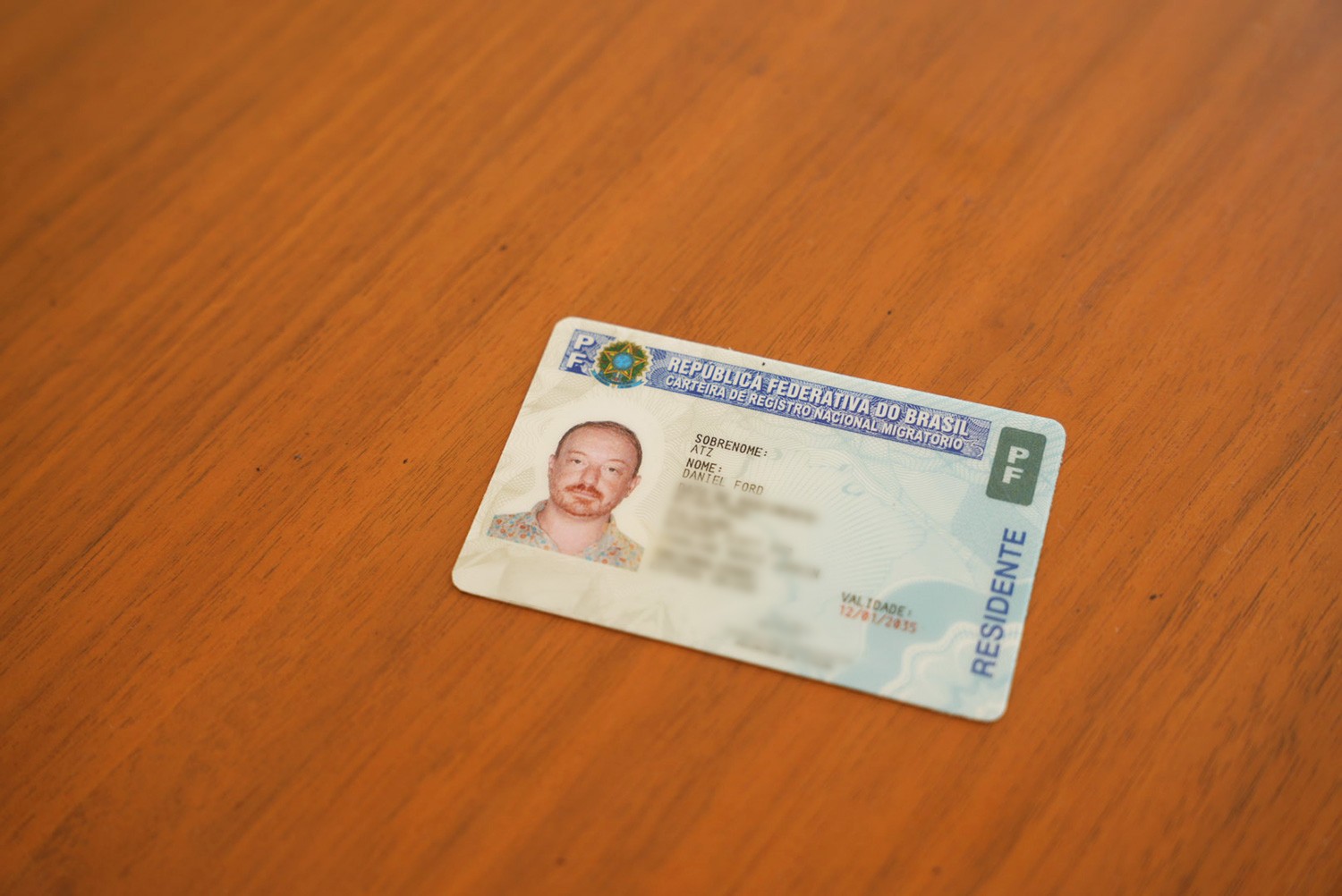
Brazilian-issued documents are recognized more readily than foreign documents throughout South America. Your Brazilian permanent resident card (RNE), CPF (tax ID), CNPJ (corporate registration), bank statements, and criminal background checks all carry inherent credibility in MERCOSUR countries.
When applying for Argentine or Uruguayan residency, you submit:
Brazilian police clearance (instead of FBI checks or multi-country background verifications)
Brazilian proof of address and economic activity
Brazilian business registration showing regional operations
A permanent resident card from a MERCOSUR member state
The administrative burden decreases dramatically. You're leveraging Brazil's institutional standing within the bloc rather than starting documentation from scratch as a foreign national.
3. Business Positioning: Regional Player vs. Foreign Investor
There's an enormous perceptual difference between:
Option A: American investor with no South American presence applies for Argentine residency to establish business operations
Option B: Brazilian-based company (owned by naturalized Brazilian or permanent resident) seeks to expand operations from São Paulo to Buenos Aires
Option A triggers full foreign investment scrutiny, additional reporting requirements, and skepticism about long-term commitment. Option B presents as regional expansion by an established South American entity.
This matters for:
Banking relationships: Opening corporate accounts in Argentina or Uruguay is dramatically easier with existing Brazilian banking history
Real estate transactions: Property purchases by Brazilian residents face fewer restrictions than foreign purchases
Business licensing: Many professional services and sectors have preference for regional over foreign ownership
Government contracts: Public procurement often favors regional companies over purely foreign entities
You're not claiming false identity—you genuinely are a Brazilian resident with regional operations. The optics alone change negotiation dynamics.
4. The Compounding Effect of Regional Presence
Perhaps most importantly, Brazilian permanent residency positions you to build MERCOSUR presence over time in ways that compound:
Years 0-4: Establish Brazilian operations, build business relationships, generate tax history, learn Portuguese/Spanish, develop regional expertise
Years 2-5: Begin exploring expansion to secondary MERCOSUR markets, using your Brazilian base as the anchor credential for applications
Years 4+: Obtain Brazilian citizenship, unlocking full MERCOSUR mobility rights and eliminating remaining barriers
Years 5-10: Operating across multiple MERCOSUR countries with full citizenship rights, established business presence, fluency in regional languages, and deep network of professional relationships
This isn't available to someone entering from outside. They're always approaching as outsiders requesting access. You're building from within.
How Foreign Investors Can Leverage Brazilian PR + MERCOSUR Positioning
Let's make this concrete with strategic playbooks for different investor profiles:
Manufacturing and Distribution Companies
The Opportunity: Use Brazil as a production hub with tariff-free access to 284 million consumers across MERCOSUR, then expand distribution networks into Argentina, Uruguay, and Paraguay as your Brazilian operations mature.
The Playbook:
Establish Brazilian entity and manufacturing facility (qualifies for VITEM IX if it includes innovation/tech components)
Obtain permanent residency and begin production for Brazilian domestic market
Export to MERCOSUR countries tariff-free using Brazilian origin certificates
After establishing track record (2-3 years), seek residency in secondary markets to establish distribution centers
Upon obtaining Brazilian citizenship (year 4+), expand to full regional operations with mobility rights
Why It Works: MERCOSUR's customs union means your Brazilian production facility serves a market 30% larger than just Brazil's 220 million. The tariff elimination alone typically represents 10-35% cost advantage versus importing from outside the bloc.
Professional Services (Consulting, Legal, Accounting, Engineering)
The Opportunity: Brazilian professional licenses and corporate credentials facilitate expansion into Spanish-speaking markets where demand exists but competition from international firms remains limited.
The Playbook:
Establish Brazilian service company and obtain permanent residency
Build client base in Brazil while developing Portuguese fluency
Leverage Brazilian credentials to pitch regional expansion services to local clients with operations in Argentina/Uruguay
Apply for professional recognition in target MERCOSUR countries using simplified procedures
Upon citizenship, freely practice throughout the bloc with full mobility rights
Why It Works: Many multinational firms have presence in São Paulo but ignore secondary MERCOSUR markets. You can capture middle-market clients who need regional expertise but can't justify Big Four pricing.
E-Commerce and Digital Services
The Opportunity: Brazilian incorporation and payment processing infrastructure (PIX, local credit card acceptance) creates credibility for selling throughout Latin America, with MERCOSUR countries representing lowest-friction expansion markets.
The Playbook:
Establish Brazilian e-commerce entity with local banking and payment processing
Launch initially targeting Brazilian market to build reviews, track record, logistics partnerships
Expand to Argentina and Chile using Brazilian entity and tax ID for credibility
Leverage MERCOSUR's digital trade facilitation frameworks and mutual recognition of e-signatures
Scale to full regional operations with localized marketing but centralized fulfillment from Brazil
Why It Works: Latin American consumers trust local companies far more than foreign operators. A .br domain, Brazilian corporate registration, and Portuguese/Spanish language support signals regional commitment versus a pure international player.
Real Estate and Development
The Opportunity: Brazilian real estate markets offer better yields than most developed countries, with MERCOSUR allowing eventual expansion into Argentine, Uruguayan, and Paraguayan property markets using Brazilian track record.
The Playbook:
Acquire Brazilian properties (residential or commercial) and establish residency
Build track record of successful property management and renovation
Form Brazilian real estate development company and establish credibility with local banks
Upon obtaining citizenship or solid track record, expand to Buenos Aires or Montevideo using Brazilian entity as sponsor
Create regional property portfolio with diversification across currencies and markets
Why It Works: Argentine and Uruguayan property markets are more volatile but offer higher returns during recovery periods. Your Brazilian base provides stability while allowing opportunistic expansion.
Commodity Trading and Agriculture
The Opportunity: Brazil is the world's largest exporter of soybeans, coffee, sugar, and orange juice, with MERCOSUR creating integrated agricultural value chains across member states.
The Playbook:
Establish Brazilian trading entity and obtain export licenses
Build relationships with Brazilian producers and MERCOSUR buyers
Leverage MERCOSUR's agricultural integration protocols for cross-border transactions
Expand into Argentine grain markets or Paraguayan beef using Brazilian credentials
Create regional supply chain spanning production, processing, and distribution across multiple countries
Why It Works: MERCOSUR agricultural protocols facilitate cross-border trade in commodities with reduced phytosanitary barriers and mutual recognition of certifications. Brazilian traders have preferential access to these integrated supply chains.
The Unstated Advantage: Economic Diversification in a Multipolar World
There's a strategic element to MERCOSUR membership that goes beyond trade statistics and regulatory frameworks: it represents deliberate non-alignment in an increasingly polarized global order.
MERCOSUR maintains productive relationships with the United States, the European Union, China, Russia, and India simultaneously. The bloc doesn't choose sides in great power competition—it trades with everyone.
This matters more now than at any point in recent history:
When US-China tensions escalate, MERCOSUR countries maintain relationships with both, allowing Brazilian-based companies to access Chinese markets without Washington's scrutiny and American markets without Beijing's retaliation.
When Russia faces sanctions, MERCOSUR nations maintain selective trade relationships that wouldn't be viable for US or EU-based entities, creating opportunities in agricultural commodities and energy markets.
When EU regulations become increasingly restrictive, MERCOSUR offers alternative markets with significant purchasing power but less bureaucratic complexity.
For an American or European investor, establishing Brazilian residency and citizenship provides access to MERCOSUR's deliberately diversified trade policy. You're not choosing between Western and non-Western markets—you're positioning in a region that maintains access to both.
This optionality compounds over time. As global trade fragments into competing blocs, countries and companies with genuine multi-alignment become increasingly valuable. Brazilian citizenship + MERCOSUR positioning creates that multi-alignment.
The Timeline Consideration: Four Years to Full Regional Access
The honest assessment: obtaining full MERCOSUR mobility rights through Brazilian citizenship requires a four-year commitment to maintaining Brazilian permanent residency before naturalization becomes possible.
For some investors, this timeline disqualifies the strategy. They want immediate mobility, passport-by-investment programs, or opportunities requiring minimal physical presence.
For others—particularly those genuinely building South American business presence—the four years represent natural business development:
Year 1: Establishing operations, learning market, building initial client base
Year 2: Expanding domestic Brazilian operations, exploring regional opportunities
Year 3: Solidifying market position, considering geographic expansion
Year 4: Eligible for citizenship; regional expansion becomes strategically logical
The citizenship doesn't drive the timeline—the business development does. Citizenship becomes available precisely when regional expansion makes operational sense.
Compare this to alternatives:
Portugal Golden Visa: Seven years to citizenship (if program survives), minimal MERCOSUR relevance
Caribbean citizenship-by-investment: Immediate passport, zero economic substance or market access
UAE residency: Tax benefits but no citizenship pathway and limited global mobility
Paraguay residency: Faster and cheaper than Brazil, but tiny economy with limited regional influence
Brazilian permanent residency + MERCOSUR positioning offers the rare combination of: legitimate business environment, pathway to valuable citizenship, regional mobility framework, and strategic positioning in a non-aligned bloc.
The four-year investment isn't waiting for papers. It's building genuine regional presence that citizenship eventually recognizes formally.
The Bottom Line for Foreign Investors
Brazil's MERCOSUR membership creates asymmetric advantage for foreign investors willing to play a longer game:
Immediate value (as permanent resident):
Access to Brazil's 220 million consumer market
Regional credibility when expanding to other South American markets
Documentation and credentials that travel throughout the bloc
Positioning as regional player rather than foreign outsider
Business environment that facilitates MERCOSUR trade through customs union
Medium-term value (years 1-4):
Building track record of South American operations
Developing language fluency and cultural understanding
Establishing business relationships that span multiple countries
Creating documentary history that supports citizenship application
Positioning for full mobility rights upon naturalization
Long-term value (citizenship at year 4+):
Full MERCOSUR residence and work rights
Ability to live anywhere in the bloc with simplified procedures
172 countries visa-free travel on Brazilian passport
Access to MERCOSUR's trade agreements and preferential market access
Strategic positioning in a deliberately non-aligned bloc maintaining relationships with all major powers
This isn't for everyone. It requires genuine commitment to building South American presence, tolerance for bureaucracy, willingness to learn Portuguese, and patience with a four-year timeline.
But for investors who understand that the next decade will reward geographic diversification, multi-market presence, and strategic positioning outside traditional Western-dominated blocs, Brazilian residency + MERCOSUR membership represents one of the highest-value opportunities available at accessible entry points.
The window remains open. The VITEM IX program provides clear pathway. The question is whether your investment timeline and risk tolerance align with building genuine regional presence rather than collecting passport options.
StartBrazil specializes in Brazilian VITEM IX applications for entrepreneurs and investors. We help you establish legitimate Brazilian residency that positions you for long-term MERCOSUR opportunity. The four-year citizenship timeline isn't a bug—it's feature that ensures you're building real regional presence worth formalizing.
Sources & Further Reading
MERCOSUR Overview & Statistics
Wikipedia: MERCOSUR - Combined GDP of $5.7 trillion (PPP) in 2023, 5th largest economy globally
Council on Foreign Relations: MERCOSUR Backgrounder - Comprehensive overview of the trade bloc's history and current challenges
AS/COA: What Is MERCOSUR? - 285 million people, combined GDP of nearly $3 trillion
MERCOSUR Official Website - Official information on the Southern Common Market
Global Policy Journal: EU-MERCOSUR Agreement Analysis - Analysis of December 2024 trade agreement covering 718 million people and $22 trillion GDP
Brazilian Passport & Global Mobility
Wikipedia: Visa Requirements for Brazilian Citizens - 169 countries visa-free or visa-on-arrival access (2025)
Henley Passport Index: Brazil Ranking - Ranked 17th globally with 171 visa-free destinations
Global Citizens Solutions: Brazil Passport Visa-Free Countries - Comprehensive list of 164 visa-free destinations
VisaIndex: Brazil Passport Ranking - 171 destinations accessible without prior visa
CitizenX: MERCOSUR Passport Benefits - Analysis of MERCOSUR citizenship advantages
Brazilian Residency & Investment Programs
Ministry of Foreign Affairs: VITEM IX Investment Visa - Official VITEM IX requirements and procedures
BizLatinHub: Brazilian Investor Visa Guide - R$150,000 minimum investment for startups
When American, European, or Australian investors evaluate Brazilian residency, they typically focus on Brazil itself—the economy, the tax regime, the lifestyle. What they miss is the regional positioning that comes with it.
Brazil isn't just a country. It's the anchor economy of South America's most important trade bloc.
What Is MERCOSUR? The Southern Hemisphere's Integration Project
MERCOSUR (Mercado Común del Sur—Southern Common Market) emerged from the Treaty of Asunción in 1991 as Latin America's answer to European integration. The founding members—Argentina, Brazil, Paraguay, and Uruguay—recognized that their collective bargaining power exceeded what any could achieve alone.
The bloc's philosophy mirrors aspects of the European Union but with crucial differences born from Latin American pragmatism. MERCOSUR prioritizes economic integration and practical cooperation over political union. There's no Brussels-style central bureaucracy, no shared currency (though discussions continue), and no attempts to harmonize social policy across vastly different societies.
What exists instead is a customs union with free movement of goods, a residence agreement allowing nationals of member states to live and work across borders, and increasingly integrated regulatory frameworks for everything from professional licensing to product standards.
Current full members: Brazil, Argentina, Paraguay, Uruguay, and Bolivia (accession process underway)
Associated members: Chile, Colombia, Ecuador, Peru—with varying levels of trade integration and participation in specific programs
Total market: 284 million people across five core countries, representing the world's fifth-largest economic bloc with combined GDP of approximately $3.4 trillion
The Three Pillars That Matter for Investors
MERCOSUR operates on three foundational principles that directly affect anyone doing business in the region:
1. Economic Integration A customs union means goods produced in one member state can move freely to others without tariffs. For manufacturers or distributors, this eliminates the traditional cost of exporting within the region. Your Brazilian production facility doesn't "export" to Argentina—it sells domestically within MERCOSUR.
2. Regulatory Harmonization Member states are gradually aligning product standards, professional qualifications, and business regulations. A company registered in Brazil faces fewer barriers when expanding to Uruguay or Paraguay than a foreign company entering from outside the bloc. Your Brazilian credentials carry weight regionally.
3. Citizenship-Based Mobility The MERCOSUR Residence Agreement allows nationals of member states to obtain residence permits in other countries with simplified documentation: passport, birth certificate, criminal background check. After two years of temporary residence, permanent status becomes available.
This last point deserves emphasis because it's often misunderstood: the mobility benefits are citizenship-based, not residence-based. Your Brazilian permanent residency doesn't automatically grant you MERCOSUR mobility rights. Brazilian citizenship does.
This distinction matters for how we think about strategic positioning.
Economic Integration: What It Means in Practice
The customs union framework creates tangible advantages that foreign investors leveraging Brazilian residency can exploit:
Tariff-Free Market Access
Goods meeting MERCOSUR origin requirements move between member states without import duties. For a manufacturer based in Brazil, this means:
Argentina (46 million people): Third-largest economy in South America, strong consumer purchasing power in urban centers
Uruguay (3.4 million people): High per-capita income, sophisticated consumer market
Paraguay (7 million people): Fast-growing economy, business-friendly regulatory environment
Bolivia (12 million people): Resource-rich economy with growing middle class
You're not dealing with separate export markets requiring customs brokers, import licenses, and tariff calculations. You're selling within a unified trade zone.
Regulatory Recognition
Professional licenses and corporate credentials from Brazil carry inherent legitimacy throughout MERCOSUR. This matters for:
Service providers: Brazilian professional certifications (legal, accounting, engineering, medical) have facilitated recognition processes in other member states
Corporate entities: A Brazilian CNPJ (corporate tax ID) signals that you've already met one member state's business registration requirements
Product standards: Items certified for Brazilian market often require minimal additional testing for MERCOSUR markets
The contrast with entering these markets as a pure foreign entity is stark. When you establish business presence in Argentina or Paraguay as a Brazilian-based company, you're presenting as a regional player, not an outsider requiring full due diligence from scratch.
Supply Chain Integration
MERCOSUR's common external tariff (CET) structure means coordinated trade policy toward non-member countries. For companies using Brazilian operations as a regional hub, this creates:
Preferential sourcing arrangements: Materials imported into Brazil for production can incorporate into goods sold throughout MERCOSUR without additional duties
Regional value chains: Ability to source components from Paraguay, manufacture in Brazil, and distribute in Argentina as a single operational flow
Reduced logistics complexity: Fewer customs checkpoints, standardized documentation, and established freight corridors between major cities
Brazil's Mercosul Trade Portal processes over $100 billion annually in intra-bloc trade. The infrastructure—both physical and administrative—exists to support regional business operations at scale.
Trade Agreements Beyond MERCOSUR
As a bloc, MERCOSUR negotiates trade agreements with other regions, multiplying market access:
Preferential trade with Israel, Egypt, and Palestine through bilateral agreements
Negotiations ongoing with the EU for a comprehensive free trade agreement (despite political delays, talks continue)
Expanding relationships with Asian economies, particularly China and India, where MERCOSUR's collective negotiating power exceeds individual member leverage
A Brazilian-based company benefits from these bloc-wide agreements. You're not just accessing Brazil's bilateral trade relationships—you're accessing MERCOSUR's collective framework.
Mobility Benefits: What Brazilian Citizenship Unlocks
Let's be clear about what permanent residency gets you versus what citizenship provides, because this is where marketing often becomes misleading.
As a Brazilian Permanent Resident:
You have the right to live and work in Brazil indefinitely. You can own property, operate businesses, pay into social security, and access healthcare. After four years of permanent residency, you become eligible to apply for Brazilian citizenship.
You do not have automatic rights to live in Argentina, Uruguay, Paraguay, or other MERCOSUR countries. You're still a foreign national—American, European, Australian, whatever your passport says—who happens to hold Brazilian residency.
As a Brazilian Citizen (After Naturalization):
You become a MERCOSUR national with access to the Residence Agreement. This means:
Simplified residence in any member state: Present your Brazilian passport, birth certificate, and criminal background check to obtain a two-year temporary residence permit
Work authorization included: No need for employer sponsorship or labor market tests
Conversion to permanent residence: After two years, temporary status converts to permanent residence in the host country
Equal treatment: Access to social security, healthcare, education on the same basis as nationals of the host country
Family inclusion: Ability to bring immediate family members regardless of their nationality
Additionally, as a Brazilian citizen you receive:
Visa-free access to 172 countries, including most of South America, the EU Schengen zone (90 days), and significant parts of Asia and Africa
MERCOSUR travel freedom: Use your Brazilian passport or even just your national ID card for travel within the bloc
Political rights in Brazil: Voting, eligibility for government positions, full civic participation
Consular protection: Access to Brazilian embassies and consulates worldwide, particularly valuable in regions where your original nationality has limited diplomatic presence
The four-year pathway from permanent residency to citizenship is shorter than most developed countries require (five to ten years is typical), and Brazil allows dual citizenship, so you don't sacrifice your original nationality.
What MERCOSUR Membership Means for Brazilian Permanent Residents (Even Without Citizenship)
Here's where the strategic value becomes more subtle but equally important: even though you don't have formal MERCOSUR mobility rights as a permanent resident, your Brazilian status fundamentally changes how you're perceived and processed throughout the region.
1. Regional Credibility and Reduced Scrutiny
When you apply for residency in Argentina, Uruguay, or Paraguay as an American or European with no South American presence, immigration authorities see a high-risk profile: someone with no regional ties, likely to leave when circumstances change, potentially using residency for tax purposes rather than genuine integration.
When you apply as someone who already holds Brazilian permanent residency, the risk profile inverts:
You've already been vetted by Brazilian federal authorities
You've demonstrated commitment to Latin America by establishing business operations and residency
You speak Portuguese (easily transitioning to Spanish for immigration officers)
You can provide years of Brazilian tax returns, proof of business activity, and documentation of regional integration
Your flight risk is lower—you already have a South American base, so seeking additional regional presence signals expansion rather than opportunism
Does this guarantee approval? No. Immigration decisions remain discretionary. But the practical difference in how applications are evaluated is substantial.
2. Documentation That Travels Regionally
Brazil participates in the Hague Apostille Convention and multiple MERCOSUR administrative cooperation protocols. Practically, this means:
Brazilian-issued documents are recognized more readily than foreign documents throughout South America. Your Brazilian permanent resident card (RNE), CPF (tax ID), CNPJ (corporate registration), bank statements, and criminal background checks all carry inherent credibility in MERCOSUR countries.
When applying for Argentine or Uruguayan residency, you submit:
Brazilian police clearance (instead of FBI checks or multi-country background verifications)
Brazilian proof of address and economic activity
Brazilian business registration showing regional operations
A permanent resident card from a MERCOSUR member state
The administrative burden decreases dramatically. You're leveraging Brazil's institutional standing within the bloc rather than starting documentation from scratch as a foreign national.
3. Business Positioning: Regional Player vs. Foreign Investor
There's an enormous perceptual difference between:
Option A: American investor with no South American presence applies for Argentine residency to establish business operations
Option B: Brazilian-based company (owned by naturalized Brazilian or permanent resident) seeks to expand operations from São Paulo to Buenos Aires
Option A triggers full foreign investment scrutiny, additional reporting requirements, and skepticism about long-term commitment. Option B presents as regional expansion by an established South American entity.
This matters for:
Banking relationships: Opening corporate accounts in Argentina or Uruguay is dramatically easier with existing Brazilian banking history
Real estate transactions: Property purchases by Brazilian residents face fewer restrictions than foreign purchases
Business licensing: Many professional services and sectors have preference for regional over foreign ownership
Government contracts: Public procurement often favors regional companies over purely foreign entities
You're not claiming false identity—you genuinely are a Brazilian resident with regional operations. The optics alone change negotiation dynamics.
4. The Compounding Effect of Regional Presence
Perhaps most importantly, Brazilian permanent residency positions you to build MERCOSUR presence over time in ways that compound:
Years 0-4: Establish Brazilian operations, build business relationships, generate tax history, learn Portuguese/Spanish, develop regional expertise
Years 2-5: Begin exploring expansion to secondary MERCOSUR markets, using your Brazilian base as the anchor credential for applications
Years 4+: Obtain Brazilian citizenship, unlocking full MERCOSUR mobility rights and eliminating remaining barriers
Years 5-10: Operating across multiple MERCOSUR countries with full citizenship rights, established business presence, fluency in regional languages, and deep network of professional relationships
This isn't available to someone entering from outside. They're always approaching as outsiders requesting access. You're building from within.
How Foreign Investors Can Leverage Brazilian PR + MERCOSUR Positioning
Let's make this concrete with strategic playbooks for different investor profiles:
Manufacturing and Distribution Companies
The Opportunity: Use Brazil as a production hub with tariff-free access to 284 million consumers across MERCOSUR, then expand distribution networks into Argentina, Uruguay, and Paraguay as your Brazilian operations mature.
The Playbook:
Establish Brazilian entity and manufacturing facility (qualifies for VITEM IX if it includes innovation/tech components)
Obtain permanent residency and begin production for Brazilian domestic market
Export to MERCOSUR countries tariff-free using Brazilian origin certificates
After establishing track record (2-3 years), seek residency in secondary markets to establish distribution centers
Upon obtaining Brazilian citizenship (year 4+), expand to full regional operations with mobility rights
Why It Works: MERCOSUR's customs union means your Brazilian production facility serves a market 30% larger than just Brazil's 220 million. The tariff elimination alone typically represents 10-35% cost advantage versus importing from outside the bloc.
Professional Services (Consulting, Legal, Accounting, Engineering)
The Opportunity: Brazilian professional licenses and corporate credentials facilitate expansion into Spanish-speaking markets where demand exists but competition from international firms remains limited.
The Playbook:
Establish Brazilian service company and obtain permanent residency
Build client base in Brazil while developing Portuguese fluency
Leverage Brazilian credentials to pitch regional expansion services to local clients with operations in Argentina/Uruguay
Apply for professional recognition in target MERCOSUR countries using simplified procedures
Upon citizenship, freely practice throughout the bloc with full mobility rights
Why It Works: Many multinational firms have presence in São Paulo but ignore secondary MERCOSUR markets. You can capture middle-market clients who need regional expertise but can't justify Big Four pricing.
E-Commerce and Digital Services
The Opportunity: Brazilian incorporation and payment processing infrastructure (PIX, local credit card acceptance) creates credibility for selling throughout Latin America, with MERCOSUR countries representing lowest-friction expansion markets.
The Playbook:
Establish Brazilian e-commerce entity with local banking and payment processing
Launch initially targeting Brazilian market to build reviews, track record, logistics partnerships
Expand to Argentina and Chile using Brazilian entity and tax ID for credibility
Leverage MERCOSUR's digital trade facilitation frameworks and mutual recognition of e-signatures
Scale to full regional operations with localized marketing but centralized fulfillment from Brazil
Why It Works: Latin American consumers trust local companies far more than foreign operators. A .br domain, Brazilian corporate registration, and Portuguese/Spanish language support signals regional commitment versus a pure international player.
Real Estate and Development
The Opportunity: Brazilian real estate markets offer better yields than most developed countries, with MERCOSUR allowing eventual expansion into Argentine, Uruguayan, and Paraguayan property markets using Brazilian track record.
The Playbook:
Acquire Brazilian properties (residential or commercial) and establish residency
Build track record of successful property management and renovation
Form Brazilian real estate development company and establish credibility with local banks
Upon obtaining citizenship or solid track record, expand to Buenos Aires or Montevideo using Brazilian entity as sponsor
Create regional property portfolio with diversification across currencies and markets
Why It Works: Argentine and Uruguayan property markets are more volatile but offer higher returns during recovery periods. Your Brazilian base provides stability while allowing opportunistic expansion.
Commodity Trading and Agriculture
The Opportunity: Brazil is the world's largest exporter of soybeans, coffee, sugar, and orange juice, with MERCOSUR creating integrated agricultural value chains across member states.
The Playbook:
Establish Brazilian trading entity and obtain export licenses
Build relationships with Brazilian producers and MERCOSUR buyers
Leverage MERCOSUR's agricultural integration protocols for cross-border transactions
Expand into Argentine grain markets or Paraguayan beef using Brazilian credentials
Create regional supply chain spanning production, processing, and distribution across multiple countries
Why It Works: MERCOSUR agricultural protocols facilitate cross-border trade in commodities with reduced phytosanitary barriers and mutual recognition of certifications. Brazilian traders have preferential access to these integrated supply chains.
The Unstated Advantage: Economic Diversification in a Multipolar World
There's a strategic element to MERCOSUR membership that goes beyond trade statistics and regulatory frameworks: it represents deliberate non-alignment in an increasingly polarized global order.
MERCOSUR maintains productive relationships with the United States, the European Union, China, Russia, and India simultaneously. The bloc doesn't choose sides in great power competition—it trades with everyone.
This matters more now than at any point in recent history:
When US-China tensions escalate, MERCOSUR countries maintain relationships with both, allowing Brazilian-based companies to access Chinese markets without Washington's scrutiny and American markets without Beijing's retaliation.
When Russia faces sanctions, MERCOSUR nations maintain selective trade relationships that wouldn't be viable for US or EU-based entities, creating opportunities in agricultural commodities and energy markets.
When EU regulations become increasingly restrictive, MERCOSUR offers alternative markets with significant purchasing power but less bureaucratic complexity.
For an American or European investor, establishing Brazilian residency and citizenship provides access to MERCOSUR's deliberately diversified trade policy. You're not choosing between Western and non-Western markets—you're positioning in a region that maintains access to both.
This optionality compounds over time. As global trade fragments into competing blocs, countries and companies with genuine multi-alignment become increasingly valuable. Brazilian citizenship + MERCOSUR positioning creates that multi-alignment.
The Timeline Consideration: Four Years to Full Regional Access
The honest assessment: obtaining full MERCOSUR mobility rights through Brazilian citizenship requires a four-year commitment to maintaining Brazilian permanent residency before naturalization becomes possible.
For some investors, this timeline disqualifies the strategy. They want immediate mobility, passport-by-investment programs, or opportunities requiring minimal physical presence.
For others—particularly those genuinely building South American business presence—the four years represent natural business development:
Year 1: Establishing operations, learning market, building initial client base
Year 2: Expanding domestic Brazilian operations, exploring regional opportunities
Year 3: Solidifying market position, considering geographic expansion
Year 4: Eligible for citizenship; regional expansion becomes strategically logical
The citizenship doesn't drive the timeline—the business development does. Citizenship becomes available precisely when regional expansion makes operational sense.
Compare this to alternatives:
Portugal Golden Visa: Seven years to citizenship (if program survives), minimal MERCOSUR relevance
Caribbean citizenship-by-investment: Immediate passport, zero economic substance or market access
UAE residency: Tax benefits but no citizenship pathway and limited global mobility
Paraguay residency: Faster and cheaper than Brazil, but tiny economy with limited regional influence
Brazilian permanent residency + MERCOSUR positioning offers the rare combination of: legitimate business environment, pathway to valuable citizenship, regional mobility framework, and strategic positioning in a non-aligned bloc.
The four-year investment isn't waiting for papers. It's building genuine regional presence that citizenship eventually recognizes formally.
The Bottom Line for Foreign Investors
Brazil's MERCOSUR membership creates asymmetric advantage for foreign investors willing to play a longer game:
Immediate value (as permanent resident):
Access to Brazil's 220 million consumer market
Regional credibility when expanding to other South American markets
Documentation and credentials that travel throughout the bloc
Positioning as regional player rather than foreign outsider
Business environment that facilitates MERCOSUR trade through customs union
Medium-term value (years 1-4):
Building track record of South American operations
Developing language fluency and cultural understanding
Establishing business relationships that span multiple countries
Creating documentary history that supports citizenship application
Positioning for full mobility rights upon naturalization
Long-term value (citizenship at year 4+):
Full MERCOSUR residence and work rights
Ability to live anywhere in the bloc with simplified procedures
172 countries visa-free travel on Brazilian passport
Access to MERCOSUR's trade agreements and preferential market access
Strategic positioning in a deliberately non-aligned bloc maintaining relationships with all major powers
This isn't for everyone. It requires genuine commitment to building South American presence, tolerance for bureaucracy, willingness to learn Portuguese, and patience with a four-year timeline.
But for investors who understand that the next decade will reward geographic diversification, multi-market presence, and strategic positioning outside traditional Western-dominated blocs, Brazilian residency + MERCOSUR membership represents one of the highest-value opportunities available at accessible entry points.
The window remains open. The VITEM IX program provides clear pathway. The question is whether your investment timeline and risk tolerance align with building genuine regional presence rather than collecting passport options.
StartBrazil specializes in Brazilian VITEM IX applications for entrepreneurs and investors. We help you establish legitimate Brazilian residency that positions you for long-term MERCOSUR opportunity. The four-year citizenship timeline isn't a bug—it's feature that ensures you're building real regional presence worth formalizing.
Sources & Further Reading
MERCOSUR Overview & Statistics
Wikipedia: MERCOSUR - Combined GDP of $5.7 trillion (PPP) in 2023, 5th largest economy globally
Council on Foreign Relations: MERCOSUR Backgrounder - Comprehensive overview of the trade bloc's history and current challenges
AS/COA: What Is MERCOSUR? - 285 million people, combined GDP of nearly $3 trillion
MERCOSUR Official Website - Official information on the Southern Common Market
Global Policy Journal: EU-MERCOSUR Agreement Analysis - Analysis of December 2024 trade agreement covering 718 million people and $22 trillion GDP
Brazilian Passport & Global Mobility
Wikipedia: Visa Requirements for Brazilian Citizens - 169 countries visa-free or visa-on-arrival access (2025)
Henley Passport Index: Brazil Ranking - Ranked 17th globally with 171 visa-free destinations
Global Citizens Solutions: Brazil Passport Visa-Free Countries - Comprehensive list of 164 visa-free destinations
VisaIndex: Brazil Passport Ranking - 171 destinations accessible without prior visa
CitizenX: MERCOSUR Passport Benefits - Analysis of MERCOSUR citizenship advantages
Brazilian Residency & Investment Programs
Ministry of Foreign Affairs: VITEM IX Investment Visa - Official VITEM IX requirements and procedures
BizLatinHub: Brazilian Investor Visa Guide - R$150,000 minimum investment for startups

When American, European, or Australian investors evaluate Brazilian residency, they typically focus on Brazil itself—the economy, the tax regime, the lifestyle. What they miss is the regional positioning that comes with it.
Brazil isn't just a country. It's the anchor economy of South America's most important trade bloc.
What Is MERCOSUR? The Southern Hemisphere's Integration Project
MERCOSUR (Mercado Común del Sur—Southern Common Market) emerged from the Treaty of Asunción in 1991 as Latin America's answer to European integration. The founding members—Argentina, Brazil, Paraguay, and Uruguay—recognized that their collective bargaining power exceeded what any could achieve alone.
The bloc's philosophy mirrors aspects of the European Union but with crucial differences born from Latin American pragmatism. MERCOSUR prioritizes economic integration and practical cooperation over political union. There's no Brussels-style central bureaucracy, no shared currency (though discussions continue), and no attempts to harmonize social policy across vastly different societies.
What exists instead is a customs union with free movement of goods, a residence agreement allowing nationals of member states to live and work across borders, and increasingly integrated regulatory frameworks for everything from professional licensing to product standards.
Current full members: Brazil, Argentina, Paraguay, Uruguay, and Bolivia (accession process underway)
Associated members: Chile, Colombia, Ecuador, Peru—with varying levels of trade integration and participation in specific programs
Total market: 284 million people across five core countries, representing the world's fifth-largest economic bloc with combined GDP of approximately $3.4 trillion
The Three Pillars That Matter for Investors
MERCOSUR operates on three foundational principles that directly affect anyone doing business in the region:
1. Economic Integration A customs union means goods produced in one member state can move freely to others without tariffs. For manufacturers or distributors, this eliminates the traditional cost of exporting within the region. Your Brazilian production facility doesn't "export" to Argentina—it sells domestically within MERCOSUR.
2. Regulatory Harmonization Member states are gradually aligning product standards, professional qualifications, and business regulations. A company registered in Brazil faces fewer barriers when expanding to Uruguay or Paraguay than a foreign company entering from outside the bloc. Your Brazilian credentials carry weight regionally.
3. Citizenship-Based Mobility The MERCOSUR Residence Agreement allows nationals of member states to obtain residence permits in other countries with simplified documentation: passport, birth certificate, criminal background check. After two years of temporary residence, permanent status becomes available.
This last point deserves emphasis because it's often misunderstood: the mobility benefits are citizenship-based, not residence-based. Your Brazilian permanent residency doesn't automatically grant you MERCOSUR mobility rights. Brazilian citizenship does.
This distinction matters for how we think about strategic positioning.
Economic Integration: What It Means in Practice
The customs union framework creates tangible advantages that foreign investors leveraging Brazilian residency can exploit:
Tariff-Free Market Access
Goods meeting MERCOSUR origin requirements move between member states without import duties. For a manufacturer based in Brazil, this means:
Argentina (46 million people): Third-largest economy in South America, strong consumer purchasing power in urban centers
Uruguay (3.4 million people): High per-capita income, sophisticated consumer market
Paraguay (7 million people): Fast-growing economy, business-friendly regulatory environment
Bolivia (12 million people): Resource-rich economy with growing middle class
You're not dealing with separate export markets requiring customs brokers, import licenses, and tariff calculations. You're selling within a unified trade zone.
Regulatory Recognition
Professional licenses and corporate credentials from Brazil carry inherent legitimacy throughout MERCOSUR. This matters for:
Service providers: Brazilian professional certifications (legal, accounting, engineering, medical) have facilitated recognition processes in other member states
Corporate entities: A Brazilian CNPJ (corporate tax ID) signals that you've already met one member state's business registration requirements
Product standards: Items certified for Brazilian market often require minimal additional testing for MERCOSUR markets
The contrast with entering these markets as a pure foreign entity is stark. When you establish business presence in Argentina or Paraguay as a Brazilian-based company, you're presenting as a regional player, not an outsider requiring full due diligence from scratch.
Supply Chain Integration
MERCOSUR's common external tariff (CET) structure means coordinated trade policy toward non-member countries. For companies using Brazilian operations as a regional hub, this creates:
Preferential sourcing arrangements: Materials imported into Brazil for production can incorporate into goods sold throughout MERCOSUR without additional duties
Regional value chains: Ability to source components from Paraguay, manufacture in Brazil, and distribute in Argentina as a single operational flow
Reduced logistics complexity: Fewer customs checkpoints, standardized documentation, and established freight corridors between major cities
Brazil's Mercosul Trade Portal processes over $100 billion annually in intra-bloc trade. The infrastructure—both physical and administrative—exists to support regional business operations at scale.
Trade Agreements Beyond MERCOSUR
As a bloc, MERCOSUR negotiates trade agreements with other regions, multiplying market access:
Preferential trade with Israel, Egypt, and Palestine through bilateral agreements
Negotiations ongoing with the EU for a comprehensive free trade agreement (despite political delays, talks continue)
Expanding relationships with Asian economies, particularly China and India, where MERCOSUR's collective negotiating power exceeds individual member leverage
A Brazilian-based company benefits from these bloc-wide agreements. You're not just accessing Brazil's bilateral trade relationships—you're accessing MERCOSUR's collective framework.
Mobility Benefits: What Brazilian Citizenship Unlocks
Let's be clear about what permanent residency gets you versus what citizenship provides, because this is where marketing often becomes misleading.
As a Brazilian Permanent Resident:
You have the right to live and work in Brazil indefinitely. You can own property, operate businesses, pay into social security, and access healthcare. After four years of permanent residency, you become eligible to apply for Brazilian citizenship.
You do not have automatic rights to live in Argentina, Uruguay, Paraguay, or other MERCOSUR countries. You're still a foreign national—American, European, Australian, whatever your passport says—who happens to hold Brazilian residency.
As a Brazilian Citizen (After Naturalization):
You become a MERCOSUR national with access to the Residence Agreement. This means:
Simplified residence in any member state: Present your Brazilian passport, birth certificate, and criminal background check to obtain a two-year temporary residence permit
Work authorization included: No need for employer sponsorship or labor market tests
Conversion to permanent residence: After two years, temporary status converts to permanent residence in the host country
Equal treatment: Access to social security, healthcare, education on the same basis as nationals of the host country
Family inclusion: Ability to bring immediate family members regardless of their nationality
Additionally, as a Brazilian citizen you receive:
Visa-free access to 172 countries, including most of South America, the EU Schengen zone (90 days), and significant parts of Asia and Africa
MERCOSUR travel freedom: Use your Brazilian passport or even just your national ID card for travel within the bloc
Political rights in Brazil: Voting, eligibility for government positions, full civic participation
Consular protection: Access to Brazilian embassies and consulates worldwide, particularly valuable in regions where your original nationality has limited diplomatic presence
The four-year pathway from permanent residency to citizenship is shorter than most developed countries require (five to ten years is typical), and Brazil allows dual citizenship, so you don't sacrifice your original nationality.
What MERCOSUR Membership Means for Brazilian Permanent Residents (Even Without Citizenship)
Here's where the strategic value becomes more subtle but equally important: even though you don't have formal MERCOSUR mobility rights as a permanent resident, your Brazilian status fundamentally changes how you're perceived and processed throughout the region.
1. Regional Credibility and Reduced Scrutiny
When you apply for residency in Argentina, Uruguay, or Paraguay as an American or European with no South American presence, immigration authorities see a high-risk profile: someone with no regional ties, likely to leave when circumstances change, potentially using residency for tax purposes rather than genuine integration.
When you apply as someone who already holds Brazilian permanent residency, the risk profile inverts:
You've already been vetted by Brazilian federal authorities
You've demonstrated commitment to Latin America by establishing business operations and residency
You speak Portuguese (easily transitioning to Spanish for immigration officers)
You can provide years of Brazilian tax returns, proof of business activity, and documentation of regional integration
Your flight risk is lower—you already have a South American base, so seeking additional regional presence signals expansion rather than opportunism
Does this guarantee approval? No. Immigration decisions remain discretionary. But the practical difference in how applications are evaluated is substantial.
2. Documentation That Travels Regionally
Brazil participates in the Hague Apostille Convention and multiple MERCOSUR administrative cooperation protocols. Practically, this means:
Brazilian-issued documents are recognized more readily than foreign documents throughout South America. Your Brazilian permanent resident card (RNE), CPF (tax ID), CNPJ (corporate registration), bank statements, and criminal background checks all carry inherent credibility in MERCOSUR countries.
When applying for Argentine or Uruguayan residency, you submit:
Brazilian police clearance (instead of FBI checks or multi-country background verifications)
Brazilian proof of address and economic activity
Brazilian business registration showing regional operations
A permanent resident card from a MERCOSUR member state
The administrative burden decreases dramatically. You're leveraging Brazil's institutional standing within the bloc rather than starting documentation from scratch as a foreign national.
3. Business Positioning: Regional Player vs. Foreign Investor
There's an enormous perceptual difference between:
Option A: American investor with no South American presence applies for Argentine residency to establish business operations
Option B: Brazilian-based company (owned by naturalized Brazilian or permanent resident) seeks to expand operations from São Paulo to Buenos Aires
Option A triggers full foreign investment scrutiny, additional reporting requirements, and skepticism about long-term commitment. Option B presents as regional expansion by an established South American entity.
This matters for:
Banking relationships: Opening corporate accounts in Argentina or Uruguay is dramatically easier with existing Brazilian banking history
Real estate transactions: Property purchases by Brazilian residents face fewer restrictions than foreign purchases
Business licensing: Many professional services and sectors have preference for regional over foreign ownership
Government contracts: Public procurement often favors regional companies over purely foreign entities
You're not claiming false identity—you genuinely are a Brazilian resident with regional operations. The optics alone change negotiation dynamics.
4. The Compounding Effect of Regional Presence
Perhaps most importantly, Brazilian permanent residency positions you to build MERCOSUR presence over time in ways that compound:
Years 0-4: Establish Brazilian operations, build business relationships, generate tax history, learn Portuguese/Spanish, develop regional expertise
Years 2-5: Begin exploring expansion to secondary MERCOSUR markets, using your Brazilian base as the anchor credential for applications
Years 4+: Obtain Brazilian citizenship, unlocking full MERCOSUR mobility rights and eliminating remaining barriers
Years 5-10: Operating across multiple MERCOSUR countries with full citizenship rights, established business presence, fluency in regional languages, and deep network of professional relationships
This isn't available to someone entering from outside. They're always approaching as outsiders requesting access. You're building from within.
How Foreign Investors Can Leverage Brazilian PR + MERCOSUR Positioning
Let's make this concrete with strategic playbooks for different investor profiles:
Manufacturing and Distribution Companies
The Opportunity: Use Brazil as a production hub with tariff-free access to 284 million consumers across MERCOSUR, then expand distribution networks into Argentina, Uruguay, and Paraguay as your Brazilian operations mature.
The Playbook:
Establish Brazilian entity and manufacturing facility (qualifies for VITEM IX if it includes innovation/tech components)
Obtain permanent residency and begin production for Brazilian domestic market
Export to MERCOSUR countries tariff-free using Brazilian origin certificates
After establishing track record (2-3 years), seek residency in secondary markets to establish distribution centers
Upon obtaining Brazilian citizenship (year 4+), expand to full regional operations with mobility rights
Why It Works: MERCOSUR's customs union means your Brazilian production facility serves a market 30% larger than just Brazil's 220 million. The tariff elimination alone typically represents 10-35% cost advantage versus importing from outside the bloc.
Professional Services (Consulting, Legal, Accounting, Engineering)
The Opportunity: Brazilian professional licenses and corporate credentials facilitate expansion into Spanish-speaking markets where demand exists but competition from international firms remains limited.
The Playbook:
Establish Brazilian service company and obtain permanent residency
Build client base in Brazil while developing Portuguese fluency
Leverage Brazilian credentials to pitch regional expansion services to local clients with operations in Argentina/Uruguay
Apply for professional recognition in target MERCOSUR countries using simplified procedures
Upon citizenship, freely practice throughout the bloc with full mobility rights
Why It Works: Many multinational firms have presence in São Paulo but ignore secondary MERCOSUR markets. You can capture middle-market clients who need regional expertise but can't justify Big Four pricing.
E-Commerce and Digital Services
The Opportunity: Brazilian incorporation and payment processing infrastructure (PIX, local credit card acceptance) creates credibility for selling throughout Latin America, with MERCOSUR countries representing lowest-friction expansion markets.
The Playbook:
Establish Brazilian e-commerce entity with local banking and payment processing
Launch initially targeting Brazilian market to build reviews, track record, logistics partnerships
Expand to Argentina and Chile using Brazilian entity and tax ID for credibility
Leverage MERCOSUR's digital trade facilitation frameworks and mutual recognition of e-signatures
Scale to full regional operations with localized marketing but centralized fulfillment from Brazil
Why It Works: Latin American consumers trust local companies far more than foreign operators. A .br domain, Brazilian corporate registration, and Portuguese/Spanish language support signals regional commitment versus a pure international player.
Real Estate and Development
The Opportunity: Brazilian real estate markets offer better yields than most developed countries, with MERCOSUR allowing eventual expansion into Argentine, Uruguayan, and Paraguayan property markets using Brazilian track record.
The Playbook:
Acquire Brazilian properties (residential or commercial) and establish residency
Build track record of successful property management and renovation
Form Brazilian real estate development company and establish credibility with local banks
Upon obtaining citizenship or solid track record, expand to Buenos Aires or Montevideo using Brazilian entity as sponsor
Create regional property portfolio with diversification across currencies and markets
Why It Works: Argentine and Uruguayan property markets are more volatile but offer higher returns during recovery periods. Your Brazilian base provides stability while allowing opportunistic expansion.
Commodity Trading and Agriculture
The Opportunity: Brazil is the world's largest exporter of soybeans, coffee, sugar, and orange juice, with MERCOSUR creating integrated agricultural value chains across member states.
The Playbook:
Establish Brazilian trading entity and obtain export licenses
Build relationships with Brazilian producers and MERCOSUR buyers
Leverage MERCOSUR's agricultural integration protocols for cross-border transactions
Expand into Argentine grain markets or Paraguayan beef using Brazilian credentials
Create regional supply chain spanning production, processing, and distribution across multiple countries
Why It Works: MERCOSUR agricultural protocols facilitate cross-border trade in commodities with reduced phytosanitary barriers and mutual recognition of certifications. Brazilian traders have preferential access to these integrated supply chains.
The Unstated Advantage: Economic Diversification in a Multipolar World
There's a strategic element to MERCOSUR membership that goes beyond trade statistics and regulatory frameworks: it represents deliberate non-alignment in an increasingly polarized global order.
MERCOSUR maintains productive relationships with the United States, the European Union, China, Russia, and India simultaneously. The bloc doesn't choose sides in great power competition—it trades with everyone.
This matters more now than at any point in recent history:
When US-China tensions escalate, MERCOSUR countries maintain relationships with both, allowing Brazilian-based companies to access Chinese markets without Washington's scrutiny and American markets without Beijing's retaliation.
When Russia faces sanctions, MERCOSUR nations maintain selective trade relationships that wouldn't be viable for US or EU-based entities, creating opportunities in agricultural commodities and energy markets.
When EU regulations become increasingly restrictive, MERCOSUR offers alternative markets with significant purchasing power but less bureaucratic complexity.
For an American or European investor, establishing Brazilian residency and citizenship provides access to MERCOSUR's deliberately diversified trade policy. You're not choosing between Western and non-Western markets—you're positioning in a region that maintains access to both.
This optionality compounds over time. As global trade fragments into competing blocs, countries and companies with genuine multi-alignment become increasingly valuable. Brazilian citizenship + MERCOSUR positioning creates that multi-alignment.
The Timeline Consideration: Four Years to Full Regional Access
The honest assessment: obtaining full MERCOSUR mobility rights through Brazilian citizenship requires a four-year commitment to maintaining Brazilian permanent residency before naturalization becomes possible.
For some investors, this timeline disqualifies the strategy. They want immediate mobility, passport-by-investment programs, or opportunities requiring minimal physical presence.
For others—particularly those genuinely building South American business presence—the four years represent natural business development:
Year 1: Establishing operations, learning market, building initial client base
Year 2: Expanding domestic Brazilian operations, exploring regional opportunities
Year 3: Solidifying market position, considering geographic expansion
Year 4: Eligible for citizenship; regional expansion becomes strategically logical
The citizenship doesn't drive the timeline—the business development does. Citizenship becomes available precisely when regional expansion makes operational sense.
Compare this to alternatives:
Portugal Golden Visa: Seven years to citizenship (if program survives), minimal MERCOSUR relevance
Caribbean citizenship-by-investment: Immediate passport, zero economic substance or market access
UAE residency: Tax benefits but no citizenship pathway and limited global mobility
Paraguay residency: Faster and cheaper than Brazil, but tiny economy with limited regional influence
Brazilian permanent residency + MERCOSUR positioning offers the rare combination of: legitimate business environment, pathway to valuable citizenship, regional mobility framework, and strategic positioning in a non-aligned bloc.
The four-year investment isn't waiting for papers. It's building genuine regional presence that citizenship eventually recognizes formally.
The Bottom Line for Foreign Investors
Brazil's MERCOSUR membership creates asymmetric advantage for foreign investors willing to play a longer game:
Immediate value (as permanent resident):
Access to Brazil's 220 million consumer market
Regional credibility when expanding to other South American markets
Documentation and credentials that travel throughout the bloc
Positioning as regional player rather than foreign outsider
Business environment that facilitates MERCOSUR trade through customs union
Medium-term value (years 1-4):
Building track record of South American operations
Developing language fluency and cultural understanding
Establishing business relationships that span multiple countries
Creating documentary history that supports citizenship application
Positioning for full mobility rights upon naturalization
Long-term value (citizenship at year 4+):
Full MERCOSUR residence and work rights
Ability to live anywhere in the bloc with simplified procedures
172 countries visa-free travel on Brazilian passport
Access to MERCOSUR's trade agreements and preferential market access
Strategic positioning in a deliberately non-aligned bloc maintaining relationships with all major powers
This isn't for everyone. It requires genuine commitment to building South American presence, tolerance for bureaucracy, willingness to learn Portuguese, and patience with a four-year timeline.
But for investors who understand that the next decade will reward geographic diversification, multi-market presence, and strategic positioning outside traditional Western-dominated blocs, Brazilian residency + MERCOSUR membership represents one of the highest-value opportunities available at accessible entry points.
The window remains open. The VITEM IX program provides clear pathway. The question is whether your investment timeline and risk tolerance align with building genuine regional presence rather than collecting passport options.
StartBrazil specializes in Brazilian VITEM IX applications for entrepreneurs and investors. We help you establish legitimate Brazilian residency that positions you for long-term MERCOSUR opportunity. The four-year citizenship timeline isn't a bug—it's feature that ensures you're building real regional presence worth formalizing.
Sources & Further Reading
MERCOSUR Overview & Statistics
Wikipedia: MERCOSUR - Combined GDP of $5.7 trillion (PPP) in 2023, 5th largest economy globally
Council on Foreign Relations: MERCOSUR Backgrounder - Comprehensive overview of the trade bloc's history and current challenges
AS/COA: What Is MERCOSUR? - 285 million people, combined GDP of nearly $3 trillion
MERCOSUR Official Website - Official information on the Southern Common Market
Global Policy Journal: EU-MERCOSUR Agreement Analysis - Analysis of December 2024 trade agreement covering 718 million people and $22 trillion GDP
Brazilian Passport & Global Mobility
Wikipedia: Visa Requirements for Brazilian Citizens - 169 countries visa-free or visa-on-arrival access (2025)
Henley Passport Index: Brazil Ranking - Ranked 17th globally with 171 visa-free destinations
Global Citizens Solutions: Brazil Passport Visa-Free Countries - Comprehensive list of 164 visa-free destinations
VisaIndex: Brazil Passport Ranking - 171 destinations accessible without prior visa
CitizenX: MERCOSUR Passport Benefits - Analysis of MERCOSUR citizenship advantages
Brazilian Residency & Investment Programs
Ministry of Foreign Affairs: VITEM IX Investment Visa - Official VITEM IX requirements and procedures
BizLatinHub: Brazilian Investor Visa Guide - R$150,000 minimum investment for startups
You might also like…
Start Your Journey
to Brazil Today
Join the growing movement of people securing Brazilian residency. Limited capacity in our inaugural program means early access is essential for priority consideration.