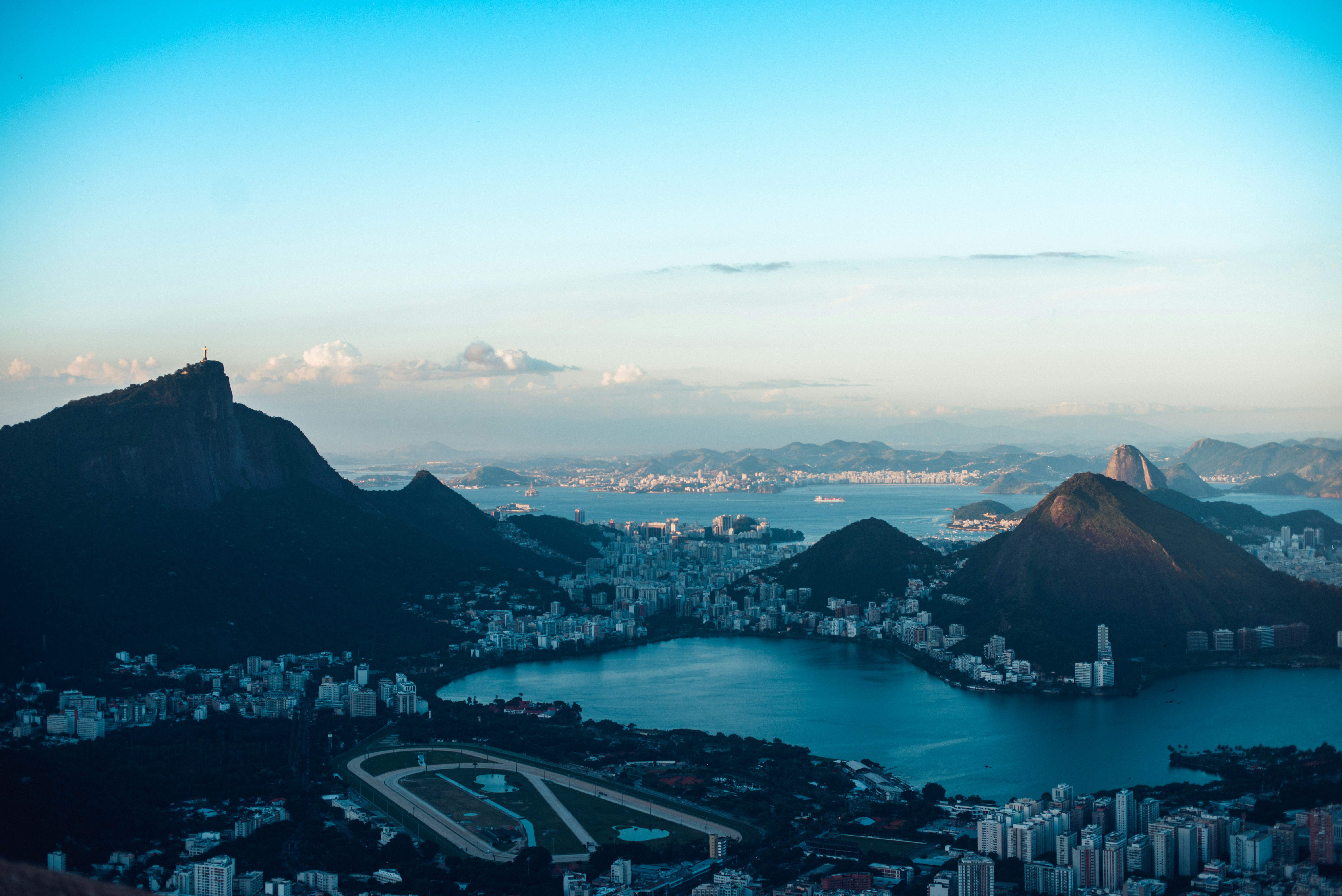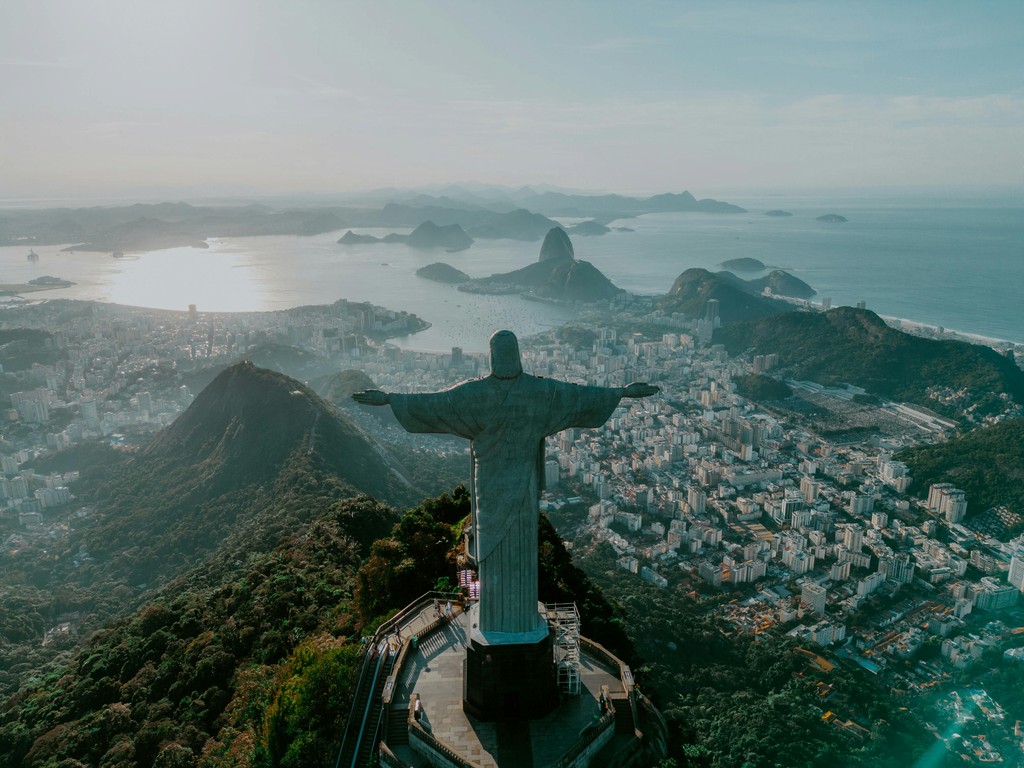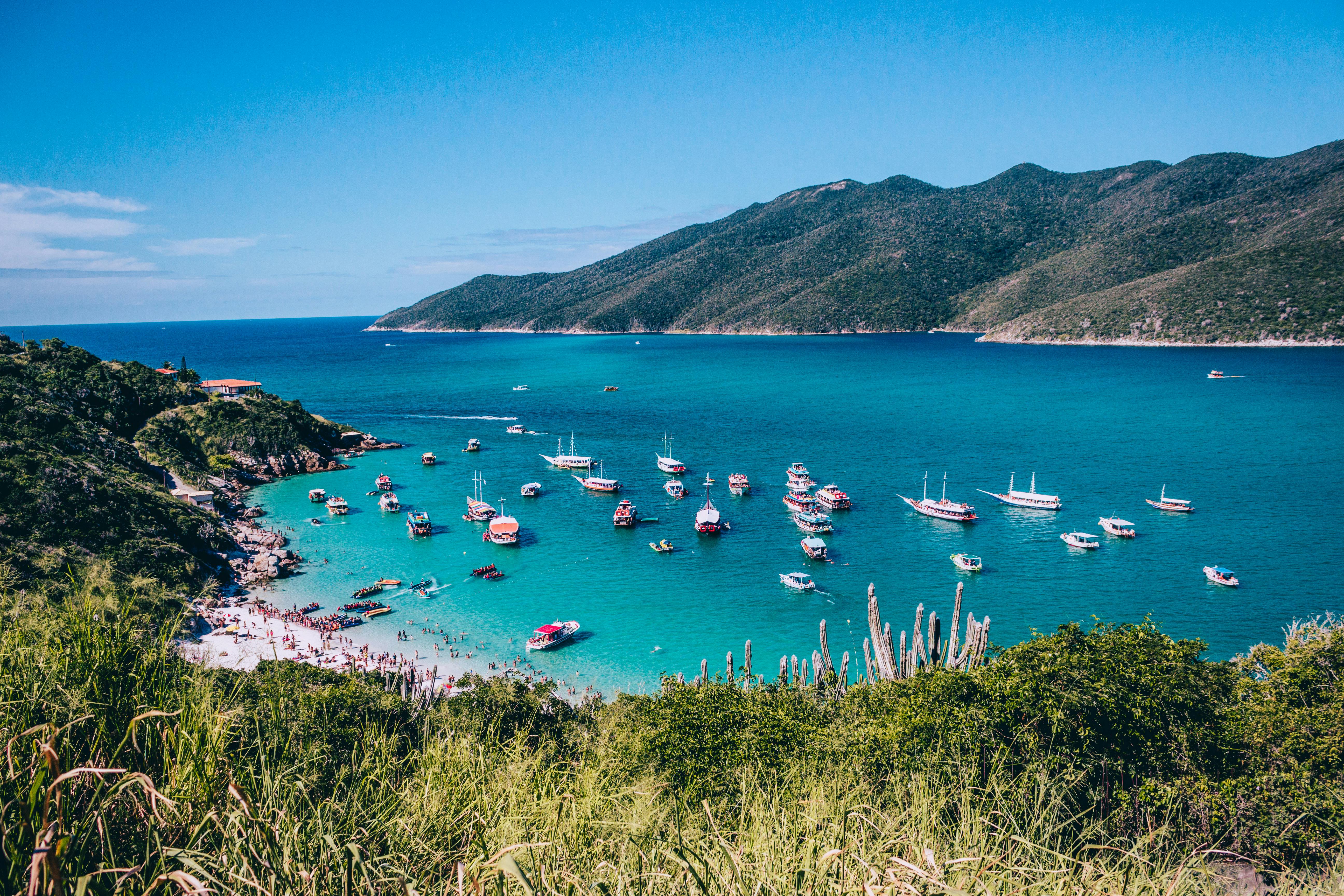
Beautifull Image of southern Brazil Landscape

Dec 11, 2025

Why Brazil, Why Now: The Strategic Case for Southern Hemisphere Residency

The world's geopolitical center of gravity is shifting. For those paying attention, the question is no longer
whether to diversify—but where, and how quickly.

The Moment We're Living In

Every generation faces its defining moment of geopolitical recalibration. For our parents, it was the fall of the Berlin Wall. For their parents, the end of World War II and the redrawing of the global order. We are living through such a moment now—though the changes are less dramatic in their unfolding, they may prove equally profound in their consequences.

The established centers of global power are experiencing stresses that would have seemed inconceivable a decade ago. Not the manufactured anxiety of cable news cycles, but fundamental questions about the durability of institutions, the predictability of policy, and the very concept of civic stability that has underpinned Western prosperity for generations.

In this environment, a certain class of globally-minded individuals—entrepreneurs, investors, professionals who've built their lives on the assumption of stability and rational governance—are asking uncomfortable questions. Questions they never thought they'd need to ask.

If the unthinkable becomes thinkable, where do we go?

The answer, increasingly, lies south.

Why the Southern Hemisphere Matters Now

Geography has always been destiny, but never more so than in an era of fragmented global systems. The Northern Hemisphere contains the world's traditional power centers, its historic economic engines, its accumulated wealth. It also contains its accumulated tensions.

Consider the strategic realities quietly reshaping global migration patterns:

Distance as protection. In an age of hypersonic missiles and rapid force projection, physical distance still matters—but selectively. South America occupies a unique position: close enough to North American markets for business continuity, far enough to sit outside primary conflict zones. The Amazon Basin alone represents a geographic barrier of continental significance.

Resource sovereignty in an age of scarcity. As climate change, water stress, and food security concerns intensify, nations with abundant natural resources and agricultural capacity gain strategic weight. Brazil controls the world's largest rainforest, holds massive freshwater reserves, and produces food for 1.5 billion people—all while maintaining population density low enough to sustain growth without resource strain.

Institutional independence. When traditional alliances fracture under the weight of competing national interests, countries that have maintained strategic autonomy gain optionality. Brazil's participation in BRICS and leadership in MERCOSUR represents not isolation, but diversified partnerships—a buffer against any single bloc's instability.

This isn't speculation. It's the logic driving billions in institutional capital southward, the calculus behind Switzerland's cooling embrace of foreign wealth, and the reason why residency programs in traditionally neutral nations have seen waiting lists extend by years.

The Brazil Advantage: Beyond Basic Diversification

Every wealthy nation offers some path to residency. What makes Brazil fundamentally different—and why this moment matters—comes down to a rare convergence of factors that has never existed before and may not persist.

1. Structural Economic Transformation

Brazil is experiencing what economists call a "structural break"—a fundamental shift in its economic position that creates generational opportunity.

The country's economy has diversified beyond resource extraction into technology, advanced manufacturing, and services. São Paulo now rivals Singapore as a financial hub for emerging markets. The Brazilian startup ecosystem has produced multiple unicorns, with more in the pipeline. PIX, Brazil's instant payment system, has achieved 76% adoption and processes more daily transactions than Venmo, Zelle, and Cash App combined—a case study in financial infrastructure innovation that European and American observers are now studying.

More significantly, Brazil's economy operates with a degree of independence from global financial shocks that would have seemed impossible a decade ago. When Silicon Valley Bank collapsed and sent tremors through American regional banking, Brazilian financial institutions barely registered the impact. This isn't isolation—it's insulation through diversification.

2. The MERCOSUR Multiplier Effect

Obtaining Brazilian residency isn't just about Brazil. It's about accessing an integrated market of 284 million people across five countries with increasingly aligned regulatory frameworks.

MERCOSUR operates on principles similar to the European Union—gradual integration, mutual recognition of standards, increasingly frictionless movement—but without the political baggage that has made European expansion so contentious. It's the EU concept executed with Latin American pragmatism: business integration without attempts at political union.

For permanent residents of Brazil, this means:

  • Simplified residence rights across Argentina, Paraguay, Uruguay, and beyond through bilateral agreements

  • Reduced barriers to doing business across one of the world's largest integrated markets

  • Regional mobility that functions practically, even if it lacks the formal elegance of Schengen

More importantly, MERCOSUR nations are actively expanding partnerships with Asian economies, particularly China and India, creating trade corridors that bypass traditional Western intermediaries. As global trade fragmentes into regional blocs, MERCOSUR represents a bloc with growth momentum rather than defensive consolidation.

3. A Policy Window That Won't Stay Open

Here's what most coverage of Brazilian immigration misses: the current policy environment represents a deliberate strategy by the Brazilian government to attract high-value immigrants, and these windows historically close faster than they open.

The VITEM IX startup visa allows permanent residency from day one with an investment of approximately R$150,000 (USD $27,000 at current rates). Compare this to:

  • Portugal's Golden Visa: Minimum €500,000, now significantly restricted

  • Spain's investment visa: €500,000 minimum for real estate, with limited ROI

  • Malta's program: €1.2 million total investment requirement

  • Caribbean citizenship by investment: $150,000+ with no economic substance

Brazil's program isn't just cheaper—it offers something the others don't: immediate permanent residency in an economy with legitimate growth potential, not a small nation essentially monetizing its passport.

But policy liberalism has a shelf life. Portugal's program was generous until it wasn't. Ireland welcomed investment until it didn't. These windows close when political winds shift, when enough wealthy foreigners arrive to trigger nativist backlash, or when the program's strategic value to the government changes.

Brazil's current policy represents a sweet spot: established enough to be legitimate, new enough to be accessible, structured enough to survive political transitions. The government has clear incentives to maintain these pathways to attract innovation and capital. But "current policy" and "permanent policy" are very different things.

4. Cultural and Lifestyle Asymmetries That Matter

The business case matters. The legal structure matters. But for families making generational decisions, the lived experience of a place matters more than any spreadsheet.

Brazil offers something increasingly rare: a society that hasn't yet succumbed to the atomization, political tribalism, and social fragmentation affecting much of the developed world. Brazilian culture emphasizes social connection, family, and community in ways that feel anachronistic to Americans or Europeans—until you remember that those values were once central to Western society too.

This isn't exoticism. It's recognizing that social capital—the ability to build genuine relationships, to feel embedded in community, to let children play unsupervised in a neighborhood where people know each other—has become a luxury good in much of the developed world. Brazil, for all its challenges, hasn't yet sacrificed these fundamentals to the altar of hyperefficiency.

Consider the practical implications:

Cost of living arbitrage that's sustainable. Not the precarious digital nomad lifestyle, but genuine purchasing power. High-quality private education, modern healthcare, domestic help, beachfront property—all at price points that have disappeared from major Western cities. A professional income that feels middle-class in New York or London translates to genuine affluence in São Paulo or Florianópolis.

Climate migration that's proactive, not reactive. While researchers debate how climate change will affect migration patterns by 2050, Brazil is already positioned as a destination, not a source of climate refugees. Abundant freshwater, diverse climates, agricultural surplus, and minimal exposure to the extreme weather events intensifying elsewhere.

A hedge against multiple failure modes. This is the uncomfortable truth that drives high-net-worth migration: diversification isn't about optimizing for the most likely scenario—it's about protecting against tail risks. Brazilian residency creates optionality against economic instability, political chaos, currency collapse, or civil disruption in your primary residence. Hope for the best, prepare for scenarios you prefer not to contemplate.

The Geopolitical Reconfiguration Nobody's Talking About

Let's address the unspoken calculation driving much of this discussion.

The global order established after World War II—American hegemony, European integration, stable democratic institutions, predictable rule of law—delivered unprecedented prosperity and security for those within its boundaries. That order now shows stress fractures that can no longer be dismissed as temporary.

We're not speaking of anything as dramatic as collapse. But the signals accumulate:

  • The fraying of transatlantic unity over trade, security, and energy policy

  • The emergence of alternative power centers actively building parallel systems

  • The domestic political dysfunction in historically stable democracies

  • The weaponization of economic interdependence, making every trade relationship a potential geopolitical pressure point

  • The simple recognition that conflicts long considered impossible have become subjects of serious strategic planning

Brazil sits outside these tensions. Not isolated—Brazil trades with everyone—but genuinely non-aligned in ways that would have seemed impossible during the Cold War. The country maintains productive relationships with the United States, Europe, China, Russia, and India simultaneously, not because of Machiavellian calculation but because it lacks the historical baggage that forces other nations into permanent camps.

This neutrality has value. Real, practical value. It means:

  • Business relationships that don't require navigating sanctions regimes or political boycotts

  • Banking access that won't disappear overnight due to political developments

  • Travel freedom that doesn't make you a proxy for your government's foreign policy

  • Asset protection in a jurisdiction outside the enforcement reach of Western regulatory regimes, without resorting to traditional "offshore" structures with their attendant reputational costs

More fundamentally, it means building a position in a country whose future trajectory isn't hostage to decisions made in Washington, Brussels, Moscow, or Beijing. Brazilian domestic policy is set by Brazilians, according to Brazilian interests. For families seeking genuine sovereignty over their futures, this independence matters more than any GDP growth projection.

The Infrastructure Moment: Why Timing Matters

Brazil stands at an inflection point in its development trajectory. After decades of underinvestment, the country is experiencing an infrastructure renaissance driven by public-private partnerships, international development finance, and genuine political consensus around modernization.

We're witnessing:

  • Transportation overhauls: New highways, rail expansion, port modernization connecting the interior to export markets

  • Energy transition: Massive renewable energy buildout leveraging Brazil's hydroelectric and solar potential

  • Telecommunications: 5G rollout proceeding faster than most of Europe, fiber optic penetration accelerating

  • Urban development: Smart city initiatives in secondary cities creating livability that rivals coastal capitals at fraction of the cost

This isn't the story sold to investors in the 2000s during the first BRICS hype cycle. This is tangible, capital-intensive development with identifiable projects, committed funding, and actual construction timelines.

For investors, this represents generational opportunity: getting position before infrastructure improvements unlock land values, before improved logistics enable business models that weren't previously viable, before secondary cities become legitimate alternatives to São Paulo and Rio.

The pattern repeats throughout economic history: those who establish position during infrastructure build-outs capture asymmetric returns as the improvements multiply economic activity. Those who arrive after the improvements are complete pay for the privilege.

A Note on What This Isn't

Let's be direct about what Brazilian residency doesn't solve.

This isn't an escape hatch from paying taxes. Brazil taxes worldwide income for residents. If you're running from tax obligations, this is the wrong jurisdiction.

This isn't a easy button for instant wealth preservation. Brazil has its own regulatory complexity, its own bureaucratic challenges, its own requirements for compliance. Anyone selling Brazilian residency as "easy" is either lying or doesn't understand the actual process.

This isn't political alignment with Brazilian domestic policy. The country has its own political debates, its own social tensions, its own governance challenges. You're opting into a different system, not escaping system altogether.

What this is: a legitimate second (or third) position in a large, increasingly sophisticated economy with genuine growth potential, located in a geography that provides strategic distance from Northern Hemisphere tensions, accessible through a program that's historically affordable and structurally sound.

It's a calculated bet that diversification across hemispheres, economic systems, and geopolitical alignments represents prudent risk management in an increasingly multipolar world. Nothing more, nothing less.

The Practical Path Forward: VITEM IX and Beyond

The mechanism for obtaining this position is straightforward: Brazil's VITEM IX startup visa allows qualified entrepreneurs to establish a business with R$150,000 in capital (approximately USD $27,000), obtain immediate permanent residency, and after three years of maintaining the investment, transition to permanent status with no ongoing capital requirements.

The program was designed to attract innovation, encourage job creation, and integrate foreign capital into the Brazilian economy. It succeeds on those metrics: businesses established under VITEM IX are required to operate as legitimate Brazilian entities, hire locally, pay taxes, and contribute to the economy. This isn't a residency-by-investment scheme that parks money in government bonds. It's a business immigration program that expects real economic participation.

The three-year investment period serves multiple purposes:

It demonstrates commitment. Anyone can wire money; maintaining a business operation for three years proves genuine integration into the economy.

It creates accountability. The business must comply with Brazilian commercial law, tax requirements, and labor regulations. This ensures participants aren't just buying access but actually participating in Brazilian society.

It provides flexibility. After three years, the permanent residency continues regardless of whether you maintain the business, sell it, or shut it down. The initial investment creates the foundation; the permanent residency becomes an asset independent of ongoing capital requirements.

What this enables over time:

  • Business establishment in a market of 220 million with expanding regional trade agreements

  • Banking and financial access in a sophisticated financial system increasingly integrated with Asian capital markets

  • Real estate investment in a market with significant upside potential as infrastructure improves

  • Educational opportunities for children in Portuguese, English, and Spanish—true multilingual fluency

  • Path to citizenship after four years of permanent residency, creating genuine multi-citizenship optionality

  • Portfolio diversification into an economy with low correlation to North American and European markets

The Generational Calculation

Here's the uncomfortable question that high-net-worth individuals ask privately but rarely discuss publicly:

What do I owe my children in terms of optionality?

Previous generations could assume that prosperity in America or Europe would extend indefinitely, that citizenship in a Western democracy was the only insurance policy you'd ever need, that learning English was sufficient for global opportunity.

Those assumptions are being tested in real-time.

Smart families are now building multi-jurisdictional positions not because they expect catastrophe, but because they recognize that optionality itself has value. Having a legitimate second residency in a growing economy, in a different hemisphere, subject to different geopolitical pressures, creates freedoms that can't be replicated with cash alone.

Brazilian residency—and eventually citizenship—creates genuine choices:

  • Where to bank, denominated in which currencies

  • Where to own assets, under which legal frameworks

  • Where to educate children, in which cultural contexts

  • Where to live if conditions deteriorate in your primary residence

  • Which passport to use for which purposes as geopolitical tensions evolve

These choices compound over time. A Brazilian passport allows visa-free access to 172 countries, overlapping with but distinct from American and European travel freedoms. More importantly, Brazilian citizenship doesn't require renunciation of other citizenships—you can maintain American, European, or other passports while adding Brazilian nationality.

For children, this translates to native-level Portuguese (the sixth most-spoken language globally), cultural fluency in Latin America, and the ability to position themselves in either Western markets or the Global South as opportunities dictate. It's language, culture, and legal positioning that can't be acquired later—only built during formative years.

Why Global Elites Are Taking This Seriously

The migration of high-net-worth individuals isn't a new phenomenon, but its character has changed fundamentally.

The traditional pattern was simple: people moved from less developed to more developed countries, from lower-income to higher-income jurisdictions, from instability toward stability. The movement was unidirectional.

What's happening now is different: we're seeing strategic repositioning by people who already have access to the world's most developed economies. They're not fleeing poverty—they're hedging prosperity.

This shows up in the data:

  • Wealthy Americans applying for European residency programs reached record highs in 2023-2024

  • Applications for Caribbean citizenship-by-investment programs surged among US and European nationals

  • Inquiries for Brazilian, Uruguayan, and Argentine residency programs from North Americans increased 340% year-over-year

More tellingly, these aren't marginal actors. They're:

  • Entrepreneurs with successful exits looking to diversify physical presence

  • Family offices treating geographic diversification as seriously as asset allocation

  • Tech executives recognizing that geographic arbitrage can be applied to lifestyle, not just labor costs

  • Families with children asking where those children will have maximum opportunity in 2040, not just 2025

The conversation has shifted from "why would anyone leave?" to "what's the right mix of positions?" Brazil increasingly appears in that portfolio not as exotic speculation but as a core holding in the geographic diversification strategy.

The Cultural Renaissance Moment

Beyond economics and geopolitics, Brazil is experiencing something less quantifiable but equally significant: a cultural moment.

The country has long been recognized for its contributions to music, football, and natural beauty. What's new is Brazil's emergence as a significant voice in global conversations about technology, sustainability, innovation, and social development.

Recent Brazilian films have garnered international attention at Cannes and Venice. Brazilian music is fusion global streaming playlists. Brazilian fashion designers are dressing global celebrities. Brazilian architects are winning international competitions.

Most significantly, Brazil is contributing genuinely novel solutions to problems that Western nations struggle with:

  • Financial inclusion: PIX has achieved levels of payment system adoption that the US can only dream of

  • Agricultural sustainability: Brazilian innovations in tropical agriculture are being studied by research institutions globally

  • Social integration: Despite massive inequality, Brazil has avoided the ethnic and racial tribalism fragmenting Western societies

  • Technological adaptation: Brazilian entrepreneurs have become experts at building sophisticated systems optimized for emerging market constraints

This cultural weight matters. It signals that Brazil isn't simply catching up to Western development models—it's developing its own path, contributing solutions, and building institutions that will influence the Global South as it becomes the Global Majority.

For families considering where to build presence, this matters enormously. You're not positioning yourself in a country perpetually in catch-up mode. You're establishing presence in a country finding its voice, defining its path, and building institutions that may prove more resilient than those currently showing strain in the developed world.

COP 30 and the Sustainability Advantage

In 2025, Brazil will host COP 30, bringing global attention to the country's role in environmental governance. This isn't merely symbolic—it represents genuine strategic positioning.

Brazil controls assets that become more valuable as climate concerns intensify:

  • The Amazon rainforest: Critical to global carbon cycles and biodiversity

  • Freshwater reserves: Among the world's largest, in an era of increasing water stress

  • Agricultural capacity: Ability to feed billions while conversations about food security intensify

  • Renewable energy: Already running 85% renewable, with massive expansion potential

As Western nations struggle to meet climate commitments without tanking their economies, Brazil has already built an energy matrix that most developed nations won't achieve for decades. The country's agricultural sector is becoming a laboratory for sustainable intensification—producing more food on the same or less land.

This positions Brazil favorably in any scenario where environmental sustainability becomes economically rather than rhetorically important. Whether through carbon markets, agricultural exports, ecotourism, or simply as a destination for climate migrants seeking stable conditions, Brazil's environmental assets translate to economic value.

For residents, this means living in a country whose natural resources are assets, not liabilities—a country where water doesn't need to be rationed, where energy doesn't require choosing between reliability and sustainability, where food security isn't a concern.

The Window Is Now, But It Won't Stay Open

Here's the final and most important calculation: every privilege extended can be revoked, every program opened can be closed, every policy window has a natural lifespan.

Brazil's current openness to foreign residents represents specific policy choices by specific administrations operating in specific political climates. These can and will change. Maybe not tomorrow, maybe not in five years, but inevitably.

The pattern is universal:

  • Portugal's Golden Visa became legendary for its accessibility—then was sharply restricted

  • Ireland welcomed business immigration—until it didn't

  • New Zealand's entrepreneur programs were generous—then were eliminated entirely

  • Canada's provincial nominee programs were straightforward—then became lottery systems

The countries that maintain open immigration policies longterm are either demographically desperate or economically marginal. Brazil fits neither category. The country wants foreign investment and immigration now, while it's building capacity. Once capacity is built, the incentives change.

Additionally, as more people discover these opportunities, the programs themselves become victims of their own success. Bottlenecks emerge. Processing times extend. Requirements tighten. Eventually, the program becomes a fraction of its former self, or is replaced entirely with something less accessible.

The strategic move is positional: establishing residency while the path remains clear, building ties while integration is encouraged, and making investments while opportunities remain obvious to few rather than apparent to many.

This isn't about rushing into decisions. It's about recognizing that strategic patience and decisive action aren't contradictory—they're complementary. The research, planning, and execution required to obtain Brazilian residency takes months, sometimes years when done properly. By the time a geopolitical event forces your hand, the window has already closed.

Conclusion: The South Rises Differently This Time

The future doesn't announce itself with fanfare. It emerges in the accumulation of small signals, in the quiet repositioning of capital, in the decisions made by people who understand that optionality itself has value.

Brazilian residency isn't a panacea. It won't solve every problem or hedge every risk. What it offers is something increasingly rare: a legitimate position in a large, growing economy, in a stable region, with genuine cultural richness, accessible through a program that's affordable, transparent, and legally sound.

The question isn't whether Brazil will become the next global superpower—it won't, and doesn't need to be. The question is whether having a position in the Southern Hemisphere's largest economy, in a country with abundant resources and strategic autonomy, represents prudent diversification in an increasingly multipolar world.

For a growing cohort of globally-minded families, that question has been answered. Not with panic or fear, but with the clear-eyed recognition that the world is changing, that old assumptions don't hold, and that building positions across geographies, economies, and legal systems is simply the rational response to living in a more complex, more uncertain, more multipolar world.

Brazil isn't an escape. It's a strategic addition to a global life.

The window is open. For now.

StartBrazil helps entrepreneurs and investors navigate Brazil's VITEM IX startup visa program, from initial feasibility assessment through business establishment and residency acquisition. We don't make the case for whether Brazil fits your strategy—we execute the plan once you've decided it does.


Sources & Further Reading

Ministry of Foreign Affairs: VITEM IX Investment Visa - Official requirements and procedures

The world's geopolitical center of gravity is shifting. For those paying attention, the question is no longer
whether to diversify—but where, and how quickly.

The Moment We're Living In

Every generation faces its defining moment of geopolitical recalibration. For our parents, it was the fall of the Berlin Wall. For their parents, the end of World War II and the redrawing of the global order. We are living through such a moment now—though the changes are less dramatic in their unfolding, they may prove equally profound in their consequences.

The established centers of global power are experiencing stresses that would have seemed inconceivable a decade ago. Not the manufactured anxiety of cable news cycles, but fundamental questions about the durability of institutions, the predictability of policy, and the very concept of civic stability that has underpinned Western prosperity for generations.

In this environment, a certain class of globally-minded individuals—entrepreneurs, investors, professionals who've built their lives on the assumption of stability and rational governance—are asking uncomfortable questions. Questions they never thought they'd need to ask.

If the unthinkable becomes thinkable, where do we go?

The answer, increasingly, lies south.

Why the Southern Hemisphere Matters Now

Geography has always been destiny, but never more so than in an era of fragmented global systems. The Northern Hemisphere contains the world's traditional power centers, its historic economic engines, its accumulated wealth. It also contains its accumulated tensions.

Consider the strategic realities quietly reshaping global migration patterns:

Distance as protection. In an age of hypersonic missiles and rapid force projection, physical distance still matters—but selectively. South America occupies a unique position: close enough to North American markets for business continuity, far enough to sit outside primary conflict zones. The Amazon Basin alone represents a geographic barrier of continental significance.

Resource sovereignty in an age of scarcity. As climate change, water stress, and food security concerns intensify, nations with abundant natural resources and agricultural capacity gain strategic weight. Brazil controls the world's largest rainforest, holds massive freshwater reserves, and produces food for 1.5 billion people—all while maintaining population density low enough to sustain growth without resource strain.

Institutional independence. When traditional alliances fracture under the weight of competing national interests, countries that have maintained strategic autonomy gain optionality. Brazil's participation in BRICS and leadership in MERCOSUR represents not isolation, but diversified partnerships—a buffer against any single bloc's instability.

This isn't speculation. It's the logic driving billions in institutional capital southward, the calculus behind Switzerland's cooling embrace of foreign wealth, and the reason why residency programs in traditionally neutral nations have seen waiting lists extend by years.

The Brazil Advantage: Beyond Basic Diversification

Every wealthy nation offers some path to residency. What makes Brazil fundamentally different—and why this moment matters—comes down to a rare convergence of factors that has never existed before and may not persist.

1. Structural Economic Transformation

Brazil is experiencing what economists call a "structural break"—a fundamental shift in its economic position that creates generational opportunity.

The country's economy has diversified beyond resource extraction into technology, advanced manufacturing, and services. São Paulo now rivals Singapore as a financial hub for emerging markets. The Brazilian startup ecosystem has produced multiple unicorns, with more in the pipeline. PIX, Brazil's instant payment system, has achieved 76% adoption and processes more daily transactions than Venmo, Zelle, and Cash App combined—a case study in financial infrastructure innovation that European and American observers are now studying.

More significantly, Brazil's economy operates with a degree of independence from global financial shocks that would have seemed impossible a decade ago. When Silicon Valley Bank collapsed and sent tremors through American regional banking, Brazilian financial institutions barely registered the impact. This isn't isolation—it's insulation through diversification.

2. The MERCOSUR Multiplier Effect

Obtaining Brazilian residency isn't just about Brazil. It's about accessing an integrated market of 284 million people across five countries with increasingly aligned regulatory frameworks.

MERCOSUR operates on principles similar to the European Union—gradual integration, mutual recognition of standards, increasingly frictionless movement—but without the political baggage that has made European expansion so contentious. It's the EU concept executed with Latin American pragmatism: business integration without attempts at political union.

For permanent residents of Brazil, this means:

  • Simplified residence rights across Argentina, Paraguay, Uruguay, and beyond through bilateral agreements

  • Reduced barriers to doing business across one of the world's largest integrated markets

  • Regional mobility that functions practically, even if it lacks the formal elegance of Schengen

More importantly, MERCOSUR nations are actively expanding partnerships with Asian economies, particularly China and India, creating trade corridors that bypass traditional Western intermediaries. As global trade fragmentes into regional blocs, MERCOSUR represents a bloc with growth momentum rather than defensive consolidation.

3. A Policy Window That Won't Stay Open

Here's what most coverage of Brazilian immigration misses: the current policy environment represents a deliberate strategy by the Brazilian government to attract high-value immigrants, and these windows historically close faster than they open.

The VITEM IX startup visa allows permanent residency from day one with an investment of approximately R$150,000 (USD $27,000 at current rates). Compare this to:

  • Portugal's Golden Visa: Minimum €500,000, now significantly restricted

  • Spain's investment visa: €500,000 minimum for real estate, with limited ROI

  • Malta's program: €1.2 million total investment requirement

  • Caribbean citizenship by investment: $150,000+ with no economic substance

Brazil's program isn't just cheaper—it offers something the others don't: immediate permanent residency in an economy with legitimate growth potential, not a small nation essentially monetizing its passport.

But policy liberalism has a shelf life. Portugal's program was generous until it wasn't. Ireland welcomed investment until it didn't. These windows close when political winds shift, when enough wealthy foreigners arrive to trigger nativist backlash, or when the program's strategic value to the government changes.

Brazil's current policy represents a sweet spot: established enough to be legitimate, new enough to be accessible, structured enough to survive political transitions. The government has clear incentives to maintain these pathways to attract innovation and capital. But "current policy" and "permanent policy" are very different things.

4. Cultural and Lifestyle Asymmetries That Matter

The business case matters. The legal structure matters. But for families making generational decisions, the lived experience of a place matters more than any spreadsheet.

Brazil offers something increasingly rare: a society that hasn't yet succumbed to the atomization, political tribalism, and social fragmentation affecting much of the developed world. Brazilian culture emphasizes social connection, family, and community in ways that feel anachronistic to Americans or Europeans—until you remember that those values were once central to Western society too.

This isn't exoticism. It's recognizing that social capital—the ability to build genuine relationships, to feel embedded in community, to let children play unsupervised in a neighborhood where people know each other—has become a luxury good in much of the developed world. Brazil, for all its challenges, hasn't yet sacrificed these fundamentals to the altar of hyperefficiency.

Consider the practical implications:

Cost of living arbitrage that's sustainable. Not the precarious digital nomad lifestyle, but genuine purchasing power. High-quality private education, modern healthcare, domestic help, beachfront property—all at price points that have disappeared from major Western cities. A professional income that feels middle-class in New York or London translates to genuine affluence in São Paulo or Florianópolis.

Climate migration that's proactive, not reactive. While researchers debate how climate change will affect migration patterns by 2050, Brazil is already positioned as a destination, not a source of climate refugees. Abundant freshwater, diverse climates, agricultural surplus, and minimal exposure to the extreme weather events intensifying elsewhere.

A hedge against multiple failure modes. This is the uncomfortable truth that drives high-net-worth migration: diversification isn't about optimizing for the most likely scenario—it's about protecting against tail risks. Brazilian residency creates optionality against economic instability, political chaos, currency collapse, or civil disruption in your primary residence. Hope for the best, prepare for scenarios you prefer not to contemplate.

The Geopolitical Reconfiguration Nobody's Talking About

Let's address the unspoken calculation driving much of this discussion.

The global order established after World War II—American hegemony, European integration, stable democratic institutions, predictable rule of law—delivered unprecedented prosperity and security for those within its boundaries. That order now shows stress fractures that can no longer be dismissed as temporary.

We're not speaking of anything as dramatic as collapse. But the signals accumulate:

  • The fraying of transatlantic unity over trade, security, and energy policy

  • The emergence of alternative power centers actively building parallel systems

  • The domestic political dysfunction in historically stable democracies

  • The weaponization of economic interdependence, making every trade relationship a potential geopolitical pressure point

  • The simple recognition that conflicts long considered impossible have become subjects of serious strategic planning

Brazil sits outside these tensions. Not isolated—Brazil trades with everyone—but genuinely non-aligned in ways that would have seemed impossible during the Cold War. The country maintains productive relationships with the United States, Europe, China, Russia, and India simultaneously, not because of Machiavellian calculation but because it lacks the historical baggage that forces other nations into permanent camps.

This neutrality has value. Real, practical value. It means:

  • Business relationships that don't require navigating sanctions regimes or political boycotts

  • Banking access that won't disappear overnight due to political developments

  • Travel freedom that doesn't make you a proxy for your government's foreign policy

  • Asset protection in a jurisdiction outside the enforcement reach of Western regulatory regimes, without resorting to traditional "offshore" structures with their attendant reputational costs

More fundamentally, it means building a position in a country whose future trajectory isn't hostage to decisions made in Washington, Brussels, Moscow, or Beijing. Brazilian domestic policy is set by Brazilians, according to Brazilian interests. For families seeking genuine sovereignty over their futures, this independence matters more than any GDP growth projection.

The Infrastructure Moment: Why Timing Matters

Brazil stands at an inflection point in its development trajectory. After decades of underinvestment, the country is experiencing an infrastructure renaissance driven by public-private partnerships, international development finance, and genuine political consensus around modernization.

We're witnessing:

  • Transportation overhauls: New highways, rail expansion, port modernization connecting the interior to export markets

  • Energy transition: Massive renewable energy buildout leveraging Brazil's hydroelectric and solar potential

  • Telecommunications: 5G rollout proceeding faster than most of Europe, fiber optic penetration accelerating

  • Urban development: Smart city initiatives in secondary cities creating livability that rivals coastal capitals at fraction of the cost

This isn't the story sold to investors in the 2000s during the first BRICS hype cycle. This is tangible, capital-intensive development with identifiable projects, committed funding, and actual construction timelines.

For investors, this represents generational opportunity: getting position before infrastructure improvements unlock land values, before improved logistics enable business models that weren't previously viable, before secondary cities become legitimate alternatives to São Paulo and Rio.

The pattern repeats throughout economic history: those who establish position during infrastructure build-outs capture asymmetric returns as the improvements multiply economic activity. Those who arrive after the improvements are complete pay for the privilege.

A Note on What This Isn't

Let's be direct about what Brazilian residency doesn't solve.

This isn't an escape hatch from paying taxes. Brazil taxes worldwide income for residents. If you're running from tax obligations, this is the wrong jurisdiction.

This isn't a easy button for instant wealth preservation. Brazil has its own regulatory complexity, its own bureaucratic challenges, its own requirements for compliance. Anyone selling Brazilian residency as "easy" is either lying or doesn't understand the actual process.

This isn't political alignment with Brazilian domestic policy. The country has its own political debates, its own social tensions, its own governance challenges. You're opting into a different system, not escaping system altogether.

What this is: a legitimate second (or third) position in a large, increasingly sophisticated economy with genuine growth potential, located in a geography that provides strategic distance from Northern Hemisphere tensions, accessible through a program that's historically affordable and structurally sound.

It's a calculated bet that diversification across hemispheres, economic systems, and geopolitical alignments represents prudent risk management in an increasingly multipolar world. Nothing more, nothing less.

The Practical Path Forward: VITEM IX and Beyond

The mechanism for obtaining this position is straightforward: Brazil's VITEM IX startup visa allows qualified entrepreneurs to establish a business with R$150,000 in capital (approximately USD $27,000), obtain immediate permanent residency, and after three years of maintaining the investment, transition to permanent status with no ongoing capital requirements.

The program was designed to attract innovation, encourage job creation, and integrate foreign capital into the Brazilian economy. It succeeds on those metrics: businesses established under VITEM IX are required to operate as legitimate Brazilian entities, hire locally, pay taxes, and contribute to the economy. This isn't a residency-by-investment scheme that parks money in government bonds. It's a business immigration program that expects real economic participation.

The three-year investment period serves multiple purposes:

It demonstrates commitment. Anyone can wire money; maintaining a business operation for three years proves genuine integration into the economy.

It creates accountability. The business must comply with Brazilian commercial law, tax requirements, and labor regulations. This ensures participants aren't just buying access but actually participating in Brazilian society.

It provides flexibility. After three years, the permanent residency continues regardless of whether you maintain the business, sell it, or shut it down. The initial investment creates the foundation; the permanent residency becomes an asset independent of ongoing capital requirements.

What this enables over time:

  • Business establishment in a market of 220 million with expanding regional trade agreements

  • Banking and financial access in a sophisticated financial system increasingly integrated with Asian capital markets

  • Real estate investment in a market with significant upside potential as infrastructure improves

  • Educational opportunities for children in Portuguese, English, and Spanish—true multilingual fluency

  • Path to citizenship after four years of permanent residency, creating genuine multi-citizenship optionality

  • Portfolio diversification into an economy with low correlation to North American and European markets

The Generational Calculation

Here's the uncomfortable question that high-net-worth individuals ask privately but rarely discuss publicly:

What do I owe my children in terms of optionality?

Previous generations could assume that prosperity in America or Europe would extend indefinitely, that citizenship in a Western democracy was the only insurance policy you'd ever need, that learning English was sufficient for global opportunity.

Those assumptions are being tested in real-time.

Smart families are now building multi-jurisdictional positions not because they expect catastrophe, but because they recognize that optionality itself has value. Having a legitimate second residency in a growing economy, in a different hemisphere, subject to different geopolitical pressures, creates freedoms that can't be replicated with cash alone.

Brazilian residency—and eventually citizenship—creates genuine choices:

  • Where to bank, denominated in which currencies

  • Where to own assets, under which legal frameworks

  • Where to educate children, in which cultural contexts

  • Where to live if conditions deteriorate in your primary residence

  • Which passport to use for which purposes as geopolitical tensions evolve

These choices compound over time. A Brazilian passport allows visa-free access to 172 countries, overlapping with but distinct from American and European travel freedoms. More importantly, Brazilian citizenship doesn't require renunciation of other citizenships—you can maintain American, European, or other passports while adding Brazilian nationality.

For children, this translates to native-level Portuguese (the sixth most-spoken language globally), cultural fluency in Latin America, and the ability to position themselves in either Western markets or the Global South as opportunities dictate. It's language, culture, and legal positioning that can't be acquired later—only built during formative years.

Why Global Elites Are Taking This Seriously

The migration of high-net-worth individuals isn't a new phenomenon, but its character has changed fundamentally.

The traditional pattern was simple: people moved from less developed to more developed countries, from lower-income to higher-income jurisdictions, from instability toward stability. The movement was unidirectional.

What's happening now is different: we're seeing strategic repositioning by people who already have access to the world's most developed economies. They're not fleeing poverty—they're hedging prosperity.

This shows up in the data:

  • Wealthy Americans applying for European residency programs reached record highs in 2023-2024

  • Applications for Caribbean citizenship-by-investment programs surged among US and European nationals

  • Inquiries for Brazilian, Uruguayan, and Argentine residency programs from North Americans increased 340% year-over-year

More tellingly, these aren't marginal actors. They're:

  • Entrepreneurs with successful exits looking to diversify physical presence

  • Family offices treating geographic diversification as seriously as asset allocation

  • Tech executives recognizing that geographic arbitrage can be applied to lifestyle, not just labor costs

  • Families with children asking where those children will have maximum opportunity in 2040, not just 2025

The conversation has shifted from "why would anyone leave?" to "what's the right mix of positions?" Brazil increasingly appears in that portfolio not as exotic speculation but as a core holding in the geographic diversification strategy.

The Cultural Renaissance Moment

Beyond economics and geopolitics, Brazil is experiencing something less quantifiable but equally significant: a cultural moment.

The country has long been recognized for its contributions to music, football, and natural beauty. What's new is Brazil's emergence as a significant voice in global conversations about technology, sustainability, innovation, and social development.

Recent Brazilian films have garnered international attention at Cannes and Venice. Brazilian music is fusion global streaming playlists. Brazilian fashion designers are dressing global celebrities. Brazilian architects are winning international competitions.

Most significantly, Brazil is contributing genuinely novel solutions to problems that Western nations struggle with:

  • Financial inclusion: PIX has achieved levels of payment system adoption that the US can only dream of

  • Agricultural sustainability: Brazilian innovations in tropical agriculture are being studied by research institutions globally

  • Social integration: Despite massive inequality, Brazil has avoided the ethnic and racial tribalism fragmenting Western societies

  • Technological adaptation: Brazilian entrepreneurs have become experts at building sophisticated systems optimized for emerging market constraints

This cultural weight matters. It signals that Brazil isn't simply catching up to Western development models—it's developing its own path, contributing solutions, and building institutions that will influence the Global South as it becomes the Global Majority.

For families considering where to build presence, this matters enormously. You're not positioning yourself in a country perpetually in catch-up mode. You're establishing presence in a country finding its voice, defining its path, and building institutions that may prove more resilient than those currently showing strain in the developed world.

COP 30 and the Sustainability Advantage

In 2025, Brazil will host COP 30, bringing global attention to the country's role in environmental governance. This isn't merely symbolic—it represents genuine strategic positioning.

Brazil controls assets that become more valuable as climate concerns intensify:

  • The Amazon rainforest: Critical to global carbon cycles and biodiversity

  • Freshwater reserves: Among the world's largest, in an era of increasing water stress

  • Agricultural capacity: Ability to feed billions while conversations about food security intensify

  • Renewable energy: Already running 85% renewable, with massive expansion potential

As Western nations struggle to meet climate commitments without tanking their economies, Brazil has already built an energy matrix that most developed nations won't achieve for decades. The country's agricultural sector is becoming a laboratory for sustainable intensification—producing more food on the same or less land.

This positions Brazil favorably in any scenario where environmental sustainability becomes economically rather than rhetorically important. Whether through carbon markets, agricultural exports, ecotourism, or simply as a destination for climate migrants seeking stable conditions, Brazil's environmental assets translate to economic value.

For residents, this means living in a country whose natural resources are assets, not liabilities—a country where water doesn't need to be rationed, where energy doesn't require choosing between reliability and sustainability, where food security isn't a concern.

The Window Is Now, But It Won't Stay Open

Here's the final and most important calculation: every privilege extended can be revoked, every program opened can be closed, every policy window has a natural lifespan.

Brazil's current openness to foreign residents represents specific policy choices by specific administrations operating in specific political climates. These can and will change. Maybe not tomorrow, maybe not in five years, but inevitably.

The pattern is universal:

  • Portugal's Golden Visa became legendary for its accessibility—then was sharply restricted

  • Ireland welcomed business immigration—until it didn't

  • New Zealand's entrepreneur programs were generous—then were eliminated entirely

  • Canada's provincial nominee programs were straightforward—then became lottery systems

The countries that maintain open immigration policies longterm are either demographically desperate or economically marginal. Brazil fits neither category. The country wants foreign investment and immigration now, while it's building capacity. Once capacity is built, the incentives change.

Additionally, as more people discover these opportunities, the programs themselves become victims of their own success. Bottlenecks emerge. Processing times extend. Requirements tighten. Eventually, the program becomes a fraction of its former self, or is replaced entirely with something less accessible.

The strategic move is positional: establishing residency while the path remains clear, building ties while integration is encouraged, and making investments while opportunities remain obvious to few rather than apparent to many.

This isn't about rushing into decisions. It's about recognizing that strategic patience and decisive action aren't contradictory—they're complementary. The research, planning, and execution required to obtain Brazilian residency takes months, sometimes years when done properly. By the time a geopolitical event forces your hand, the window has already closed.

Conclusion: The South Rises Differently This Time

The future doesn't announce itself with fanfare. It emerges in the accumulation of small signals, in the quiet repositioning of capital, in the decisions made by people who understand that optionality itself has value.

Brazilian residency isn't a panacea. It won't solve every problem or hedge every risk. What it offers is something increasingly rare: a legitimate position in a large, growing economy, in a stable region, with genuine cultural richness, accessible through a program that's affordable, transparent, and legally sound.

The question isn't whether Brazil will become the next global superpower—it won't, and doesn't need to be. The question is whether having a position in the Southern Hemisphere's largest economy, in a country with abundant resources and strategic autonomy, represents prudent diversification in an increasingly multipolar world.

For a growing cohort of globally-minded families, that question has been answered. Not with panic or fear, but with the clear-eyed recognition that the world is changing, that old assumptions don't hold, and that building positions across geographies, economies, and legal systems is simply the rational response to living in a more complex, more uncertain, more multipolar world.

Brazil isn't an escape. It's a strategic addition to a global life.

The window is open. For now.

StartBrazil helps entrepreneurs and investors navigate Brazil's VITEM IX startup visa program, from initial feasibility assessment through business establishment and residency acquisition. We don't make the case for whether Brazil fits your strategy—we execute the plan once you've decided it does.


Sources & Further Reading

Ministry of Foreign Affairs: VITEM IX Investment Visa - Official requirements and procedures

The world's geopolitical center of gravity is shifting. For those paying attention, the question is no longer
whether to diversify—but where, and how quickly.

The Moment We're Living In

Every generation faces its defining moment of geopolitical recalibration. For our parents, it was the fall of the Berlin Wall. For their parents, the end of World War II and the redrawing of the global order. We are living through such a moment now—though the changes are less dramatic in their unfolding, they may prove equally profound in their consequences.

The established centers of global power are experiencing stresses that would have seemed inconceivable a decade ago. Not the manufactured anxiety of cable news cycles, but fundamental questions about the durability of institutions, the predictability of policy, and the very concept of civic stability that has underpinned Western prosperity for generations.

In this environment, a certain class of globally-minded individuals—entrepreneurs, investors, professionals who've built their lives on the assumption of stability and rational governance—are asking uncomfortable questions. Questions they never thought they'd need to ask.

If the unthinkable becomes thinkable, where do we go?

The answer, increasingly, lies south.

Why the Southern Hemisphere Matters Now

Geography has always been destiny, but never more so than in an era of fragmented global systems. The Northern Hemisphere contains the world's traditional power centers, its historic economic engines, its accumulated wealth. It also contains its accumulated tensions.

Consider the strategic realities quietly reshaping global migration patterns:

Distance as protection. In an age of hypersonic missiles and rapid force projection, physical distance still matters—but selectively. South America occupies a unique position: close enough to North American markets for business continuity, far enough to sit outside primary conflict zones. The Amazon Basin alone represents a geographic barrier of continental significance.

Resource sovereignty in an age of scarcity. As climate change, water stress, and food security concerns intensify, nations with abundant natural resources and agricultural capacity gain strategic weight. Brazil controls the world's largest rainforest, holds massive freshwater reserves, and produces food for 1.5 billion people—all while maintaining population density low enough to sustain growth without resource strain.

Institutional independence. When traditional alliances fracture under the weight of competing national interests, countries that have maintained strategic autonomy gain optionality. Brazil's participation in BRICS and leadership in MERCOSUR represents not isolation, but diversified partnerships—a buffer against any single bloc's instability.

This isn't speculation. It's the logic driving billions in institutional capital southward, the calculus behind Switzerland's cooling embrace of foreign wealth, and the reason why residency programs in traditionally neutral nations have seen waiting lists extend by years.

The Brazil Advantage: Beyond Basic Diversification

Every wealthy nation offers some path to residency. What makes Brazil fundamentally different—and why this moment matters—comes down to a rare convergence of factors that has never existed before and may not persist.

1. Structural Economic Transformation

Brazil is experiencing what economists call a "structural break"—a fundamental shift in its economic position that creates generational opportunity.

The country's economy has diversified beyond resource extraction into technology, advanced manufacturing, and services. São Paulo now rivals Singapore as a financial hub for emerging markets. The Brazilian startup ecosystem has produced multiple unicorns, with more in the pipeline. PIX, Brazil's instant payment system, has achieved 76% adoption and processes more daily transactions than Venmo, Zelle, and Cash App combined—a case study in financial infrastructure innovation that European and American observers are now studying.

More significantly, Brazil's economy operates with a degree of independence from global financial shocks that would have seemed impossible a decade ago. When Silicon Valley Bank collapsed and sent tremors through American regional banking, Brazilian financial institutions barely registered the impact. This isn't isolation—it's insulation through diversification.

2. The MERCOSUR Multiplier Effect

Obtaining Brazilian residency isn't just about Brazil. It's about accessing an integrated market of 284 million people across five countries with increasingly aligned regulatory frameworks.

MERCOSUR operates on principles similar to the European Union—gradual integration, mutual recognition of standards, increasingly frictionless movement—but without the political baggage that has made European expansion so contentious. It's the EU concept executed with Latin American pragmatism: business integration without attempts at political union.

For permanent residents of Brazil, this means:

  • Simplified residence rights across Argentina, Paraguay, Uruguay, and beyond through bilateral agreements

  • Reduced barriers to doing business across one of the world's largest integrated markets

  • Regional mobility that functions practically, even if it lacks the formal elegance of Schengen

More importantly, MERCOSUR nations are actively expanding partnerships with Asian economies, particularly China and India, creating trade corridors that bypass traditional Western intermediaries. As global trade fragmentes into regional blocs, MERCOSUR represents a bloc with growth momentum rather than defensive consolidation.

3. A Policy Window That Won't Stay Open

Here's what most coverage of Brazilian immigration misses: the current policy environment represents a deliberate strategy by the Brazilian government to attract high-value immigrants, and these windows historically close faster than they open.

The VITEM IX startup visa allows permanent residency from day one with an investment of approximately R$150,000 (USD $27,000 at current rates). Compare this to:

  • Portugal's Golden Visa: Minimum €500,000, now significantly restricted

  • Spain's investment visa: €500,000 minimum for real estate, with limited ROI

  • Malta's program: €1.2 million total investment requirement

  • Caribbean citizenship by investment: $150,000+ with no economic substance

Brazil's program isn't just cheaper—it offers something the others don't: immediate permanent residency in an economy with legitimate growth potential, not a small nation essentially monetizing its passport.

But policy liberalism has a shelf life. Portugal's program was generous until it wasn't. Ireland welcomed investment until it didn't. These windows close when political winds shift, when enough wealthy foreigners arrive to trigger nativist backlash, or when the program's strategic value to the government changes.

Brazil's current policy represents a sweet spot: established enough to be legitimate, new enough to be accessible, structured enough to survive political transitions. The government has clear incentives to maintain these pathways to attract innovation and capital. But "current policy" and "permanent policy" are very different things.

4. Cultural and Lifestyle Asymmetries That Matter

The business case matters. The legal structure matters. But for families making generational decisions, the lived experience of a place matters more than any spreadsheet.

Brazil offers something increasingly rare: a society that hasn't yet succumbed to the atomization, political tribalism, and social fragmentation affecting much of the developed world. Brazilian culture emphasizes social connection, family, and community in ways that feel anachronistic to Americans or Europeans—until you remember that those values were once central to Western society too.

This isn't exoticism. It's recognizing that social capital—the ability to build genuine relationships, to feel embedded in community, to let children play unsupervised in a neighborhood where people know each other—has become a luxury good in much of the developed world. Brazil, for all its challenges, hasn't yet sacrificed these fundamentals to the altar of hyperefficiency.

Consider the practical implications:

Cost of living arbitrage that's sustainable. Not the precarious digital nomad lifestyle, but genuine purchasing power. High-quality private education, modern healthcare, domestic help, beachfront property—all at price points that have disappeared from major Western cities. A professional income that feels middle-class in New York or London translates to genuine affluence in São Paulo or Florianópolis.

Climate migration that's proactive, not reactive. While researchers debate how climate change will affect migration patterns by 2050, Brazil is already positioned as a destination, not a source of climate refugees. Abundant freshwater, diverse climates, agricultural surplus, and minimal exposure to the extreme weather events intensifying elsewhere.

A hedge against multiple failure modes. This is the uncomfortable truth that drives high-net-worth migration: diversification isn't about optimizing for the most likely scenario—it's about protecting against tail risks. Brazilian residency creates optionality against economic instability, political chaos, currency collapse, or civil disruption in your primary residence. Hope for the best, prepare for scenarios you prefer not to contemplate.

The Geopolitical Reconfiguration Nobody's Talking About

Let's address the unspoken calculation driving much of this discussion.

The global order established after World War II—American hegemony, European integration, stable democratic institutions, predictable rule of law—delivered unprecedented prosperity and security for those within its boundaries. That order now shows stress fractures that can no longer be dismissed as temporary.

We're not speaking of anything as dramatic as collapse. But the signals accumulate:

  • The fraying of transatlantic unity over trade, security, and energy policy

  • The emergence of alternative power centers actively building parallel systems

  • The domestic political dysfunction in historically stable democracies

  • The weaponization of economic interdependence, making every trade relationship a potential geopolitical pressure point

  • The simple recognition that conflicts long considered impossible have become subjects of serious strategic planning

Brazil sits outside these tensions. Not isolated—Brazil trades with everyone—but genuinely non-aligned in ways that would have seemed impossible during the Cold War. The country maintains productive relationships with the United States, Europe, China, Russia, and India simultaneously, not because of Machiavellian calculation but because it lacks the historical baggage that forces other nations into permanent camps.

This neutrality has value. Real, practical value. It means:

  • Business relationships that don't require navigating sanctions regimes or political boycotts

  • Banking access that won't disappear overnight due to political developments

  • Travel freedom that doesn't make you a proxy for your government's foreign policy

  • Asset protection in a jurisdiction outside the enforcement reach of Western regulatory regimes, without resorting to traditional "offshore" structures with their attendant reputational costs

More fundamentally, it means building a position in a country whose future trajectory isn't hostage to decisions made in Washington, Brussels, Moscow, or Beijing. Brazilian domestic policy is set by Brazilians, according to Brazilian interests. For families seeking genuine sovereignty over their futures, this independence matters more than any GDP growth projection.

The Infrastructure Moment: Why Timing Matters

Brazil stands at an inflection point in its development trajectory. After decades of underinvestment, the country is experiencing an infrastructure renaissance driven by public-private partnerships, international development finance, and genuine political consensus around modernization.

We're witnessing:

  • Transportation overhauls: New highways, rail expansion, port modernization connecting the interior to export markets

  • Energy transition: Massive renewable energy buildout leveraging Brazil's hydroelectric and solar potential

  • Telecommunications: 5G rollout proceeding faster than most of Europe, fiber optic penetration accelerating

  • Urban development: Smart city initiatives in secondary cities creating livability that rivals coastal capitals at fraction of the cost

This isn't the story sold to investors in the 2000s during the first BRICS hype cycle. This is tangible, capital-intensive development with identifiable projects, committed funding, and actual construction timelines.

For investors, this represents generational opportunity: getting position before infrastructure improvements unlock land values, before improved logistics enable business models that weren't previously viable, before secondary cities become legitimate alternatives to São Paulo and Rio.

The pattern repeats throughout economic history: those who establish position during infrastructure build-outs capture asymmetric returns as the improvements multiply economic activity. Those who arrive after the improvements are complete pay for the privilege.

A Note on What This Isn't

Let's be direct about what Brazilian residency doesn't solve.

This isn't an escape hatch from paying taxes. Brazil taxes worldwide income for residents. If you're running from tax obligations, this is the wrong jurisdiction.

This isn't a easy button for instant wealth preservation. Brazil has its own regulatory complexity, its own bureaucratic challenges, its own requirements for compliance. Anyone selling Brazilian residency as "easy" is either lying or doesn't understand the actual process.

This isn't political alignment with Brazilian domestic policy. The country has its own political debates, its own social tensions, its own governance challenges. You're opting into a different system, not escaping system altogether.

What this is: a legitimate second (or third) position in a large, increasingly sophisticated economy with genuine growth potential, located in a geography that provides strategic distance from Northern Hemisphere tensions, accessible through a program that's historically affordable and structurally sound.

It's a calculated bet that diversification across hemispheres, economic systems, and geopolitical alignments represents prudent risk management in an increasingly multipolar world. Nothing more, nothing less.

The Practical Path Forward: VITEM IX and Beyond

The mechanism for obtaining this position is straightforward: Brazil's VITEM IX startup visa allows qualified entrepreneurs to establish a business with R$150,000 in capital (approximately USD $27,000), obtain immediate permanent residency, and after three years of maintaining the investment, transition to permanent status with no ongoing capital requirements.

The program was designed to attract innovation, encourage job creation, and integrate foreign capital into the Brazilian economy. It succeeds on those metrics: businesses established under VITEM IX are required to operate as legitimate Brazilian entities, hire locally, pay taxes, and contribute to the economy. This isn't a residency-by-investment scheme that parks money in government bonds. It's a business immigration program that expects real economic participation.

The three-year investment period serves multiple purposes:

It demonstrates commitment. Anyone can wire money; maintaining a business operation for three years proves genuine integration into the economy.

It creates accountability. The business must comply with Brazilian commercial law, tax requirements, and labor regulations. This ensures participants aren't just buying access but actually participating in Brazilian society.

It provides flexibility. After three years, the permanent residency continues regardless of whether you maintain the business, sell it, or shut it down. The initial investment creates the foundation; the permanent residency becomes an asset independent of ongoing capital requirements.

What this enables over time:

  • Business establishment in a market of 220 million with expanding regional trade agreements

  • Banking and financial access in a sophisticated financial system increasingly integrated with Asian capital markets

  • Real estate investment in a market with significant upside potential as infrastructure improves

  • Educational opportunities for children in Portuguese, English, and Spanish—true multilingual fluency

  • Path to citizenship after four years of permanent residency, creating genuine multi-citizenship optionality

  • Portfolio diversification into an economy with low correlation to North American and European markets

The Generational Calculation

Here's the uncomfortable question that high-net-worth individuals ask privately but rarely discuss publicly:

What do I owe my children in terms of optionality?

Previous generations could assume that prosperity in America or Europe would extend indefinitely, that citizenship in a Western democracy was the only insurance policy you'd ever need, that learning English was sufficient for global opportunity.

Those assumptions are being tested in real-time.

Smart families are now building multi-jurisdictional positions not because they expect catastrophe, but because they recognize that optionality itself has value. Having a legitimate second residency in a growing economy, in a different hemisphere, subject to different geopolitical pressures, creates freedoms that can't be replicated with cash alone.

Brazilian residency—and eventually citizenship—creates genuine choices:

  • Where to bank, denominated in which currencies

  • Where to own assets, under which legal frameworks

  • Where to educate children, in which cultural contexts

  • Where to live if conditions deteriorate in your primary residence

  • Which passport to use for which purposes as geopolitical tensions evolve

These choices compound over time. A Brazilian passport allows visa-free access to 172 countries, overlapping with but distinct from American and European travel freedoms. More importantly, Brazilian citizenship doesn't require renunciation of other citizenships—you can maintain American, European, or other passports while adding Brazilian nationality.

For children, this translates to native-level Portuguese (the sixth most-spoken language globally), cultural fluency in Latin America, and the ability to position themselves in either Western markets or the Global South as opportunities dictate. It's language, culture, and legal positioning that can't be acquired later—only built during formative years.

Why Global Elites Are Taking This Seriously

The migration of high-net-worth individuals isn't a new phenomenon, but its character has changed fundamentally.

The traditional pattern was simple: people moved from less developed to more developed countries, from lower-income to higher-income jurisdictions, from instability toward stability. The movement was unidirectional.

What's happening now is different: we're seeing strategic repositioning by people who already have access to the world's most developed economies. They're not fleeing poverty—they're hedging prosperity.

This shows up in the data:

  • Wealthy Americans applying for European residency programs reached record highs in 2023-2024

  • Applications for Caribbean citizenship-by-investment programs surged among US and European nationals

  • Inquiries for Brazilian, Uruguayan, and Argentine residency programs from North Americans increased 340% year-over-year

More tellingly, these aren't marginal actors. They're:

  • Entrepreneurs with successful exits looking to diversify physical presence

  • Family offices treating geographic diversification as seriously as asset allocation

  • Tech executives recognizing that geographic arbitrage can be applied to lifestyle, not just labor costs

  • Families with children asking where those children will have maximum opportunity in 2040, not just 2025

The conversation has shifted from "why would anyone leave?" to "what's the right mix of positions?" Brazil increasingly appears in that portfolio not as exotic speculation but as a core holding in the geographic diversification strategy.

The Cultural Renaissance Moment

Beyond economics and geopolitics, Brazil is experiencing something less quantifiable but equally significant: a cultural moment.

The country has long been recognized for its contributions to music, football, and natural beauty. What's new is Brazil's emergence as a significant voice in global conversations about technology, sustainability, innovation, and social development.

Recent Brazilian films have garnered international attention at Cannes and Venice. Brazilian music is fusion global streaming playlists. Brazilian fashion designers are dressing global celebrities. Brazilian architects are winning international competitions.

Most significantly, Brazil is contributing genuinely novel solutions to problems that Western nations struggle with:

  • Financial inclusion: PIX has achieved levels of payment system adoption that the US can only dream of

  • Agricultural sustainability: Brazilian innovations in tropical agriculture are being studied by research institutions globally

  • Social integration: Despite massive inequality, Brazil has avoided the ethnic and racial tribalism fragmenting Western societies

  • Technological adaptation: Brazilian entrepreneurs have become experts at building sophisticated systems optimized for emerging market constraints

This cultural weight matters. It signals that Brazil isn't simply catching up to Western development models—it's developing its own path, contributing solutions, and building institutions that will influence the Global South as it becomes the Global Majority.

For families considering where to build presence, this matters enormously. You're not positioning yourself in a country perpetually in catch-up mode. You're establishing presence in a country finding its voice, defining its path, and building institutions that may prove more resilient than those currently showing strain in the developed world.

COP 30 and the Sustainability Advantage

In 2025, Brazil will host COP 30, bringing global attention to the country's role in environmental governance. This isn't merely symbolic—it represents genuine strategic positioning.

Brazil controls assets that become more valuable as climate concerns intensify:

  • The Amazon rainforest: Critical to global carbon cycles and biodiversity

  • Freshwater reserves: Among the world's largest, in an era of increasing water stress

  • Agricultural capacity: Ability to feed billions while conversations about food security intensify

  • Renewable energy: Already running 85% renewable, with massive expansion potential

As Western nations struggle to meet climate commitments without tanking their economies, Brazil has already built an energy matrix that most developed nations won't achieve for decades. The country's agricultural sector is becoming a laboratory for sustainable intensification—producing more food on the same or less land.

This positions Brazil favorably in any scenario where environmental sustainability becomes economically rather than rhetorically important. Whether through carbon markets, agricultural exports, ecotourism, or simply as a destination for climate migrants seeking stable conditions, Brazil's environmental assets translate to economic value.

For residents, this means living in a country whose natural resources are assets, not liabilities—a country where water doesn't need to be rationed, where energy doesn't require choosing between reliability and sustainability, where food security isn't a concern.

The Window Is Now, But It Won't Stay Open

Here's the final and most important calculation: every privilege extended can be revoked, every program opened can be closed, every policy window has a natural lifespan.

Brazil's current openness to foreign residents represents specific policy choices by specific administrations operating in specific political climates. These can and will change. Maybe not tomorrow, maybe not in five years, but inevitably.

The pattern is universal:

  • Portugal's Golden Visa became legendary for its accessibility—then was sharply restricted

  • Ireland welcomed business immigration—until it didn't

  • New Zealand's entrepreneur programs were generous—then were eliminated entirely

  • Canada's provincial nominee programs were straightforward—then became lottery systems

The countries that maintain open immigration policies longterm are either demographically desperate or economically marginal. Brazil fits neither category. The country wants foreign investment and immigration now, while it's building capacity. Once capacity is built, the incentives change.

Additionally, as more people discover these opportunities, the programs themselves become victims of their own success. Bottlenecks emerge. Processing times extend. Requirements tighten. Eventually, the program becomes a fraction of its former self, or is replaced entirely with something less accessible.

The strategic move is positional: establishing residency while the path remains clear, building ties while integration is encouraged, and making investments while opportunities remain obvious to few rather than apparent to many.

This isn't about rushing into decisions. It's about recognizing that strategic patience and decisive action aren't contradictory—they're complementary. The research, planning, and execution required to obtain Brazilian residency takes months, sometimes years when done properly. By the time a geopolitical event forces your hand, the window has already closed.

Conclusion: The South Rises Differently This Time

The future doesn't announce itself with fanfare. It emerges in the accumulation of small signals, in the quiet repositioning of capital, in the decisions made by people who understand that optionality itself has value.

Brazilian residency isn't a panacea. It won't solve every problem or hedge every risk. What it offers is something increasingly rare: a legitimate position in a large, growing economy, in a stable region, with genuine cultural richness, accessible through a program that's affordable, transparent, and legally sound.

The question isn't whether Brazil will become the next global superpower—it won't, and doesn't need to be. The question is whether having a position in the Southern Hemisphere's largest economy, in a country with abundant resources and strategic autonomy, represents prudent diversification in an increasingly multipolar world.

For a growing cohort of globally-minded families, that question has been answered. Not with panic or fear, but with the clear-eyed recognition that the world is changing, that old assumptions don't hold, and that building positions across geographies, economies, and legal systems is simply the rational response to living in a more complex, more uncertain, more multipolar world.

Brazil isn't an escape. It's a strategic addition to a global life.

The window is open. For now.

StartBrazil helps entrepreneurs and investors navigate Brazil's VITEM IX startup visa program, from initial feasibility assessment through business establishment and residency acquisition. We don't make the case for whether Brazil fits your strategy—we execute the plan once you've decided it does.


Sources & Further Reading

Ministry of Foreign Affairs: VITEM IX Investment Visa - Official requirements and procedures

You might also like…

Start Your Journey
to Brazil Today

Join the growing movement of people securing Brazilian residency. Limited capacity in our inaugural program means early access is essential for priority consideration.

Rio de Janeiro Eagle eye picture
Brazilian people working for a startup, using a laptop in a coffee shop
Rio de Janeiro beach, with multiple surfboards on the picture
Cristo Rei from Rio de Janeiro

Secure Your
Path to Brazil

Connecting entrepreneurs with Brazilian opportunities through VITEM IX investor visa program. Your gateway to permanent residency in Latin America's most innovative ecosystem.

Headquarters

Connaissance Solutions LLC

500 7th Ave, Flr 8
New York, NY 10018

United States

email

info@startbrazil.com

phone number

+1 (646) 466-5058

Start Brazil Logo - White

Secure Your
Path to Brazil

Connecting entrepreneurs with Brazilian opportunities through VITEM IX investor visa program. Your gateway to permanent residency in Latin America's most innovative ecosystem.

Headquarters

Connaissance Solutions LLC

500 7th Ave, Flr 8
New York, NY 10018

United States

email

info@startbrazil.com

phone number

+1 (646) 466-5058

Start Brazil Logo - White

Secure Your Path to Brazil

Connecting entrepreneurs with Brazilian opportunities through VITEM IX investor visa program. Your gateway to permanent residency in Latin America's most innovative ecosystem.

Headquarters

Connaissance Solutions LLC

500 7th Ave, Flr 8
New York, NY 10018

United States

email

info@startbrazil.com

phone number

+1 (646) 466-5058

Start Brazil Logo - White