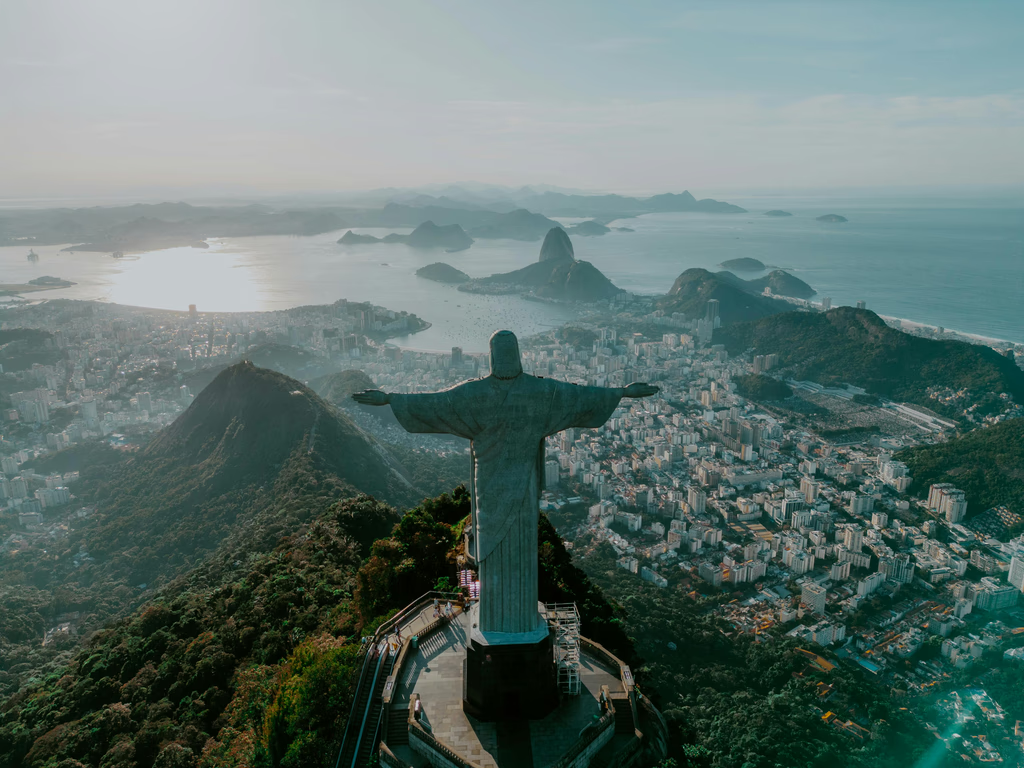
The Southern Hemisphere Opportunity
Why Brazil? Why Now?
For decades, the default assumption held: build your life in the U.S. or Europe, and you were positioned at the center of stability and opportunity. That worked for a long time. It feels less certain now.
Risk today is rarely one event. Supply chains, regional conflicts, political polarization and economic fragmentation now overlap. More people are looking again at where they live, and at how much of their life sits inside one country.
213
Million people
#
5
Largest country on earth by area
#
8
Largest economy on earth (PPP)
$
29
K
To start a business and get permanent residency

The Big Picture
Structural
Distance, Real Scale
Brazil offers something increasingly rare: distance without disconnection. It sits outside the primary geopolitical pressure corridors, yet remains deeply integrated into global markets through trade, commodities, and a large internal economy.
At the same time, it operates within a democratic and institutional framework that is imperfect and has held its independence. With its scale, resource base and regional influence, Brazil is positioned to operate alongside the world rather than react to it.
Brazil 101
Forget What You Think
You Know
Most people's image of Brazil stops at Carnival and the Amazon. That's like judging the US by Times Square and the Grand Canyon. Here's the Brazil you probably haven't heard about: a modern, industrialized economy bigger than the UK, France, or Italy.
$
5.1
T
GDP(PPP), in trillions of dollars
7
th
Most populous country on Earth
85
%
Renewable energy, mostly hydroelectric. The US is at 21%.
800
M
People worldwide fed by Brazilian agriculture
A Country That's Quietly
Leapfrogging
Brazil isn't copying any foreign playbook, it's building its own. And in some areas, it's ahead.
PIX: The Payment System That Puts Venmo to Shame
In 2020, Brazil launched PIX: a free, instant payment system built by the central bank using QR codes. Within four years, 76% of the population was using it - both for purchases at stores and transferring money by phone. Many countries are now studying it as a model.
Digital Infrastructure Built for Scale
São Paulo has become Brazil's Silicon Valley. The country has produced dozens of unicorns. The country is mobile-first and are early adopters when it comes to AI.
Energy Ingenuity, By Design
Brazil's nature and position in the world give it unique advantages for energy generation, including hydroelectric power, sugarcane ethanol biofuel available at every gas station, and major offshore oil reserves.
What Life in Brazil
Actually Feels Like
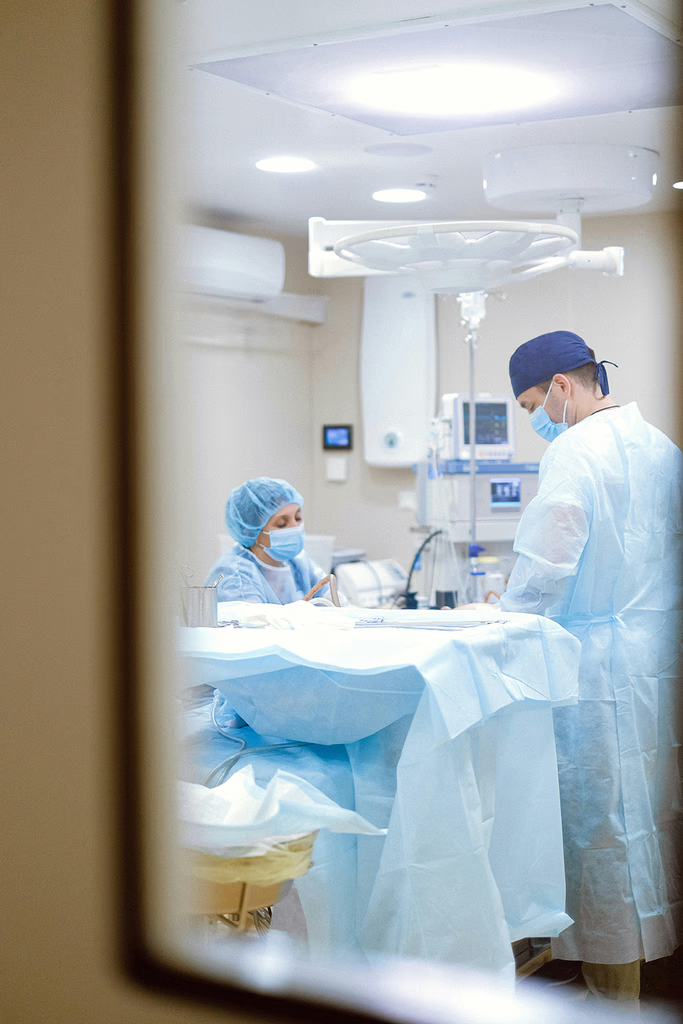
This isn't about roughing it in the developing world. Brazil has modern cities, world-class hospitals, international schools, and much more.

More Living, Less Overhead
Compared to major U.S. cities, many everyday costs (housing, services, dining) are significantly lower in Brazil. That difference shows up in day-to-day life: more space, more flexibility, and access to things that often feel out of reach in cities like New York or San Francisco.

Modern Healthcare at a Fraction of US Costs
Brazil has both a universal public health system and a private system that's excellent. Top private hospitals in São Paulo rank among the best in the Americas. A comprehensive private health plan runs $200–400/month per person — not per paycheck.

Water, Food, Climate: No Worries
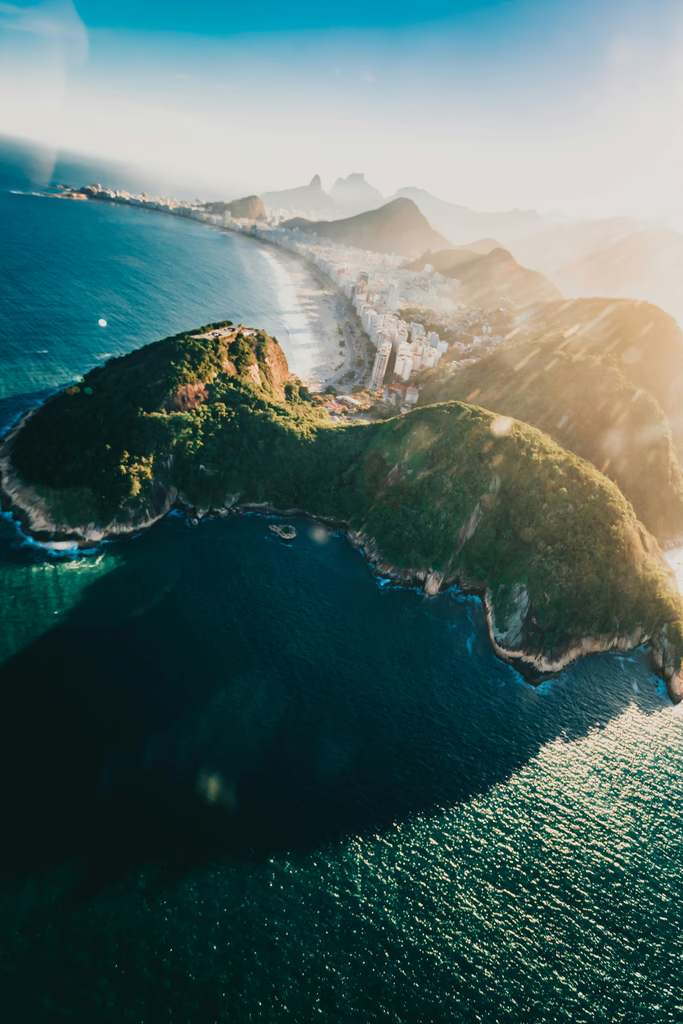
Brazil has more freshwater than almost any country on earth (12% of global total). Its growth in agricultural output is outpacing domestic demand. The climate ranges from tropical beaches to temperate European-feeling cities in the south. There's only ever been one hurricane to hit South America (2004).

People Who Actually Talk to Their Neighbors
This sounds small until you've lived it. Brazilian culture is built around family, community, and genuine human connection. People know their neighbors. Kids play outside. Sunday lunch with the extended family is the highlight of the week, not a duty.

Same Timezone, Easy Flights Home
São Paulo is in the same timezone as New York. Direct flights run daily to Miami (5 hrs), NYC (10 hrs), London, Paris, and Lisbon. São Paulo is well connected to everywhere you already go.

Your Kids Will Thank You
Children who grow up in Brazil gain native Portuguese, the sixth most-spoken language in the world, plus cultural fluency across Latin America. Combined with English and any other citizenships in the family, they'll be positioned for opportunities across multiple continents instead of being locked into one.
Strategic Autonomy
In a world splitting into rival camps, Brazil has managed to stay friends with everyone. That is deliberate, and it matters a great deal if you're deciding where to build a foothold for the future.
Far From the Fighting
Brazil is thousands of miles from every active conflict zone. It has no territorial disputes with neighbors. No World War I or II battles took place in South America and the last war on the continent took place in the 1930s.
Trades With Everyone
In addition to a large domestic market, Brazil sells beef to China, soybeans to Europe, aircraft to the US, and iron ore to India. It doesn't pick sides in trade wars. It belongs to trade blocs like BRICS and Mercosur.
Sanctions Resistant
2025 proved that Brazil can withstand both trade pressure and foreign financial sanctions. As a permanent resident, you bank in Brazil as a Brazilian resident. That means stable, uninterrupted access to local financial institutions

Think Bigger Than Brazil
Open The Door To A Whole Continent
Permanent Residents who decide to move to Brazil can also naturalize as Brazilian citizens after four years living there.
Brazil is part of something called MERCOSUR. Think of it like a South American version of the EU. It's a trade bloc of five countries - Brazil, Argentina, Uruguay, Paraguay, and Bolivia - that are increasingly opening borders to each other's residents and businesses. If you become a Brazilian citizens, you also have freedom of movement across a 284-million-person market.
"Brazil doesn't need to be the next superpower. It just needs to be big enough, stable enough, and far enough away that you have real options if the world you know changes faster than you expected."
Where StartBrazil Comes In
One Route. Three Ways In.
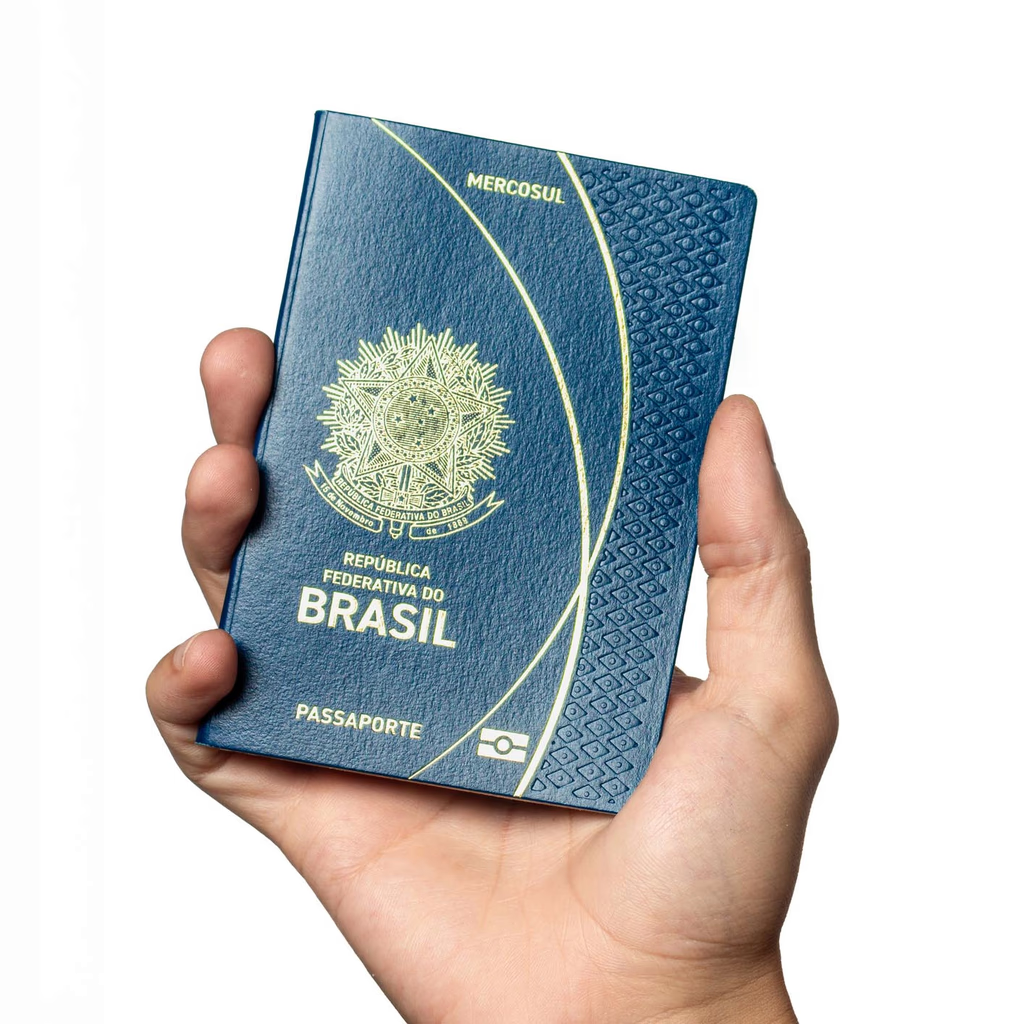
Brazil's golden visa has three qualifying investments: a startup, a company, or property. All three end in permanent residency, and we handle all three.

Long-Term Commitment
Startup Investor Visa
You invest about $29,000 to start or buy into a real business in Brazil. In return, you get permanent residency from day one, not a temporary permit that converts later. The one condition is that the capital stays deployed in the Brazilian economy for 3 years; after that, your residency is unconditional. This pathway can turn into citizenship after four years of physically living in Brazil (not mandatory).
Investment
~$29K
In local currency
R$150,000
What you get
Permanent residency, day 1
Commitment
Maintain the investment for 3 years
Family
Spouse & kids included
Best for
Ready to go all-in

The Established Route
Company Investor Visa
You invest R$500,000, about $95,000, into a new or existing Brazilian company and file a three-year business plan showing real economic activity or job creation. Permanent residency is granted from day one. This is Brazil’s workhorse route and the one the authorities understand best: 239 people were approved through it in 2025.
Investment
~$95K
In local currency
R$500,000
What you get
Permanent residency, day 1
Commitment
Three-year business plan
Family
Spouse & kids included
Best for
Operators running a real business

The Property Route
Real Estate Investor Visa
You buy qualifying Brazilian property worth R$1 million, or R$700,000 in the North and Northeast. That earns a four-year residence permit tied to the investment, convertible to permanent residency once the residence requirement is met. It is Brazil’s most-used golden visa route, with 273 approvals in 2025, and the only one that does not involve running a business.
Investment
~$185K
In local currency
R$1,000,000 (R$700,000 in the N/NE)
What you get
4-year permit, convertible
Commitment
Hold the qualifying property
Family
Spouse & kids included
Best for
Buyers who want property, not a company
Brazil Versus
the World
Residency in another country usually costs hundreds of thousands of dollars and still only buys a temporary visa. Brazil is the outlier. It has the lowest cost of entry to permanent status of any major economy.
Country
Min. Investment
Residency Type
Status
🇧🇷 Brazil
$29K
Permanent from Day 1
open
🇨🇴 Colombia
$35K
Temporary, renewable
open
🇲🇽 Mexico
$255K
Temporary, renewable
open
🇵🇦 Panama
$500K
Permanent from Day 1
open
🇵🇹 Portugal
$540K
Temporary, renewable
restricted
🇪🇸 Spain
$540K
Temporary, renewable
restricted
STARTUP INVESTOR VISA
These Programs Don't
Stay Open Forever
Many countries have recently cut investor residency programs or increased the costs. The pattern is the same every time: program opens, word gets out, demand spikes, government restricts it. Brazil's program is open today & largely under used. Nobody can promise it stays that way.
Portugal Golden Visa: restricted 2023
Ireland Investor Programme: closed 2023
UK Tier 1 Investor: abolished 2022
New Zealand Entrepreneur: eliminated
Canada PNP: now a lottery


Ready To Start Your Journey to Brazil?
Begin your path to Brazilian residency with expert guidance, vetted opportunities, and a transparent step-by-step process.